
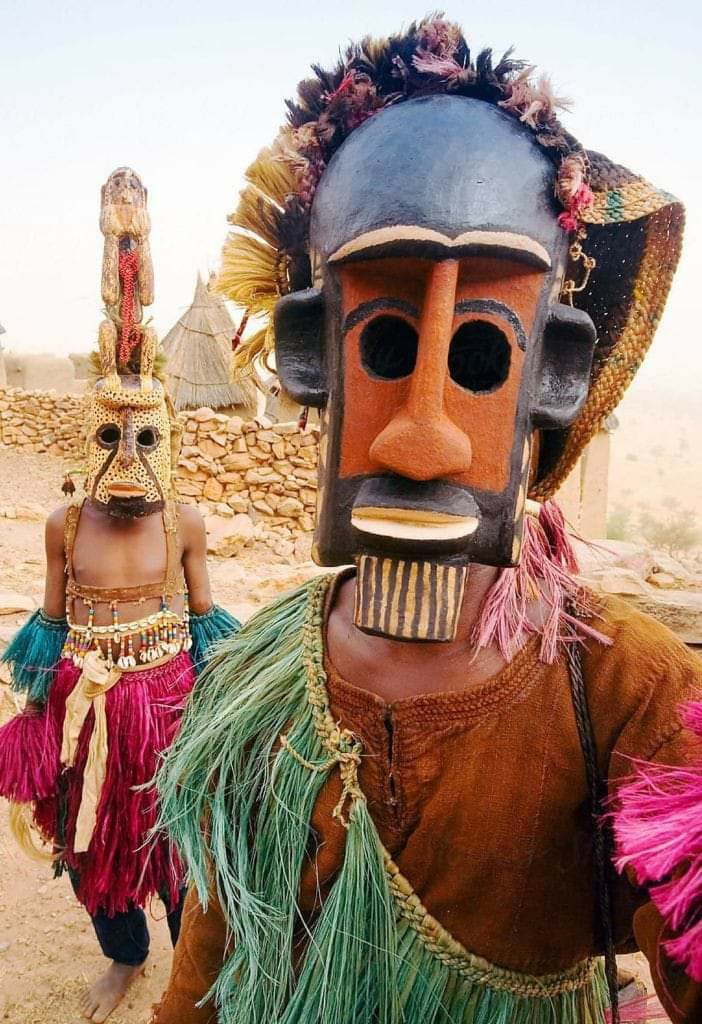
The Dogon mask is truly a captivating piece of art and cultural heritage.
The Dogon mask is truly a captivating piece of art and cultural heritage.
The Dogon mask holds immense significance in the traditional rituals and ceremonies of the Dogon people, who reside in the beautiful country of Mali in West Africa.
These masks are not just mere decorative objects; they play a crucial role in connecting the physical and spiritual realms.
Crafted with meticulous attention to detail, Dogon masks are known for their intricate designs and skilled craftsmanship. They are typically made from materials such as wood, animal hides, feathers, and vibrant pigments.
The masks often represent animals, spirits, or ancestral figures, each carrying its own symbolic meaning and purpose.
In Dogon society, masks are used in various ceremonies, such as initiation rites, funerals, harvest celebrations, and agricultural festivals.
They are believed to embody the spirits of ancestors and serve as a medium for communication between the living and the spiritual world. Through the mask, the wearer can channel the wisdom, guidance, and blessings of the ancestors.
The symbolism behind each Dogon mask varies, reflecting the rich cosmology and mythology of the Dogon people. For example, the Kanaga mask represents the primordial ancestor and is associated with the creation of the world.
The Sirige mask is linked to agricultural fertility and is worn during planting and harvesting rituals. These masks not only convey cultural stories but also preserve the collective memory and traditions of the Dogon community.
It’s important to note that Dogon masks are not solely objects of artistic expression; they are deeply rooted in spiritual beliefs and cultural practices.
They serve as a visual language, conveying messages, and teachings to the community. The intricate patterns, colors, and symbols on the masks hold profound meanings that are passed down through generations.
The Dogon mask is not just a beautiful artifact; it’s a living testament to the rich cultural heritage and spiritual beliefs of the Dogon people.
Its significance goes beyond its aesthetic appeal, making it a cherished and respected symbol of identity and tradition.
 Hi welcome to my website