
MYTH BUSTERS: DEBUNKING THE HALF-BAKED TAN THEORY
MYTH BUSTERS: DEBUNKING THE HALF-BAKED TAN THEORY
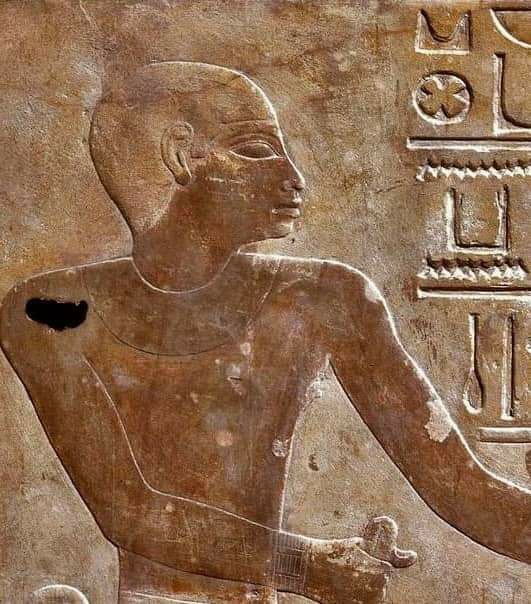
The ancient Kemetyu (Egyptians) have long been described by traditional Egyptologist’s as having an olive skin complexion in an effort to associate the Pharoanic Kings of the South with Mediterranean populations in the Delta. However, not only is this statement untrue and unscientific, it is just silly and asinine. As far as I am aware olives come in two colors, green and black. So why this delusional comparison is still regurgitated as a way to disassociate Nile Valley Africans from blackness is beyond me. When faced with the countless wall paintings, reliefs and busts, which depict people with heavily melanated complexions, the typical response is, that it is not their actual complexion but rather a tan.
While laughable this should not be taken lightly because this concept has been accepted by some fringe academics and uneducated yet influential TikTokers and therefore must be addressed. It should be noted that this half-baked theory has no evidence to back it up, it was simply concocted as a means to promote the idea of a fair skinned civilization and to minimize even erase those with a darker complexion. Although fair skinned populations from the Levant who primarily settled in the Delta region and indigenous light skin Africans both existed within the Nation of Kemet, there is zero evidence to suggest dark skin people in Nile Valley artwork were depicted with tans.
While the ancient Kemetyu and Africans in general do indeed have a wide range of complexions from the obsidian black complexions of the south Sudanese to the yellowish citrine complexions of the Khoisan in South Africa, the tanned theory is a misnomer with no evidence to support it. It only feeds into the anti-African sentiment and ideals of anti-blackness that has pervaded the Arab Republic of Egypt and traditional Western academia.
But when you research 18th Dynasty artwork you will find that dark complexions and wooly hair is the standard among royalty and citizens alike. Furthermore the existence of fair skinned populations from Syria and the Levant illustrate the contrast between indigenous African populations and the fair skinned non-Africans such as the Asiatics whom somehow maintain their fair complexions despite living underneath the same sun. So no these were not tans. They are black Africans.
In 2023, Christopher Ehret reported that the physical anthropological findings from the “major burial sites of those founding locales of ancient Egypt in the fourth millennium BCE, notably El-Badari as well as Naqada, show no demographic indebtedness to the Levant”. Ehret specified that these studies revealed cranial and dental affinities with “closest parallels” to other longtime populations in the surrounding areas of Northeastern Africa “such as Nubia and the northern Horn of Africa”.
Ehret, Christopher (20 June 2023). Ancient Africa: A Global History, to 300 CE. Princeton: Princeton University Press. pp. 83–85.
“King of Upper Kemet…Beautiful is the Ka-Soul of Ra who appears in Waset”
“I have not spoken angrily or arrogantly. I have not cursed anyone in thought, word or deeds.” ~ 35th & 36th Principles of Ma’at
 Hi welcome to my website