
The Old City of Sanaa, located in Yemen,
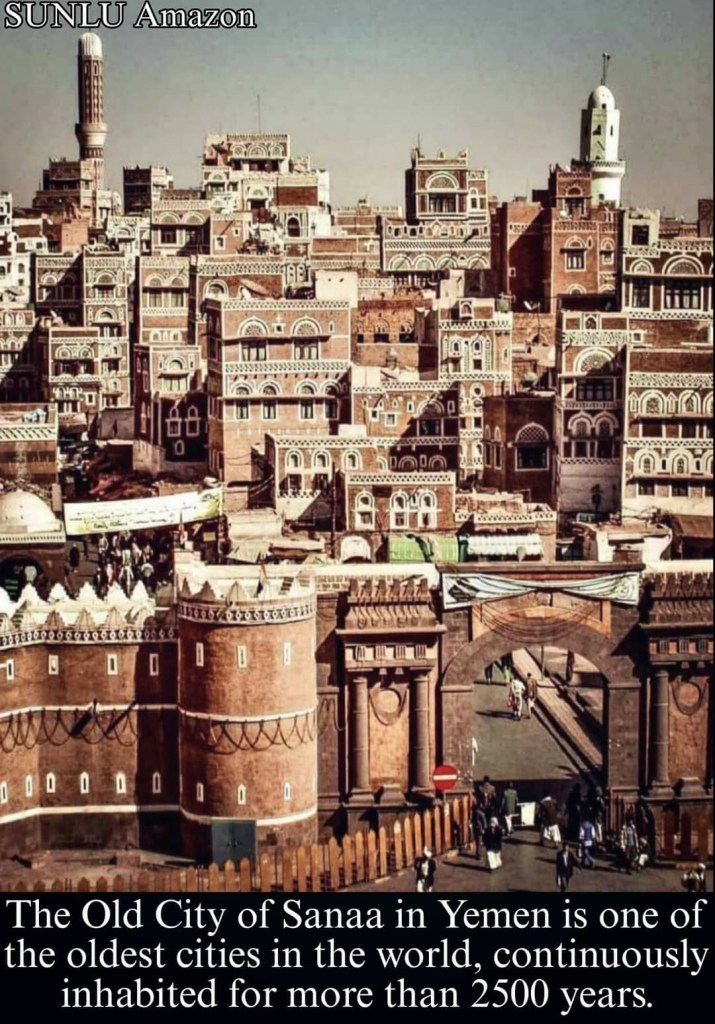
The Old City of Sanaa, located in Yemen, is one of the most ancient and continuously inhabited cities in the world, with a history stretching back more than 2,500 years. The name “Sanaa” means “fortified palace,” reflecting its long-standing importance as a center of culture, trade, and governance in the Arabian Peninsula.
This city is a living museum, renowned for its extraordinary architecture, characterized by towering multi-story buildings made of rammed earth, adorned with intricate geometric patterns and stunning white gypsum decorations. These buildings, some of which date back over a thousand years, are not just homes but works of art, showcasing the ingenuity and craftsmanship of Yemeni builders across centuries. The iconic gingerbread-like houses, with their distinctive stained-glass windows, known as qamariyyah, have become symbols of the city’s unique architectural heritage.
Sanaa’s history is deeply intertwined with the rise and fall of several empires and kingdoms, including the Sabeans and Himyarites, and later Islamic caliphates. It became a vital center of Islamic learning and culture, particularly during the medieval period when the city was known for its mosques, schools, and libraries. The Great Mosque of Sanaa, one of the oldest mosques in the world, is a testament to the city’s spiritual significance and its role as a hub of Islamic scholarship.
Despite the passage of time, the Old City of Sanaa has retained much of its historical character, with its narrow, winding streets, bustling souks, and ancient walls standing as reminders of its rich past. The city’s layout, with its distinct neighborhoods and public spaces, reflects traditional Islamic urban planning, designed to foster a sense of community and social cohesion.
However, the Old City of Sanaa is not just a relic of the past; it remains a vibrant, living city, where the rhythms of daily life continue much as they have
 Hi welcome to my website