
The Jomon people were an ancient ethnic group that inhabited Japan during the Jomon period (14,000-300 BCE). While they are not directly related to African people, there is a fascinating connection:
The Jomon people were an ancient ethnic group that inhabited Japan during the Jomon period (14,000-300 BCE). While they are not directly related to African people, there is a fascinating connection:
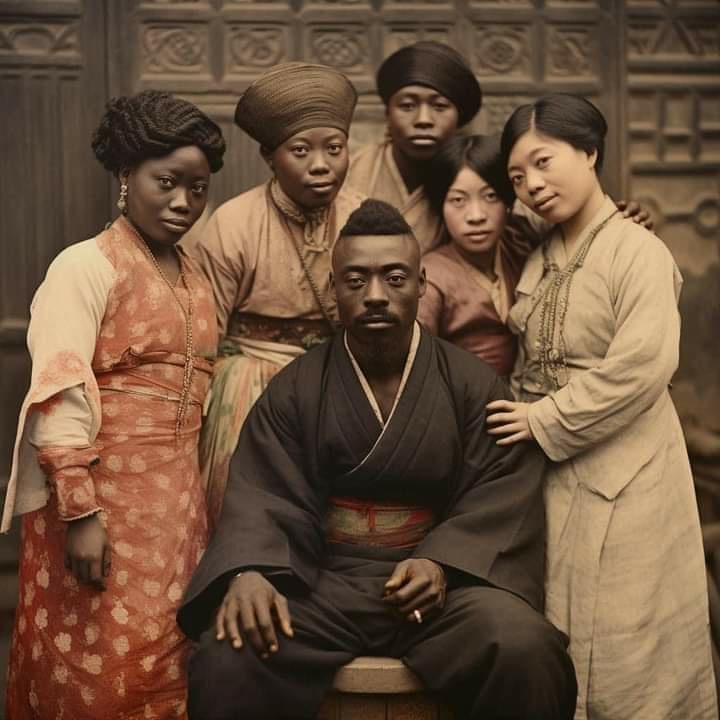
- Physical resemblance: The Jomon people are believed to have had physical characteristics similar to those of Africans, such as dark skin, curly hair, and facial features.
- Genetic connection: Recent studies suggest a possible genetic link between the Jomon people and modern-day Africans, particularly from the Yoruba and Zulu groups.
- Cultural exchange: There is evidence of cultural exchange between ancient Japan and Africa, including similarities in pottery, tools, and art.
- Migration theories: Some researchers propose that the Jomon people may have migrated from Africa to Japan via the southern route, around 20,000 years ago.
- Linguistic connections: Some linguists suggest a possible connection between the Jomon language and African languages, such as Niger-Congo.
- Shared traditions: Both Jomon and African cultures share similar traditions, such as ancestor worship and shamanism.
- Historical records: The Jomon people are mentioned in ancient Chinese records, which describe them as having dark skin and curly hair.
- Archaeological findings: Excavations in Japan have uncovered artifacts and human remains that support the physical and cultural connections to Africa.
- Controversy and debate: The topic is still a subject of debate among scholars, with some disagreeing with the African-Jomon connection.
- Further research needed: More research is necessary to fully understand the extent of the African-Jomon connection and its implications.
 Hi welcome to my website