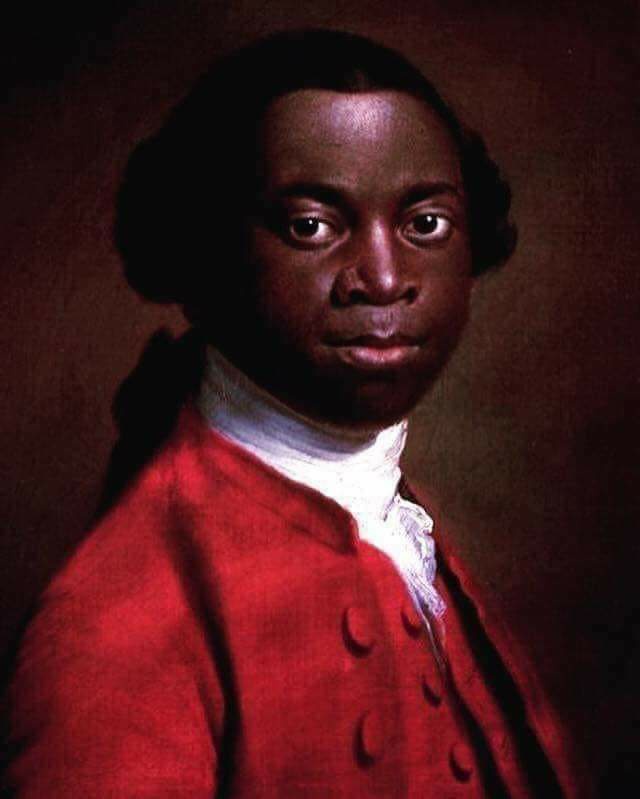
Olaudah Equiano (1745 – 1797) was an 18th-century African writer and anti-slàvery campaigner.
Olaudah Equiano (1745 – 1797) was an 18th-century African writer and anti-slàvery campaigner. From an early age, Olaudah Equiano experienced the h0rrors of slàvery first hand. However, eventually, one of his Masters gave him his freedom. This enabled him to become a B.ritish citizen and he began writing about his experiences. His autobiography ‘The Interesting Narrative of the Life of Olaudah Equiano‘ played a pivotal role in turning public opinion in Britain against sàvery.
Olaudah Equiano writes that he was born in West Africa ( Nigeria) in the year 1745 – a member of the Igbo tribe. Aged 11, he was kidn@pped, along with sisters, by native slave-holders; after being s0ld to Eur0pean slàve traders, he was then packed into a slave ship and transferred across the Atlantic to Barbados. Equiano eventually ended up in the British colony of Virginia. As a slavè, he was given different names, including Gustavus Vassa.
Equiano later wrote about the mistrèatment of slàves on the Virginia plantations. His vivid descriptions of the various punishments and hùmiliations that slàves had to endure were the first published account of an autobiography of a slàve. Speaking of the Virginia overseers.
Equiano was able to give a first-hand testament about life as a slàve. This information was useful for those who were hoping to change the law and outlaw slàvery. His friends encouraged him to write down a book about his experiences. First published in 1789, the account was eagerly received by many people in B.ritain. It sold well and went through many editions. Many people who read about the sùffering of slaves were more inclined to support the abolitionist cause. The book received good reviews, and many were surprised and moved by the quality of writing and his ability to depict life as a slavè.
The book made Equiano a prominent figure in literary circles. In 1788, Equiano was able to personally petition the king for the end of slàvery. The book also helped to demystify many of the current miscònceptions about African people – this personal account and personality of Equiano was very influential in displaying the obvious humànity of Black Africans.
Although there is some controversy about the exact birthplace of Equiano – some historians believe he may have been born in North America rather than Africa, there is no doubt that Equiano played a pivotal figure in the anti-slàvery movement. His writing and speeches helped show people that there was a strong sense of shared humanity.
 Hi welcome to my website