Shortly after the dark ages in Europe,
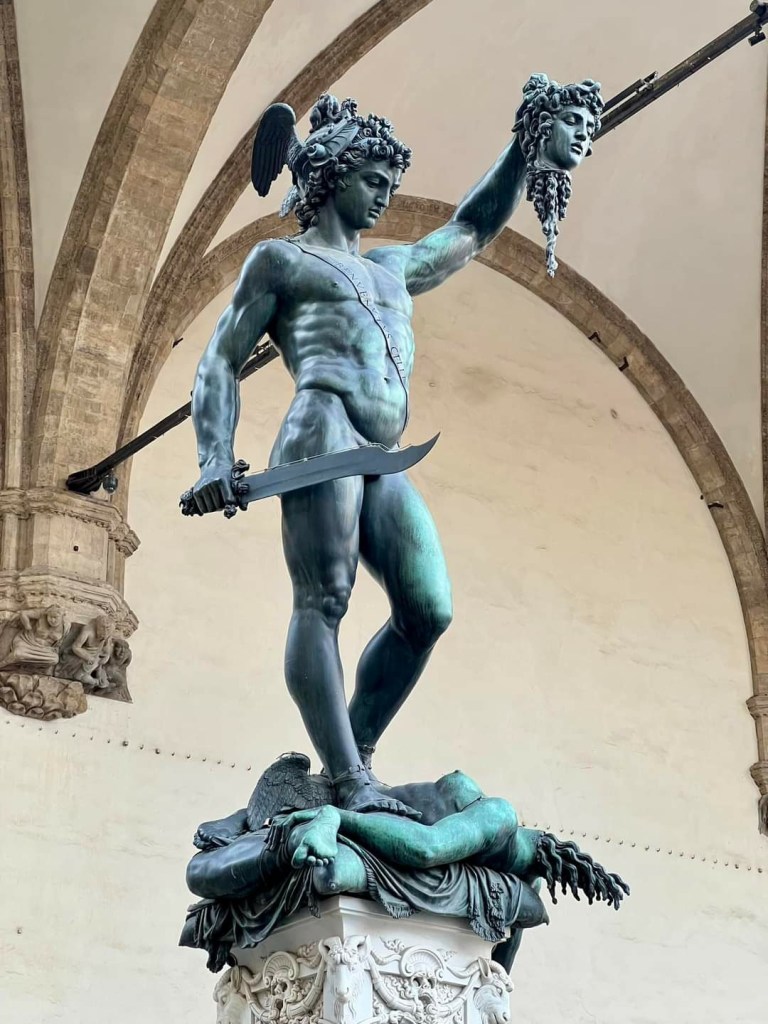
Shortly after the dark ages in Europe, the industrious sculptor and goldsmith, Benvenuto Cellini began to make use of the lost wax method of casting. He learned this process from the writings of the monk Theophilus Presbyter (circa 1100) whose Schedula Diversarum Artium is the earliest known foundry text. In Cellini’s autobiography, considered to be one of the classics of literature, he describes in great detail the casting of his famous Perseus and the Head of Medusa. This three and a half ton statue was completed in 1554 and was unveiled at the Loggia dei Lanzi in Florence, Italy, where it stands to this day.
Born in Florence in 1500, Cellini was banished aged 16 for taking part in public fighting. He also confesses to three murders in The Autobiography of Benvenuto Cellini, stating that he stabbed his brother’s murderer to death, killed a rival goldsmith and shot an innkeeper dead.
Cellini’s use of bronze in Perseus and the head of Medusa, and the motifs he used to respond to the previous sculpture in the piazza, were highly innovative. Examining the sculpture from the back, one can see a self-portrait of the sculptor Cellini on the back of Perseus’ helmet.
Benvenuto Cellini sculpted Perseus with the Head of Medusa (in wax) between 1545 and 1554. It was commissioned by the Duke of Florence Cosimo I, who was a significant patron and advocate for the arts, learning and philosophy.
The story goes that as the bronze was being cast in Cellini’s workshop, the incapacitated sculptor lay dying on his sickbed. A storm broke at night, and his assistants failed to notice that the metal was beginning to clot as it cooled. Cellini jumped from his bed and ordered that everything be thrown into the fire to raise the heat (including furniture). It worked, and the sculpture was saved.
Cellini likened this revival to raising the dead, both because he saved a great work of art but also because he himself was raised from his deathbed. Cellini’s salvation was remelting the bronze.
Once the sculpture was cooled, a long polishing process which started in 1549 was required. It was finally completed in 1554 and then presented in the square to great acclaim.
At the time Cellini’s sculpture was created, bronze had not been used for a monumental work of art for almost half a century.
 Hi welcome to my website