
The Nkhokwe continues to be a significant part of Malawi’s cultural identity, connecting modern Malawians to their traditional agricultural roots.
The Nkhokwe is a traditional Malawian granary, primarily used for the storage of maize and other grains. It plays a significant role in Malawi’s agricultural and cultural heritage, symbolizing the importance of food security and the preservation of crops.
Key Features of the Nkhokwe:
- Design:
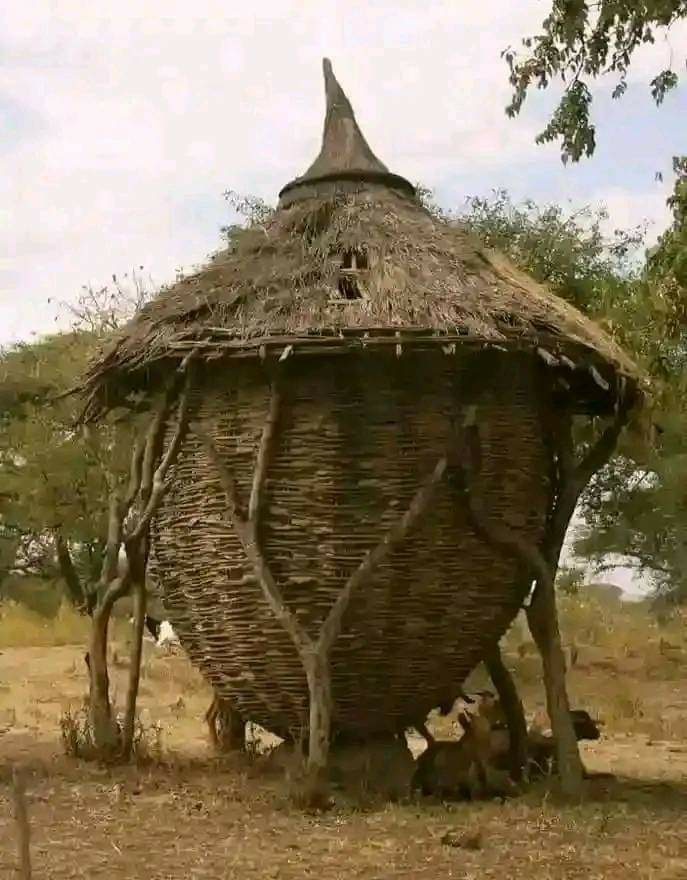
The Nkhokwe is typically an elevated structure made of locally available materials such as bamboo, mud, and grass thatch for the roof. The elevation helps protect the stored grains from rodents, pests, and moisture.
Its circular shape allows for efficient storage, ensuring that air can circulate around the stored crops to reduce the chances of spoilage.
- Construction:
The base of the Nkhokwe is usually made from stones or logs, which elevate the structure several feet off the ground. This elevation serves as a natural defense against pests, particularly rats and termites.
The walls are constructed from a lattice of bamboo or wooden poles, often reinforced with mud plaster to create a sturdy structure. The thatched roof is designed to be waterproof, keeping the grain dry during the rainy season.
- Cultural Significance:
The Nkhokwe is more than just a storage facility; it is a symbol of wealth and prosperity. A household with a full Nkhokwe signifies that the family has successfully harvested enough food to last through the season.
In rural communities, the Nkhokwe is also a representation of food security and survival, especially in areas where agriculture is the primary source of livelihood.
- Modern Adaptations:
While traditional Nkhokwes are still in use, some modern versions have incorporated additional materials such as bricks and cement, making them more durable and resistant to environmental factors.
However, the traditional Nkhokwe remains a vital aspect of rural life, especially in areas where industrialized storage options are unavailable.
Role in Food Security:
In a country like Malawi, where maize is the staple food and the agricultural economy is vulnerable to droughts and floods, the Nkhokwe ensures that families can store surplus crops and maintain food supplies during lean seasons. This has long-term implications for reducing hunger and promoting sustainable agricultural practices in rural communities.
The Nkhokwe continues to be a significant part of Malawi’s cultural identity, connecting modern Malawians to their traditional agricultural roots.
 Hi welcome to my website