Is it important to tell factual history or therapeutic narratives?
Is it important to tell factual history or therapeutic narratives? The claim IS African armies lost all their battles because of the religion of Christianity, not due to lacking machine guns and canons.
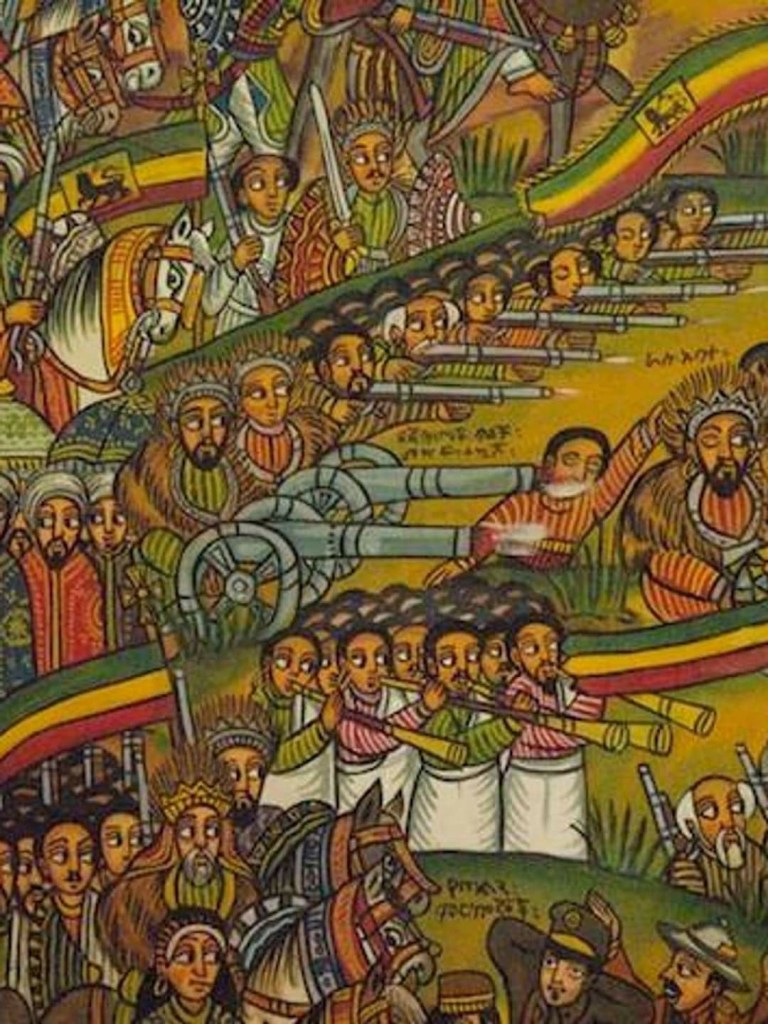
The origins of Christianity are entirely non-European. Before converting to Christianity, Europeans worshipped gods like Jupiter, Odin, and Zeus. Christianity was brought to Europe by Middle Easterners and North Africans, including the ancient Jews, who themselves were a population with African roots. Ethiopia, a symbol of resistance against colonization, adopted Christianity 1,700 years ago—long before Europe’s rise to power.
The claim that colonization and land theft were justified by a civilizing mission or any other pretext is false; these actions were driven by greed and injustice. This is evident in the case of Ethiopia, which maintained its independence by force, and other African states that successfully employed diplomacy, negotiations, and treaties to safeguard their autonomy.
Consider Botswana (Bechuanaland), where Tswana chiefs, particularly Kgosi Khama III, strategically sought British protection to avoid conquest by other European powers. Rather than being colonized, Botswana became a British protectorate, preserving its internal governance and eventually gaining full independence in 1966.
Eswatini (Swaziland), through the leadership of its monarchs like King Mbandzeni, similarly retained autonomy by negotiating with the British, who recognized its sovereignty and made it a protectorate without direct colonization. Full independence followed in 1968.
In Lesotho (Basutoland), King Moshoeshoe I skillfully navigated colonial pressures, securing British protection and retaining Basotho autonomy. This strategic diplomacy helped Lesotho remain free from European conquest, leading to independence in 1966.
Even the Maasai of Kenya and Tanzania maintained autonomy, thanks to their nomadic resilience and warrior culture. Despite European encroachments, they avoided direct conquest, exemplifying how African communities adapted to protect their sovereignty.
Morocco resisted European colonization through military success, including its victory over Spain at the Battle of Annal. However, internal instability and economic dependence on foreign loans eventually led to French occupation in 1912, but Morocco regained its independence by 1956.
The Oyo Kingdom avoided colonization through strategic alliances. The Alaafin (king) of Oyo invited Britain to prevent a French invasion, ensuring its protection. While Oyo’s decline came from internal conflicts, it was never fully conquered by European powers.
Similarly, Ondo Kingdom in present-day Nigeria resisted direct European conquest but was subject to British influence through indirect rule. It retained local governance while navigating the pressures of colonialism.
Owerri, like many regions in Nigeria, used diplomacy and treaties to avoid direct military confrontation. Over 50 treaties and a complex negotiation process saw regions like Owerri resist full domination despite falling under broader British colonial rule.
Sierra Leone and Liberia offer unique cases. Sierra Leone became a British colony by treaty as a settlement for freed slaves, and Liberia was established by freed African Americans, not through European conquest.
This highlights the varying degrees of African autonomy and resistance, showcasing how many African states employed the principle of “the enemy of my enemy is my friend” to navigate colonial pressures. While colonization undeniably affected Africa, these examples prove that Africans were not passive recipients of conquest but active agents using diplomacy, alliances, and resistance to protect their lands.
In short, the myth of European superiority is debunked by the historical reality of African resilience. These African states, often lacking advanced weaponry, outmaneuvered colonial powers with strategic diplomacy, showing that colonization was not inevitable but the result of complex geopolitical dynamics.
 Hi welcome to my website