
In 1939, burlesque dancer Zorita, renowned for her provocative and exotic performances,
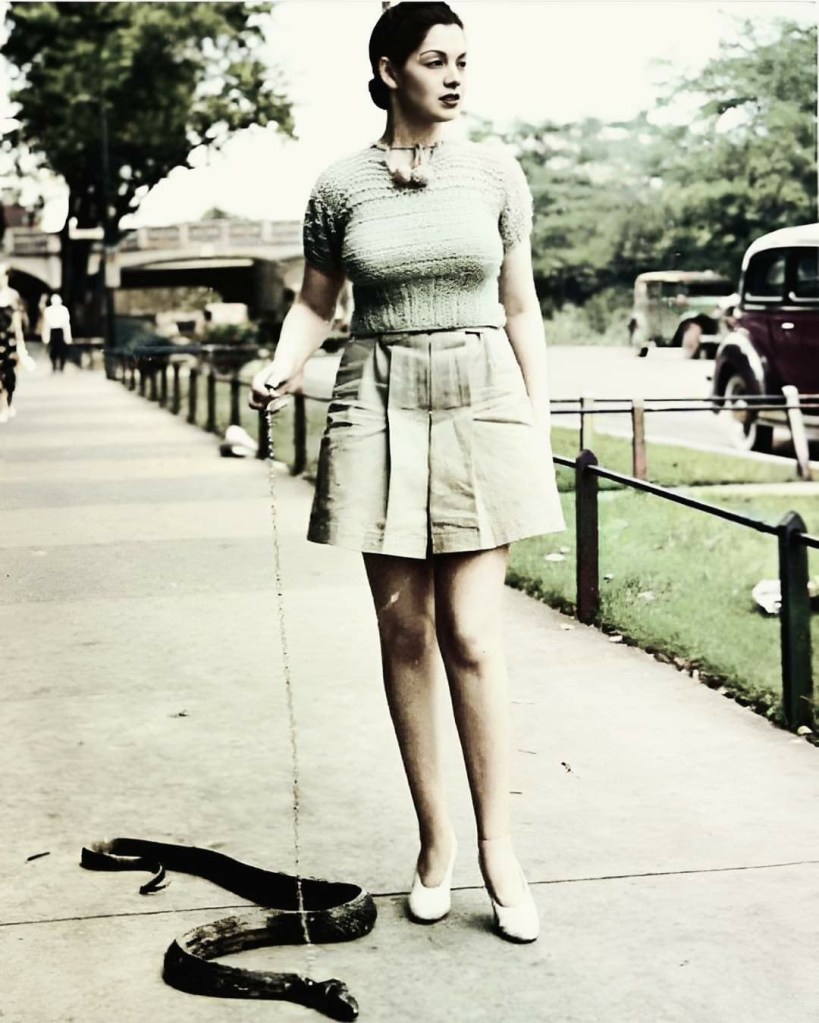
In 1939, burlesque dancer Zorita, renowned for her provocative and exotic performances, struck a dramatic pose with her pet snake, capturing the era’s fascination with sensuality and the allure of the unconventional. Adorned in glamorous, revealing attire—likely decorated with sequins, feathers, and beads—Zorita exuded confidence and charisma, her steady gaze commanding attention as the snake coiled around her body. The snake, a defining feature of her act, symbolized both beauty and danger, amplifying the exotic mystique that made her performances so captivating. In the world of 1930s burlesque, it wasn’t just about striptease—it was a theatrical spectacle, a celebration of fantasy and taboo, with performers like Zorita redefining sensual entertainment.
Zorita’s use of snakes in her performances was both daring and symbolic, transforming her routines into mesmerizing displays of power and seduction. The snake, likely a boa or python, became an extension of her persona, intertwining with her movements to evoke themes of intimacy and control, vulnerability and dominance. This visual interplay between the dancer and the serpent created an unforgettable experience for audiences, elevating her act into an art form that explored the boundaries of beauty and danger. The presence of the snake added an element of risk, enhancing the allure and intensity of her performances while embodying the “exotic” fascination of the time.
As a leading figure in the 1930s burlesque scene, Zorita epitomized the bold spirit of performers who challenged social conventions and offered audiences an escape into a world of daring and intrigue. Burlesque, with its blend of vaudeville flair and provocative theatrics, provided a space for cultural experimentation, and entertainers like Zorita became icons of a more liberated and adventurous era. This iconic image of Zorita and her snake captures not only a defining moment in her career but also the broader cultural currents of the 1930s, when entertainment embraced the provocative, the theatrical, and the taboo.
 Hi welcome to my website