
In 1941, a young boy from a sharecropping family in Putnam County, Georgia,
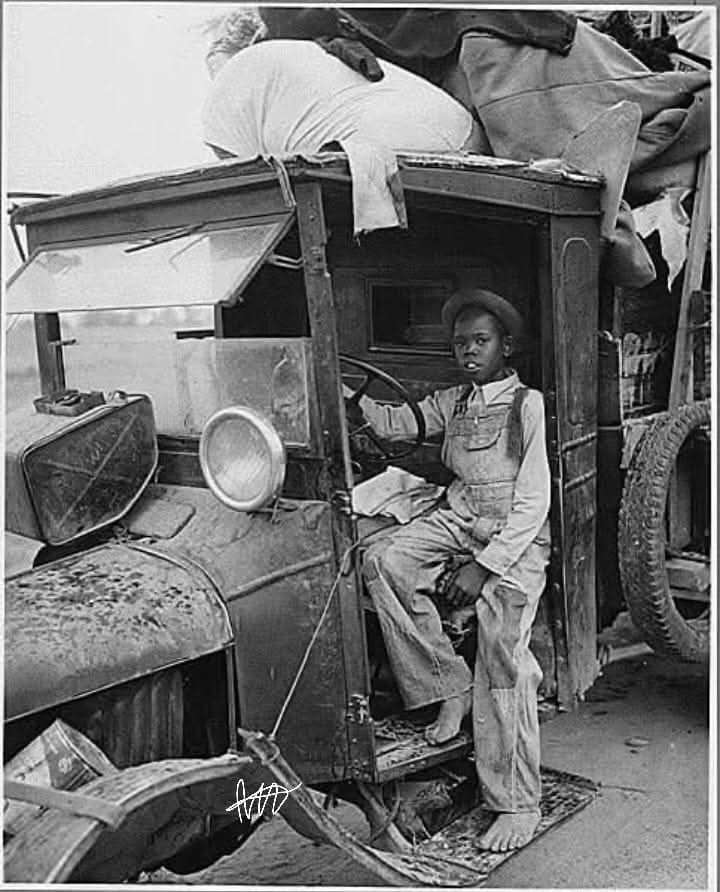
In 1941, a young boy from a sharecropping family in Putnam County, Georgia, was photographed, offering a poignant glimpse into the life of rural America during the Great Depression. Sharecropping was a system that many African American families were forced into, particularly in the South, where they would work the land for landowners in exchange for a portion of the crops. For this boy, his daily life was likely marked by long hours of hard labor, helping his family make ends meet in an era of widespread poverty and economic instability.
The photograph reflects the tough conditions that sharecroppers endured, often living in small, simple homes without modern conveniences. Despite the hardships, families like this one were resilient, with strong bonds and a deep connection to the land they worked. Children were often expected to contribute to the household from an early age, whether by assisting with farm chores or helping care for younger siblings. This boy’s expression and posture may convey a quiet strength, representing the resilience of a generation raised in challenging circumstances.
Life for sharecropping families in the South was defined by a struggle for survival, but also by moments of community, family, and hope for a better future. Though the boy’s story is only a snapshot, it speaks to the broader narrative of many African American families during this time, whose lives were shaped by both the limitations and the potential of their circumstances. The photograph, taken in 1941, serves as a reminder of the difficult realities faced by those working the land in Georgia and across the South during the 20th century.
 Hi welcome to my website