
This vibrant portrait, captured in 1930 on the Lewis Plantation in Brooksville, Florida,
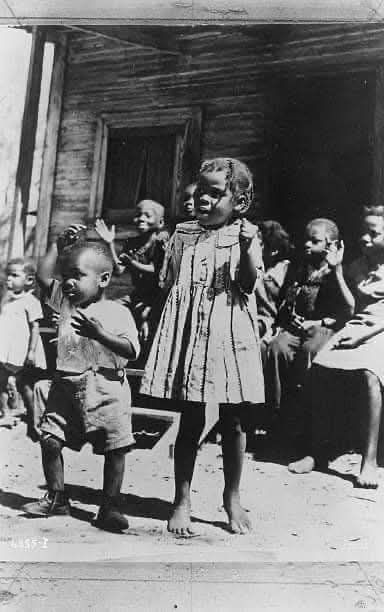
This vibrant portrait, captured in 1930 on the Lewis Plantation in Brooksville, Florida, shows a group of African American children joyfully dancing and clapping on the porch of a modest home. At the forefront of the image, two children stand out: a boy with his hand raised above his head, exuding energy and confidence, and another boy with his hand pressed to his chest, capturing a moment of focused expression. A barefoot girl in a dark dress adds to the lively scene, her feet grounded in the dirt as she participates in the rhythmic movement, embodying the sense of freedom and joy despite the challenges of their environment.
The photograph, taken during a time of intense racial and economic hardship, captures a rare and powerful moment of childhood exuberance amidst the struggles faced by African American families living on plantations in the South. The children’s dance and clap are not only a display of their spirit and creativity but also a form of cultural expression rooted in African American traditions. Music, dance, and rhythm were vital parts of daily life, offering an emotional outlet and a way to preserve community ties despite the oppressive conditions many were enduring.
Taken during the Great Depression, this portrait also speaks to the resilience and strength of Black families in the face of adversity. While economic hardships were widespread, and life on plantations remained difficult, the photograph captures the enduring human capacity for joy, connection, and self-expression. It serves as a reminder of the rich cultural heritage passed down through generations, and how, even in times of struggle, children continued to find ways to celebrate life, bond with one another, and hold onto the traditions that defined their communities.
Source: Harriet Tubman
 Hi welcome to my website