
In 1910, Mare Samuella Cromer, a rural schoolteacher in South Carolina,
In 1910, Mare Samuella Cromer, a rural schoolteacher in South Carolina, organized a girl’s tomato club so females aged 9 to 20 could “not learn simply how to grow better and more perfect tomatoes, but how to grow better and more perfect women.”
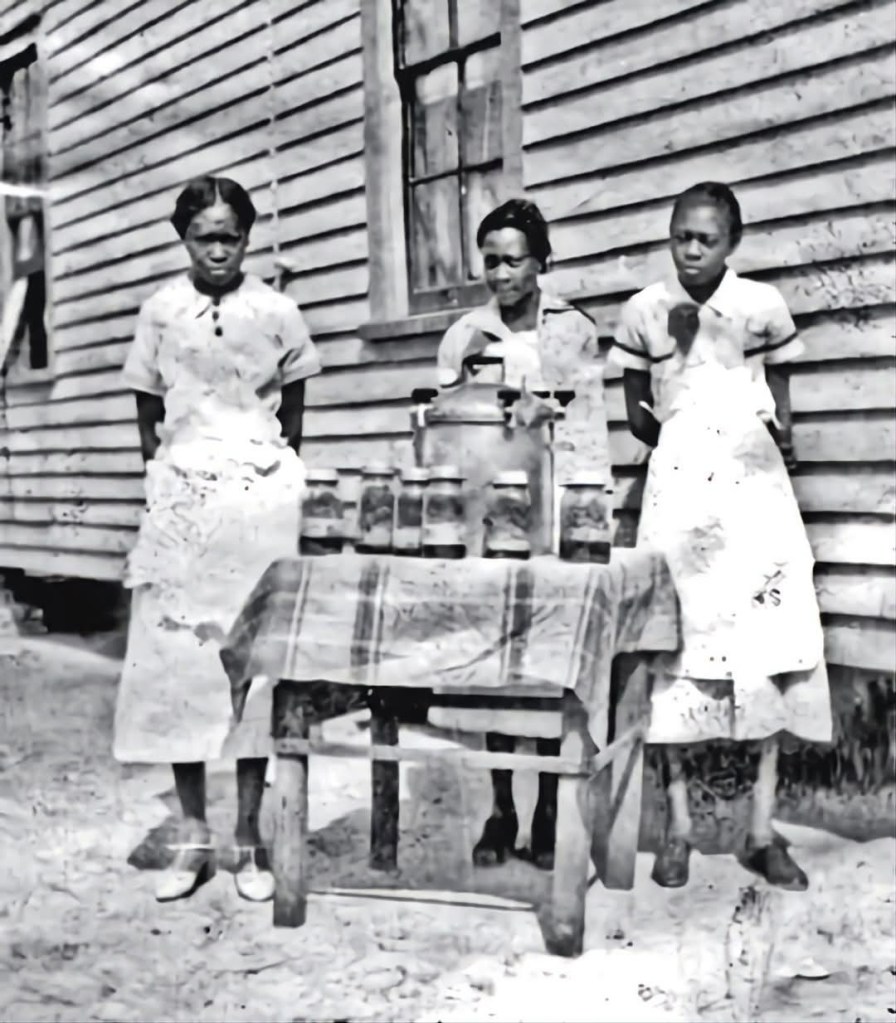
Soon, there were tomato clubs in many states. The idea was simple: Teach rural girls how to plant and grow tomatoes, then harvest and can them, and sell them for a profit. The only work the girls didn’t do themselves was the plowing of their individual 1/10th acre plots – a job even most adult women couldn’t handle in those days, since it required so much upper body strength to plow land with horses.
In one notable example, a girl harvested 2,000 lbs. of tomatoes. After sales, she earned a profit of $78 (about $2,470 today). This was real money for girls who came from hardscrabble backgrounds.
In 1913, a tomato girl named Sadie Linner wrote: “My tomatoes supplied the table for a family of six all summer, as we had no others..A girl can make money for herself if she desires and still stay right on the farm.”
In 1915, one tomato club girl wrote that the work was “long and sometimes tiresome…It has been a way by which I could not only have my own spending money and pay my expenses at the Farm Camp, but I also have a bank account of sixty dollars.” (About $1,881 today.)
Tomato clubs – and the male version, corn clubs – are consider a precursor to 4H. The clubs lead to many songs, including this one, reportedly sung in the Mississippi clubs:
“Tomato Club, Tomato Club
See how we Can, See how we Can… Give us tomatoes and a good sharp knife–This is the place to get a good wife.
Did you ever see such girls in your life– As the Tomato Club!”
 Hi welcome to my website