HISTORY OF AFIKPO
The early settlers of Afikpo, a town in Ebonyi State, Nigeria, have a rich and fascinating history. The area was initially inhabited by two groups: the Egu and the Nkalu
HISTORY OF AFIKPO
The early settlers of Afikpo, a town in Ebonyi State, Nigeria, have a rich and fascinating history. The area was initially inhabited by two groups: the Egu and the Nkalu
The Egu People
The Egu people were the first to settle in Afikpo, and they lived there for a very long time. They were skilled craftsmen, known for their creativity and talent in producing sophisticated inventions, such as pots, masquerade faces, and decorations associated with the Ogo Cult The Egu people were also hardworking, fearless, and adventurous, which enabled them to overcome obstacles and achieve their goals.
After further research, I found that the Egu people are indeed referred to as the present day Ugwuegu.
In Afikpo, the Ugwuegu are considered one of the earliest settler groups, and they have maintained their distinct identity and cultural heritage within the larger Afikpo community.
Do you know??
In Afikpo, the original owners of the Ogo cult were the women.
Historically, the Ogo cult was a powerful and prestigious institution in Afikpo, and it was controlled and managed by the women of the Ugwuegu (Egu) group.
The women played a central role in the Ogo cult, and they were responsible for its rituals, ceremonies, and traditions. The cult was closely tied to the feminine principle and the power of female spirituality.
However, over time, the control and management of the Ogo cult were gradually taken over by the men, who incorporated it into the broader Afikpo cultural and religious practices.
Despite this shift, the Ogo cult remains an important part of Afikpo’s cultural heritage, and its origins and historical significance are still celebrated and honored today.
The Nkalu People
The Nkalu people migrated to Afikpo from the eastern part of Cross River State, specifically from areas like Akoi, Ekuri, Erei, and Agwugwuna. They settled in the southern part of Afikpo and brought with them their skills in farming, fishing, and canoe building. The Nkalu people were also known for their hospitality and love of celebrations, particularly during the New Yam Festivals.
Merge of the Egu and Nkalu
Over time, the Egu and Nkalu people interacted and influenced each other’s cultures. The Nkalu people adopted some of the Egu’s traditions, such as the Ogo Cult, which became an integral part of Afikpo’s culture.
And so Afikpo’s became very rich in Cultural practices.
Today, Afikpo is a town with a rich cultural heritage, known for its ancient Igbo traditions, ceremonial masks, and festivals like the New Yam Festival. The town’s history is a testament to the resilience and creativity of its early settlers, who laid the foundation for the vibrant culture that thrives in Afikpo today.
The leader of Egu was a man called Anuma Ugwu,who settled in an area now occupied by Ezi ukaka Amaha Amaizu.Another tradition has it that the indiginous people of Afikpo went to war and defeated Egu (indiegu) Who were originally Somewhere between Abakaliki and Ahoazara and took many of them prisoners to Afikpo.
According to historical accounts, the Afikpo people and the Egu people did engage in conflicts and wars in the past.
The Egu people, who were the original inhabitants of the area, resisted the influx of migrants from other areas, including the Nkalu people, who would later merge with other groups to form the Afikpo people.
Before the defeat, There were several clashes and battles between the Egu and the Afikpo people, particularly over issues of land ownership and control.
However, over time, the conflicts subsided, and the two groups developed a more peaceful coexistence, with the Egu people eventually integrating into the broader Afikpo community.
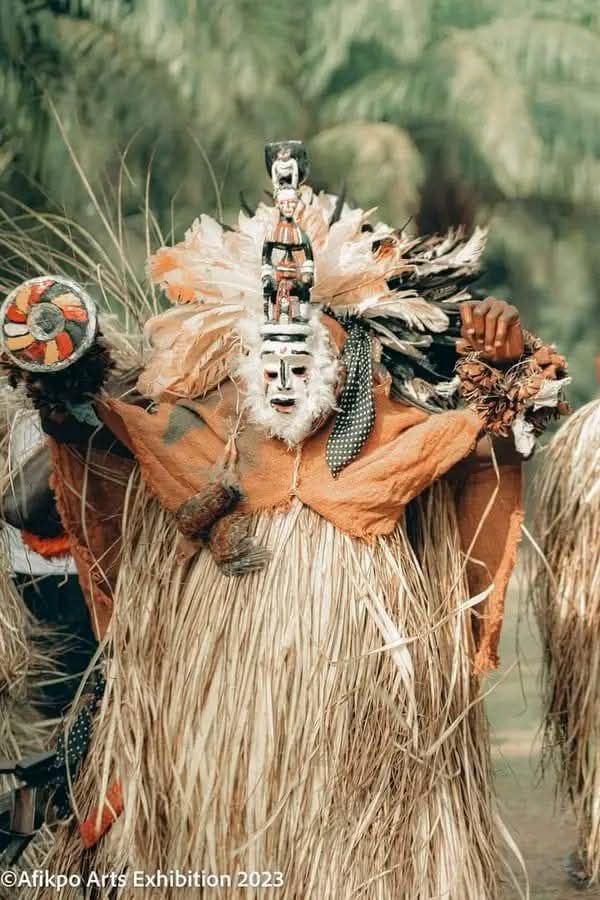
Photo:AfikpoArt&Exhibition
 Hi welcome to my website