
HAUSA: A NATIVE ETHNIC GROUP IN WEST AFRICA
HAUSA: A NATIVE ETHNIC GROUP IN WEST AFRICA
The Hausa are a culturally homogeneous ethnic group primarily found in the Sahelian and sparse savanna regions of Southern Niger and Northern Nigeria. They speak the Hausa language, the second most spoken language in the Afro-Asiatic language family after Arabic. Beyond Nigeria and Niger, the Hausa people have significant populations in Benin, Cameroon, Ivory Coast, Chad, Togo, and Ghana.
THE DAGIN HAUSA (Hausa EMBLEM)
The Hausa emblem, known as Dagin Hausa or the “Hausa Knot,” is a historic symbol of Hausa identity. This star-shaped design is widely used in traditional architecture, embroidery, and other forms of artistic expression.
Before the arrival of Europeans and the abolition of the transatlantic slave trade in 1807, Hausa traders, Islamic scholars, and spiritual leaders played a crucial role in commerce while simultaneously spreading Islam. They used Ajami (Arabic script adapted for African languages) to record historical events. Evidence of Hausa traders and scholars can be found across present-day Ghana, including Manhyia Palace and other archival records of the Gold Coast.
As trade flourished and Europeans arrived, the Hausa became middlemen in the trade of gold, gold dust, kola nuts, hides, salt, ivory, and other commodities. They traveled extensively, establishing settlements (Zongos) wherever they resided. Through these interactions, Hausa became the lingua franca of Zongo communities across Ghana.
ZANGO OR ZONGO
The word “Zango”, spelled “Zongo” by colonialists (similar to “Kyebi” and “Kibi”), is a Hausa term meaning a temporary settlement. Over time, these temporary trading settlements became permanent, forming the Zongo communities we see today.
A Zongo is, therefore, a permanent settlement within an indigenous community, found in cities, towns, and villages across Ghana. These communities often grew alongside the local population, contributing significantly to the development of urban centers. Examples include:
Sunyani Zongo
Zongo Lane (Accra Central)
Sabon Zongo (Greater Accra)
Kumasi Zongo
Tamale Zongo
Yendi Zongo
SARIKIN ZANGO (ZONGO CHIEF)
The title Sarkin Zango (or Zongo Chief) is a Hausa term for the leader of the Zongo community. The enskinment (traditional installation) of a Sarkin Zongo is usually performed by the indigenous paramount chief of the area.
For instance:
The Sarkin Zongo of Tamale is enskinned by the Tamale Paramount Chief (Naa Gulkpena).
The Sarkin Zongo of Yendi is enskinned by the Yaa Naa, the Overlord of Dagbon.
In the southern parts of Ghana, the enskinned Sarkin Zongo is outdoored with the blessings of the local paramount chief.
Other ethnic groups also have distinct names for their chiefs:
The Mossi call their chief Naaba.
The Wangara call theirs Masa.
The Dagomba use Naa or Yaa Naa.
The Hausa refer to their leader as Sarkin Zango.
While the indigenous people of a town are not originally part of the Zongo community, they can become part of it if they migrate to a Zongo elsewhere. It is also important to note that Zongo communities exist in northern Ghana as well, contrary to the misconception that they are found only in the south.
THE HAUSA COMMUNITY IN SUNYANI
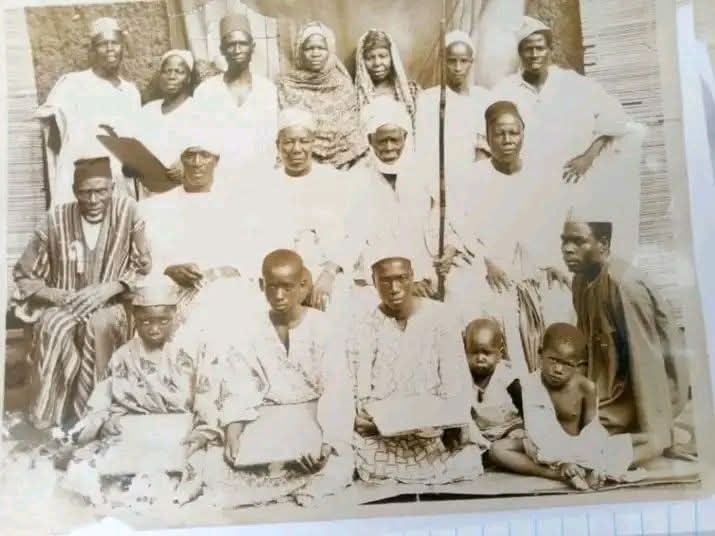
The Hausa people in Sunyani have maintained their language, traditions, and cultural heritage for generations, coexisting peacefully with other ethnic groups.
Historical Background
Before Sunyani became the capital of the Brong-Ahafo Region in 1959, it had served as a district headquarters. Hausa settlers were already present when the British colonialists relocated their headquarters from Odumasi.
One notable event in the history of the Hausa community in Sunyani was their involvement in land negotiations. They worked closely with Captain T.E. Fell, who represented the Chief Commissioner in the land acquisition agreement with the Sunyani Stool, then occupied by Nana Kwadwo Barnie III.
SHAGON GORO: THE HAUSA BUSINESS HUB
The term “Shago” is another Hausa word, meaning “shop”. Because of the Hausa people’s dominance in the kola nut trade in Sunyani, the area where they settled became known as Shagon Goro—meaning “Kola Shop.”
This area, stretching from Mossay Pharmacy to New Greenlight Building and up to the Central Mosque, became famous across Sunyani and its surroundings. Just as the kola nut trade is incomplete without the Hausa people, the history of Sunyani cannot be told without kola nuts.
RAFÌ BAWA: THE HISTORIC WATER SOURCE
Before the Hausa people relocated to their current Zongo location, the original Zongo was where the Sunyani Municipal Hospital now stands.
One of the main reasons the British chose Sunyani over Odumasi as the regional capital was its abundant water supply. The Hausa settlers had a steady water source known as “Rafì Bawa” (meaning “Bawa’s Stream”), named after a native Hausa man, Mallam Bawa.
Recognizing its importance, the British constructed a concrete water tank on this stream, which still remains visible near the Sunyani Prisons and behind Radio BAR. This historic water source served not only the Hausa community but also the broader Sunyani population.
CONCLUSION
The Hausa people in Sunyani have played an integral role in the town’s economic, cultural, and historical development. Through trade, Islamic scholarship, and strong communal ties, they have preserved their traditions while contributing to the broader Ghanaian society.
From Shagon Goro to Rafì Bawa, the Hausa legacy in Sunyani remains deeply woven into the town’s fabric, making it an essential part of Sunyani’s history.
Hausa Community – Sunyani
Africa #World #History
 Hi welcome to my website