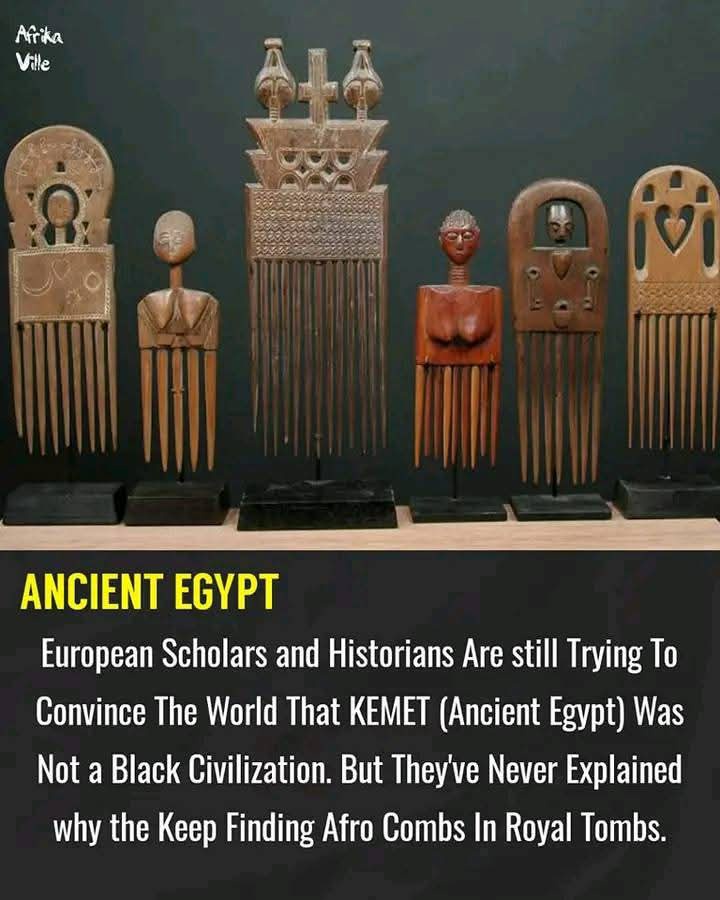
Afro combs have been discovered in several notable tombs of ancient Egyptian rulers,
Afro combs have been discovered in several notable tombs of ancient Egyptian rulers, Providing evidence of African cultural practices among the elite. These combs, often associated with African grooming traditions, And have become significant in discussions about the African identity of Egypt.
- Tomb of Tutankhamun (KV62): Discovered by Howard Carter in 1922, Tutankhamun’s tomb in the Valley of the Kings contained numerous artifacts, including Afro combs. The presence of these combs is significant, as they are commonly linked to African cultures, supporting the view of Egypt’s African roots.
- Tomb of Queen Tiye (KV46): Queen Tiye, wife of Amenhotep III and mother of Akhenaten, was buried in a tomb in the Valley of the Kings. Her tomb contained several Afro combs, further reinforcing the notion that African cultural traditions, including grooming practices, were prevalent among Egypt’s royal elite.
- Tomb of Nefertari (QV66): Nefertari, the Great Royal Wife of Ramesses II, was buried in the Valley of the Queens in a tomb adorned with beautiful artwork and numerous artifacts. Numerous Afro combs were found in her tomb, The presence of grooming tools and other culturally significant items further points to the African influence on Egypt’s royal class.
These findings in royal tombs help demonstrate that Ancient Egyptian were Blāck Africa. And it underscore the broader African context of Egyptian civilization, which was located in northeastern Africa and influenced by a variety of African cultural practices, especially in the context of royal and elite burial customs.
 Hi welcome to my website