
Hausa are different from Fulani
Fulani came to Join them
BRIEF HISTORY OF HAUSA PEOPLE
Hausa are different from Fulani
Fulani came to Join them
BRIEF HISTORY OF HAUSA PEOPLE
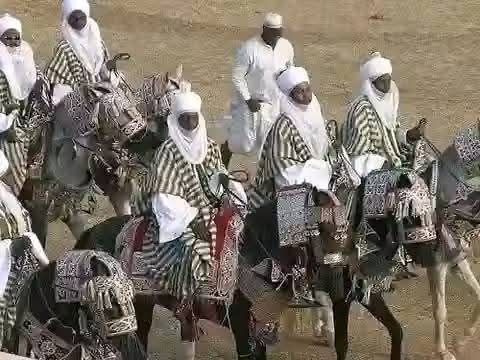
The Hausas are concentrated mainly in the northern part of Nigeria, as well as the adjoining south eastern Niger. The Hausa people are not Fulani.
Hausa and Fulani are distinct ethnic groups in Nigeria. While they share geographic proximity and some cultural overlap, they have different origins, languages, and traditional practices. The Hausa are indigenous to West Africa, while the Fulani are a nomadic group that migrated to the area.
History
The Hausa states, also known as the Hausaland, were independent political entities founded by the Hausa people, and situated between the River Niger and Lake Chad. It was a political entity with no central authority, isolated up until the mid-14th century. Irrespective of their placements, they had a common language, laws, and customs. The Hausas specialized in blacksmithing, fishing, hunting, agriculture, and salt-mining. By around the 1500s, the northern city of Kano had become the most powerful, and was a major trading center in ivory, gold, slave trade, salt, cloth, leather, and grains. Due to their lack of military expertise and a central governing body, they were regarded as loose alliances by the neighboring towns—which made them prone to external domination. All the states remained independent until they were conquered by a prominent Islamic scholar, Usman dan Fodio, in a Holy Jihad (war) between 1804 and 1815, which created the Sokoto Caliphate. It was later abolished when the British defeated the caliphate in 1903 and named the area Northern Nigeria.
Follow Okwu Biafra
 Hi welcome to my website