
Did You Know? The Fascinating Origins of Swahili!..
Did You Know? The Fascinating Origins of Swahili!..
When one thinks of widely spoken languages in Africa, names like Hausa, Yoruba, Arabic, or French often come to mind.
Yet, another colossal linguistic force spans much of East and Central Africa, uniting diverse communities and serving as a vibrant conduit for culture, trade, and communication: Swahili.
More than just a local dialect, Swahili (or Kiswahili, as it’s known in its native tongue) is a language with a rich and complex history, a true testament to centuries of interaction, trade, and cultural exchange along the East African coast.
Its very essence lies in its fascinating origins, a compelling blend of indigenous African roots and profound foreign influences.
At its core, Swahili is fundamentally a Bantu language. The Bantu linguistic family is one of the largest and most widespread in Africa, encompassing hundreds of languages spoken across sub-Saharan Africa, from Cameroon to South Africa.
The ancestral Bantu migrations, stretching back thousands of years, saw communities spreading their agricultural practices, ironworking skills, and, crucially, their languages across vast swathes of the continent.
Swahili emerged from the coastal dialects of these migrating Bantu groups, specifically from the communities that settled along the eastern seaboard of Africa, developing distinct local variations. Its grammar, syntax, and much of its basic vocabulary are undeniably Bantu in origin.
This foundational layer provides the backbone of the language, linking it directly to the heart of African linguistic heritage.
However, what truly distinguishes Swahili and makes its origins so captivating is the profound impact of Arabic. For over a millennium, Arab traders, sailors, and settlers established a continuous presence along the East African coast, particularly from the 8th century onwards.
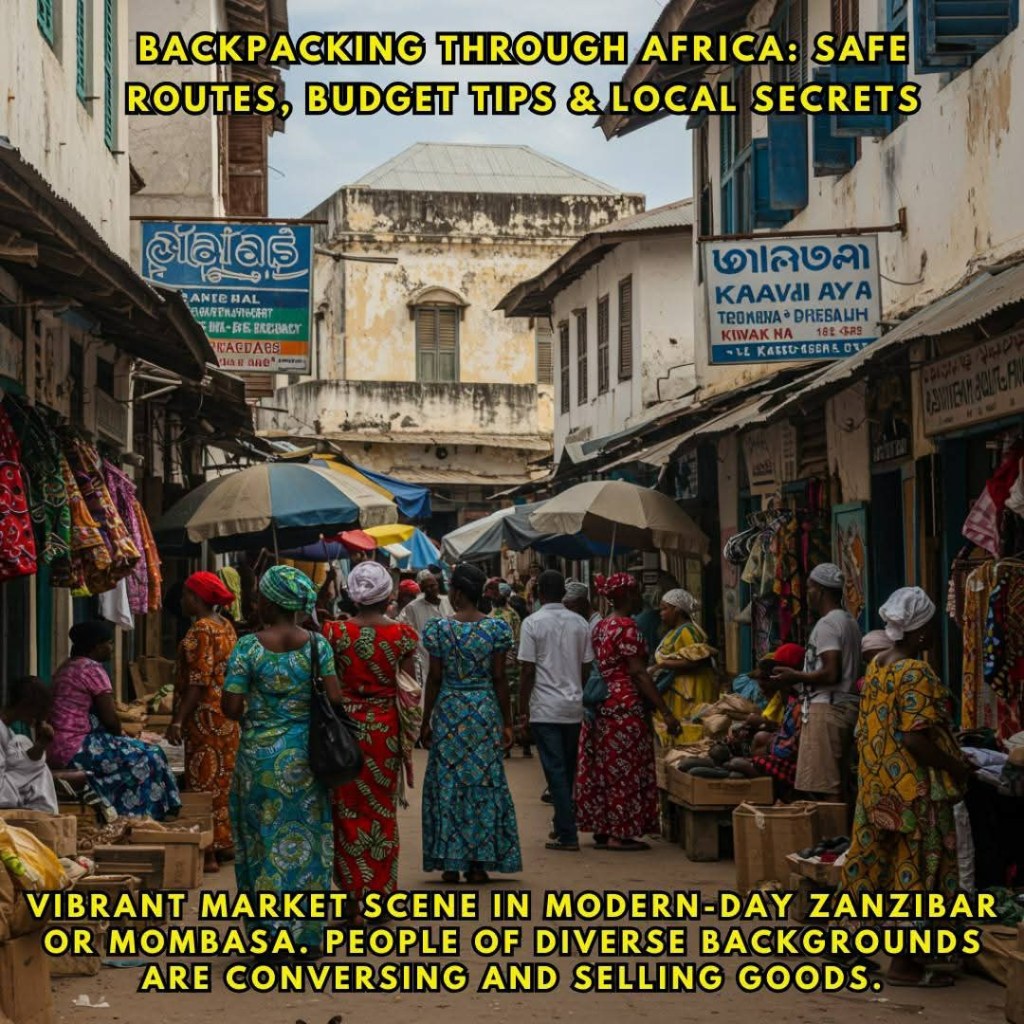
Cities like Kilwa, Mombasa, Zanzibar, and Lamu became thriving commercial hubs, part of a vast Indian Ocean trade network that connected Africa with Arabia, Persia, and even India. This constant interaction naturally led to extensive linguistic borrowing.
As trade flourished, involving goods like gold, ivory, spices, and slaves, so too did the exchange of ideas, technologies, and religious practices. Islam spread alongside trade, and Arabic became the language of commerce, religion, and scholarship. Consequently, a vast number of Arabic words were absorbed into the nascent Swahili dialects.
These loanwords enriched Swahili’s vocabulary, particularly in areas related to trade (e.g., biashara – business, from Arabic tijara), religion (e.g., sala – prayer, from Arabic salat; kitabu – book, from Arabic kitāb), administration (e.g., serikali – government, from Arabic hukuma), and even everyday concepts.
It is estimated that Arabic loanwords constitute up to 30-35% of the Swahili lexicon, a significant proportion that gives the language its unique character and flavor. The name “Swahili” itself is derived from the Arabic word sahil, meaning “coast,” thus Sawāhil refers to “coastal people” or “coastal language.”
Beyond Arabic, other linguistic influences, though less extensive, also contributed to Swahili’s development.
Persian traders introduced some words, especially related to seafaring and specialized goods. Later, European colonial powers like the Portuguese, Germans, and British left their mark. Portuguese words, for instance, were incorporated during their brief but impactful presence along the coast (e.g., meza – table, from Portuguese mesa; gereza – prison, from Portuguese igreja meaning church, but used for prison in colonial contexts).
Similarly, terms from German and English found their way into the language during their respective colonial administrations, particularly for modern concepts and technologies.
The evolution of Swahili was a dynamic process. Over centuries, the various coastal Bantu dialects intermingled and adapted, with the Zanzibar dialect (Kiunguja) eventually gaining prominence due to the island’s central role in trade.
In the early 20th century, efforts were made to standardize Swahili, largely by missionaries and colonial administrators who recognized its potential as a lingua franca.
This standardization, which involved selecting the Kiunguja dialect as the basis, facilitated the production of textbooks, dictionaries, and literary works, paving the way for its wider adoption in education, media, and administration.
Today, Swahili is an official language of Tanzania, Kenya, and Uganda, and is widely spoken in Rwanda, Burundi, the Democratic Republic of Congo, Mozambique, and even parts of Somalia, the Comoros, and Malawi. It serves as a vital bridge language, enabling communication among diverse ethnic groups and fostering a sense of regional identity.
It is a testament to Africa’s long history of global interaction, demonstrating how cultures can blend to create something truly new and powerful.
Swahili stands as a living linguistic monument to the coastal encounters, ancient trade routes, and enduring African heritage that shaped its fascinating origins.
africanculture #africanhistory #Afrique #african #africa #swahili
 Hi welcome to my website