
JUNE 12. HOW MKO ABIOLA DIED. AN ACCOUNT OF GEN. ABDULSALAMI ABUBAKAR.
JUNE 12. HOW MKO ABIOLA DIED. AN ACCOUNT OF GEN. ABDULSALAMI ABUBAKAR.
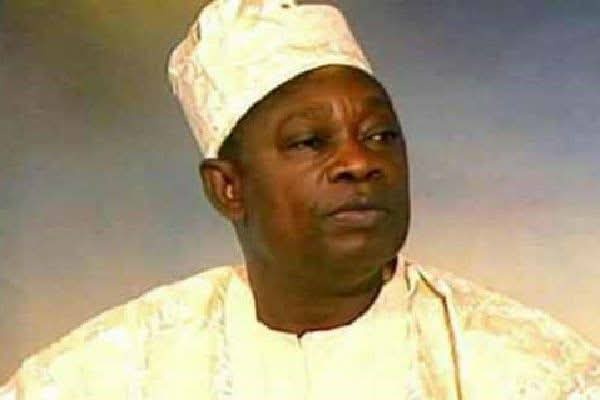
Moshood Abiola is widely considered a symbol of democracy in Nigeria due to his role in the 1993 presidential election and his subsequent imprisonment. He was a popular candidate, winning the election, but the result was annulled by the military government, sparking widespread protests and a national crisis. While not formally a “hero” in the traditional sense, his story became a powerful symbol of the struggle for democracy in Nigeria and his death cemented his legacy as a champion of the cause.
Abiola’s victory in the June 12, 1993, election was a watershed moment in Nigerian history. It was a landmark election for the country, as it was the first presidential election since the Second Republic was ended by a military coup in 1983.
The military government, led by General Ibrahim Babangida, annulled the election, citing security concerns. This decision sparked massive protests across the country and led to Abiola’s imprisonment.
Abiola’s imprisonment and eventual death became a rallying cry for pro-democracy activists. He was seen as a victim of the military regime and a symbol of the fight for democratic rule.
Abiola’s influence extended across different geopolitical zones and religious divisions, which was rare in Nigerian politics at the time. He was a strong political figure and his death further solidified his legacy as a symbol of democracy.
The pressure from civil society and international community eventually led to the restoration of democracy in Nigeria in 1999. The date of the restored democracy, June 12, is now commemorated as Democracy Day in Nigeria.
Former Head of State General Abdulsalami Abubakar has broken his silence on how winner of the June 12, 1993 presidential election late Moshood Kashimawo Abiola died while in detention.
Abiola died on July 7, 1998 when Abubakar was in power.The former Head of State denied insinuations the late business mogul was poisoned. Rather, he said he died after falling ill while receiving a delegation from the United States of America.
“Well, I smile because there were lots of allegations here and there that we killed Abiola. As always when I am talking about late Abiola, I still thank God for directing me on things to do when he gave me the leadership of this country.”
“On the day Moshood Abiola passed away, may he rest in peace, two to three things make me always say I thank my God for the guidance He gave me.One was I received a delegation from America headed by Pickering who was then, I think, the secretary of state or so. In his team I remember very well, was Susan Rice. I remember her very well because of the role she played later”.
“So after the normal courtesy and discussion we had, when they were leaving my office, Pickering said “Your Excellency we made a request to see Moshood Abiola but we were denied”, so I said “Why were you denied? who denied you?” There and then I made a decision, I said “Look, you will see Moshood definitely, I overruled whoever said you cannot see him”. So I now called my chief security officer, I said “Please make arrangement for this team to see Abiola,” that is one point.”
“Now during the incarceration of Moshood Abiola, except his personal doctor, to my knowledge, no member of his family saw him. So when I became head of state, based on consultation and interaction together with Ambassador Babagana Kingibe, I gave the family a date that they could come and see him.”
“So a day before he died, his family came to Abuja to see him. For one reason or the other, the whole family could not see him at the same time, so it was agreed that when this group of his family will see him today, tomorrow the next team will see him.
“So they saw him like yesterday, now this team from US came to see me and I said they could see him. Normally it was in the evenings the family go and see him. So because I had authorized the American team to see him, so the other part of the family were waiting to see him.
“So, it was at this meeting when the American team was meeting Abiola he fell sick and suddenly the security officers called the medical team to come and attend to him, and when they saw the situation they said it was severe and they needed to take him to the medical centre. So it was the medical team plus the American team that took him to the medical centre, unfortunately at the medical centre he gave up.”
“Then my security chief called and said “I have bad news for you”, I asked what it was, he said “Abiola is dead”. I was shocked. He told me he was there with the American team, at that time I was staying in the barracks, I had not moved to the villa, so I said okay, let him take the American team to my house, I will meet them at the house; so I closed from the office, and went there.”
“The issue now was how do I break the news to Abiola’s family and how do we tell the world Abiola had passed on. I must be thankful to God and again to Ambassador Kingibe because we called on him and asked him to bring the family of Abiola. So when they came I broke the news, that unfortunately this is what has happened.”
As you would expect, the family broke down and they started crying, I can’t remember which of the ladies, I held her, she was crying, sobbing, it was then Susan Rice, that is why I always remember her, said “Mr President that is not your job, let me do it”, so she now held this lady until she settled down and she calmed down a little bit.
“Then we had to summon my second in command and other people and then strategized on how to break the news.”
“That is why I always say I thank my God for guiding me, if I hadn’t said the American team should go and meet Abiola certainly I don’t know how I would explain to the world that Abiola had died, and the American team will they believe me that we had not killed Abiola at that time when they were requesting to see him?”.January 23, 2022 by The Nation.
On 6 June 2018, Muhammadu Buhari, President of Nigeria declared 12 June as the new date for the celebration of Democracy Day. Nigeria’s Democracy Day was formally celebrated every 29 May, the day in 1999 that former military Head of State, Abdulsalami Abubakar, handed over power to an elected president, Olusegun Obasanjo of the People’s Democratic Party (PDP) and the date when, for the second time in the history of Nigeria, an elected civilian administration took over from a military government.
On 6 June 2018, Muhammadu Buhari in a public statement changed the Democracy Day to 12 June in honor of the 12 June 1993, presidential election and it’s winner, Moshood Abiola, who died in prison. Buhari’s statement partly read: “for the past 18 years, Nigerians have been celebrating May 29, as Democracy Day. That was the date when, for the second time in our history, an elected civilian administration took over from a military government. The first time this happened was on 1 October 1979. But in the view of Nigerians, as shared by his administration, June 12, 1993, was far more symbolic of democracy in the Nigerian context than May 29 or even the October 1. June 12, 1993 was the day when Nigerians in millions expressed their democratic will in what was undisputedly the freeest, fairest and most peaceful elections since our independence. The fact that the outcome of that election was not upheld by the then military government doesn’t distract from the democratic credential of that process. Accordingly, after due consultation, the Federal Government has decided, henceforth, June 12 will be celebrated as Democracy Day. Therefore, the government has decided to award posthumously the highest honour of the land GCFR, to the late Chief M.K.O. Abiola, the presumed winner of the June 12, 1993 cancelled election”.
On 11 June 2019, Muhammadu Buhari assented to a Bill amending 29 May previously set aside as a public holiday for the celebration. The public holiday amendment Act was passed by the National Assembly of Nigeria following a Bill introduced and sponsored by Kayode Oladele, Human Rights Lawyer and Member of the House of Representatives ( Eighth Assembly) representing Yewa North/Imeko-Afon Federal Constituency of Ogun State.
From 1972 until his death, Moshood Abiola was conferred with 197 traditional titles by 68 different communities in Nigeria, in response to his having provided financial assistance in the construction of 63 secondary schools, 121 mosques and churches, 41 libraries, 21 water projects in 24 states of Nigeria, and he was grand patron to 149 societies or associations in Nigeria.
In addition to his work in Nigeria, Abiola supported the Southern African Liberation movements from the 1970s, and he sponsored the campaign to win reparations for slavery and colonialism in Africa and the diaspora. He personally communicated with every African head of state, and every head of state in the black diaspora to ensure that Africans would speak with one voice on the issues.
May his soul continue to rest in peace.
 Hi welcome to my website