
The Mbari Club: Cradle of Postcolonial African Art and Literature
The Mbari Club: Cradle of Postcolonial African Art and Literature
Chinua Achebe. Wole Soyinka. Christopher Okigbo. Demas Nwoko. Lindsay Barrett. These names ring a bell for many Nigerians and admirers of African arts and letters. Beyond being individually distinguished, these men were all members of the prestigious Mbari Art and Writers Club, which flourished in the years following Nigeria’s independence.
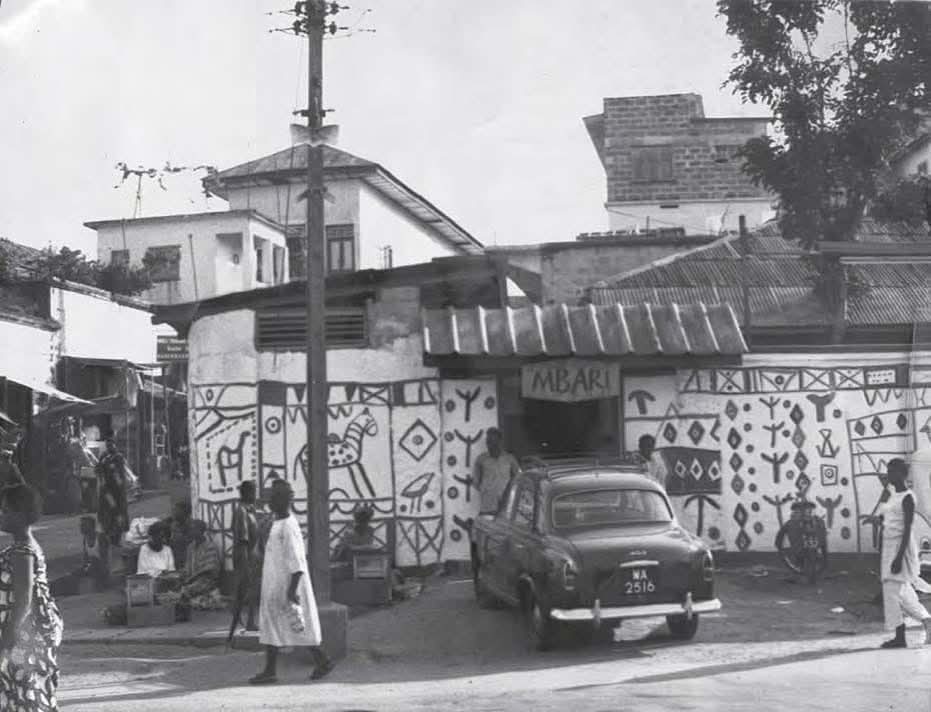
Founded in 1961 in Ibadan, the Mbari Club was established by a collective of young, visionary Nigerian writers, artists, musicians, dramatists, and intellectuals. Located in a converted Lebanese stall at Dugbe Market, the space was modest, but its influence was monumental.
“Mbari” is an Igbo word meaning “creation” or “house of life.” It became both a symbol and a sanctuary for artistic freedom, cultural pride, and postcolonial identity.
Spearheaded by German scholar and literary promoter Ulli Beier — who also founded the influential Black Orpheus magazine — Mbari served as a bridge between African and diaspora intellectuals. The club published and promoted the works of African authors when opportunities were scarce. Writers such as J.P. Clark, Wole Soyinka, and Christopher Okigbo were among those whose early works found a platform through Mbari Publications.
The club wasn’t only literary, it was a vibrant, multidisciplinary hub. Visual artists like Demas Nwoko, Bruce Onobrakpeya, and Jacob Lawrence exhibited there. The club also hosted African-American literary legends such as Langston Hughes and provided a stage for pioneering dramatists. The premieres of Wole Soyinka’s “The Trials of Brother Jero” and J.P. Clark’s “Song of a Goat” took place within its walls.
Significantly, it was at Mbari that a young Fela Anikulapo-Kuti first made his debut as a bandleader — years before he became the iconic Afrobeat revolutionary. The club nurtured not just talent, but radical expression and cultural experimentation.
Mbari soon expanded beyond Ibadan, with branches in Oshogbo and Enugu, helping to spread the artistic renaissance across Nigeria. It created a pan-African space where voices from Ghana, South Africa, the Caribbean, and the United States found common ground.
Sadly, the outbreak of the Nigerian Civil War in 1967 brought this cultural flowering to a halt. The conflict scattered many of its key figures and disrupted what was arguably the most significant artistic movement in postcolonial Africa.
 Hi welcome to my website