No Language Group in South Africa Can Claim Pure Lineage — We’re All Woven Into Africa’s Story
No Language Group in South Africa Can Claim Pure Lineage — We’re All Woven Into Africa’s Story
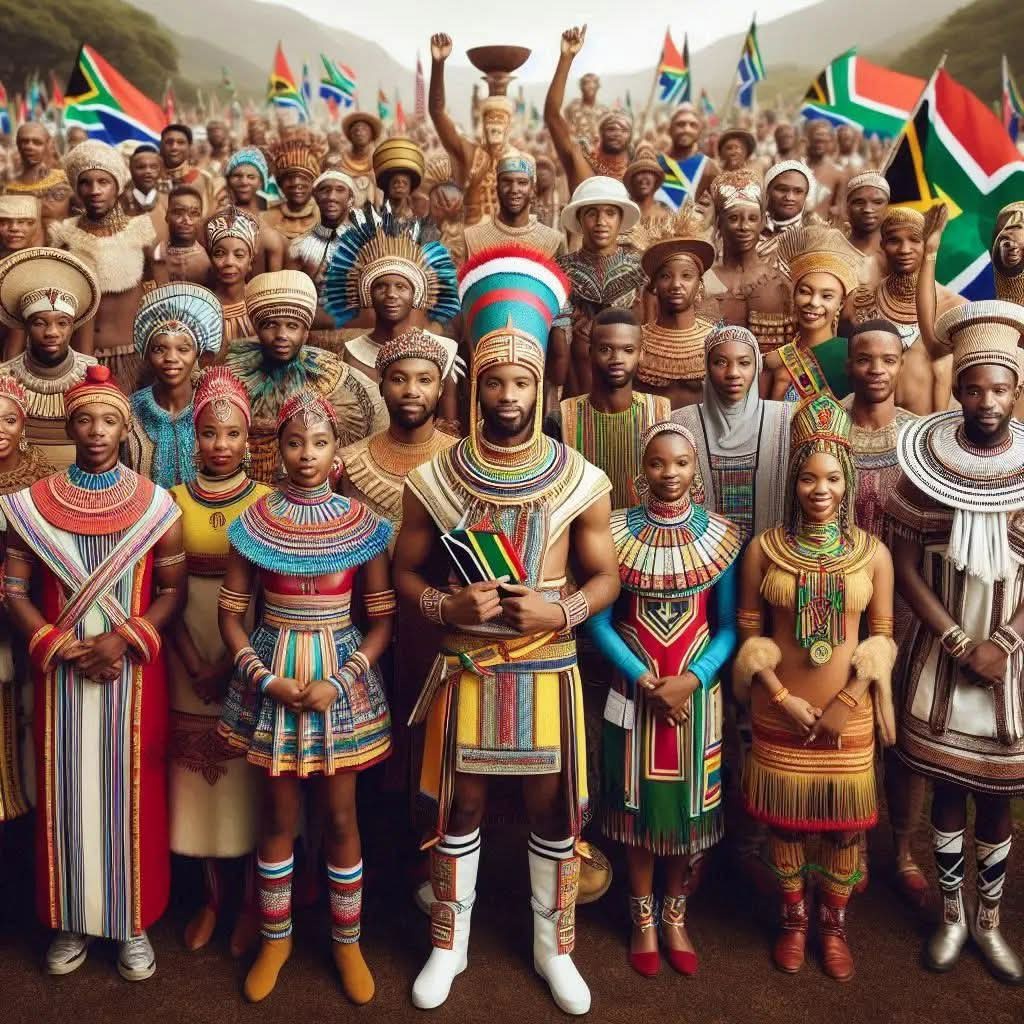
South Africa is known for its diversity — eleven official languages, countless customs, and vibrant traditions. But beneath all the beauty and pride, there’s a deeper truth we often overlook: no language group in this country can say, with full honesty, that their bloodline is untouched by others. Whether you speak isiZulu, Sesotho, isiXhosa, Xitsonga, Tshivenda, Setswana, Sepedi, or any other indigenous language, your story is not isolated — it is part of a much older African journey.
There Is No Such Thing as “Pure”
Many of us grow up hearing stories that paint our identity as pure or untouched. But the idea of a people who have never mixed with others is a myth — a comforting one maybe, but still a myth. Long before colonizers set foot here and carved up the land, our ancestors were moving, trading, marrying, and living across rivers, valleys, and mountains that today fall into different countries.
The Zulu and Xhosa people, for instance, share roots with other Nguni-speaking groups from further up the continent. The Sotho-Tswana nations have links that stretch into parts of present-day Zimbabwe, Botswana, and even Malawi. These were not borders — they were pathways. Cattle moved. People moved. Cultures grew side by side.
Bloodlines Don’t Obey Borders
Our great-grandparents married across rivers, across tribes, across regions. Royal families were known to marry outside their own kingdoms to build alliances or make peace. That means someone who proudly calls themselves Xhosa may have Sotho, Tsonga, or even Venda ancestry without knowing it. You’ll find Ndebele people with Zulu blood, Swati people with Pedi links, and Tsonga families with Mozambican roots stretching deep into the past.
And this isn’t just about kings and warriors — ordinary people fell in love too. They settled where the soil was good, where the rivers flowed, where life made sense. Culture was never a prison. It was always fluid, always changing, always mixing.
Our Ancestors Were Connected Long Before Borders
Many South Africans don’t realise that their songs, rituals, and even words have parallels across the continent. A naming ceremony in Limpopo may resemble one in Tanzania. Initiation rites practiced by the Basotho echo those done in Kenya. Clan praise names in KwaZulu-Natal carry the same structure as those in Zambia or Uganda.
These are not coincidences. They are proof that we belong to something bigger — a continent that was never meant to be broken into pieces by colonial maps.
We Are Not Strangers — We Are Family
When we start looking into our clan names, our praise poetry, and the origins of our traditions, we begin to see what the textbooks didn’t teach us: we are deeply connected. Language is not just sound — it’s history. It carries migrations, memories, and shared experiences. The reason so many of our languages have overlapping words and similar sentence structures is because we’ve been talking to each other — and living together — for centuries.
So, when someone says their culture is “pure” or “unmixed,” they are not honoring the ancestors — they are ignoring them. The truth is, our strength is in our connections, not in our separations.
The Truth That Heals
Colonialism didn’t just take land. It took identity. It told us that we were different, that our neighbours were our enemies, that our languages had nothing in common. But we’ve always known better. Deep down, we’ve always known that we are not strangers to one another.
In every language group in South Africa, you’ll find traces of another. That’s not a weakness — that’s what makes us powerful. It’s what makes us whole.
In Closing
To be South African is to carry many journeys in your veins. Your roots are not in one place — they stretch across valleys and rivers, beyond mountains and across borders. There is no “us” and “them” — only “we.” We are Africa, in different dialects, dancing to the same ancient rhythm.
We don’t need to claim purity. We need to embrace the truth: we are family.
 Hi welcome to my website