
When the first humans arrived in New Zealand,
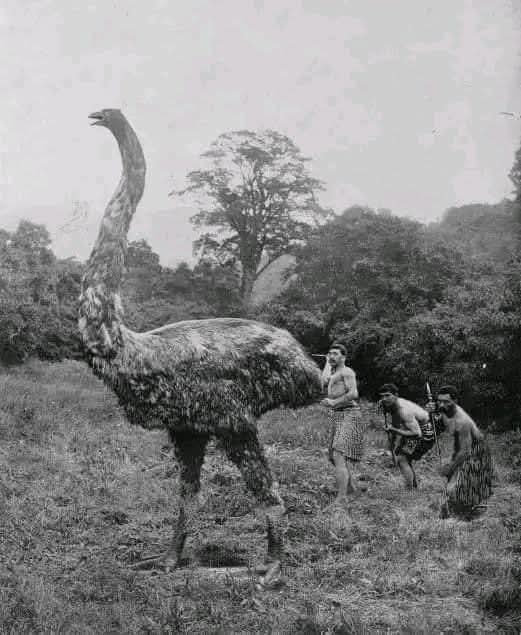
When the first humans arrived in New Zealand, they encountered an extraordinary species of giant, wingless birds known as Moas, belonging to the family Dinornithidae. Unlike their relatives such as cassowaries and emus, which still had wings, Moas had completely lost their wing bones through evolution, making them truly wingless. This unique adaptation set them apart from other large flightless birds found elsewhere.
Moas were remarkable not only for their lack of wings but also for their immense size. The largest species of Moa could grow up to four meters tall, making them the tallest birds to have ever lived on the continent. Their towering stature made them dominant herbivores in New Zealand’s prehistoric ecosystems, occupying a niche similar to that of large mammals on other continents.
Despite their impressive size and dominance, Moas faced drastic changes with the arrival of humans, who hunted them extensively. This hunting pressure, combined with habitat changes, ultimately led to their extinction. Today, Moas remain an iconic symbol of New Zealand’s unique natural history and the dramatic impact humans can have on isolated ecosystems.
 Hi welcome to my website