
The Painted Mud-Village of Burkina Faso
The Painted Mud-Village of Burkina Faso🇧🇫
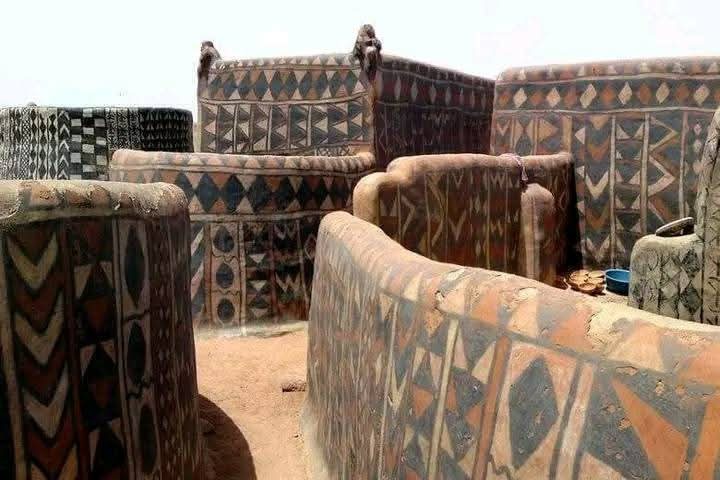
Home to around 18 million people, Burkina Faso in western Africa is not one of the world’s wealthiest nations. But what the people there lack in finances and material possessions they make up for in abundance with their rich cultural creativity. Since around the 16th century, women in the small village of Tiebele have been elaborately illustrating the walls of their traditional mud-brick homes.
The village, close to the Ghanaian border, is home to the Kassena people and there exists no ethic group in Burkino Fasa that has been around as long as them. Men construct the homes – known as sukhala – from materials available easily and locally; mud, wood and straw. Cow dung is mixed together with soil which allows the shape to become extremely malleable. Tribal warring has been a thorn in the history of the small village so homes have always been afforded defensive features, first and foremost. Walls are built a foot thick and usually without windows, but there are some crevasses for light to pass through. Some doors are just a few feet high, including the tribe’s chief, which makes gaining entry for enemies cumbersome and difficult.
Mud buildings, which are incredibly cheap to build, provide far greater insulation than a modern home and when properly constructed can easily last hundreds of years. The downside is that they are not at all easy to assemble, require strenuous manual labour, and are easily warped and damaged by wind, sun and rain.
The Kassena take the utmost pride in decorating the walls of their village homes and the job is done exclusively by the women, often communally. Murals are designed on homes using mud, water, clay and chalk and emerge as a combination of black, white and red. Paintbrushes are made from guinea-fowl feathers. After murals are completed walls are then polished with stone, with painstaking care taken not to smudge or blur the designs into one another

 Hi welcome to my website