Africa Was Smelting Steel While Europe Was Still in the Dark Ages
Africa Was Smelting Steel While Europe Was Still in the Dark Ages
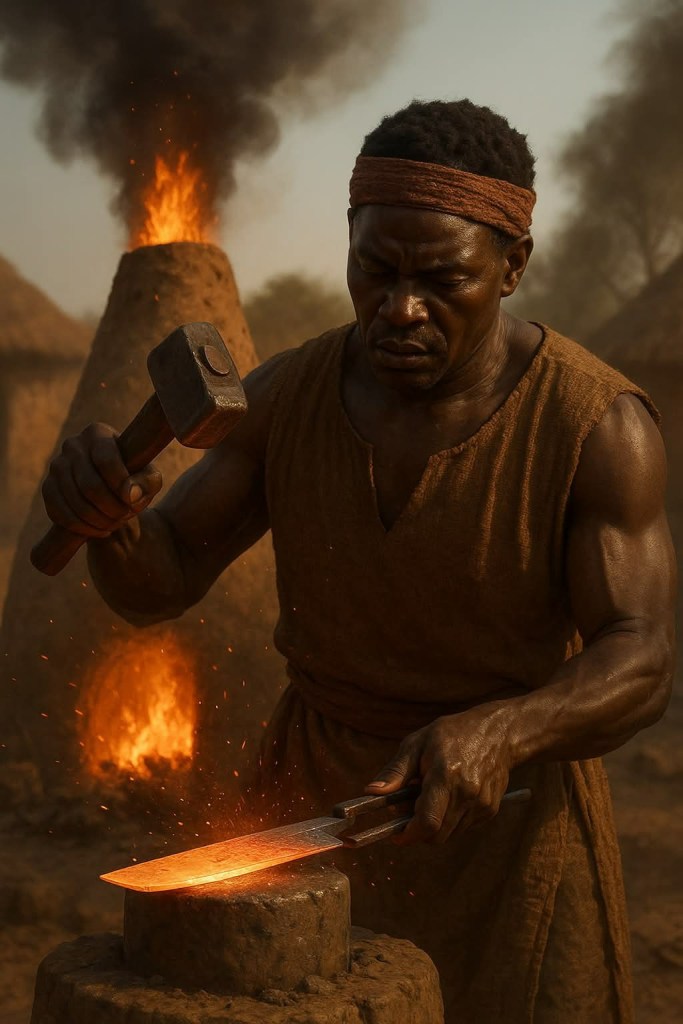
In the remote Haya region of present-day Tanzania, African blacksmiths were performing a miracle of metallurgy more than 2,000 years ago.
They weren’t just shaping iron — they were smelting high-grade carbon steel, a feat considered impossible for pre-industrial societies by many Western historians.
Using advanced forced-draft furnaces, powered by cleverly designed bellows and natural airflows, the Haya people reached smelting temperatures over 1,800°C. This allowed them to control carbon content precisely — creating a steel that was strong, flexible, and shockingly modern in quality.
Meanwhile, across much of Europe during the so-called “Dark Ages” (roughly 500–1000 CE), metallurgy was still basic. Europeans used bloomeries that couldn’t reach the same heat or precision. It wasn’t until the late Middle Ages that Europe began to produce similar-quality steel — more than a thousand years later.
So how did Africa lose its place in the history books?
European colonizers and early scholars often dismissed African technological achievements. They refused to believe such complex innovations could come from the continent. As a result, African science was buried under layers of colonial bias.
Today, archaeologists and African historians are working to change that — to shine a light on the real pioneers of steel.
AncientAfrica
AfricanInventions
HiddenHistory
BlackExcellence
ForgottenGenius
 Hi welcome to my website