
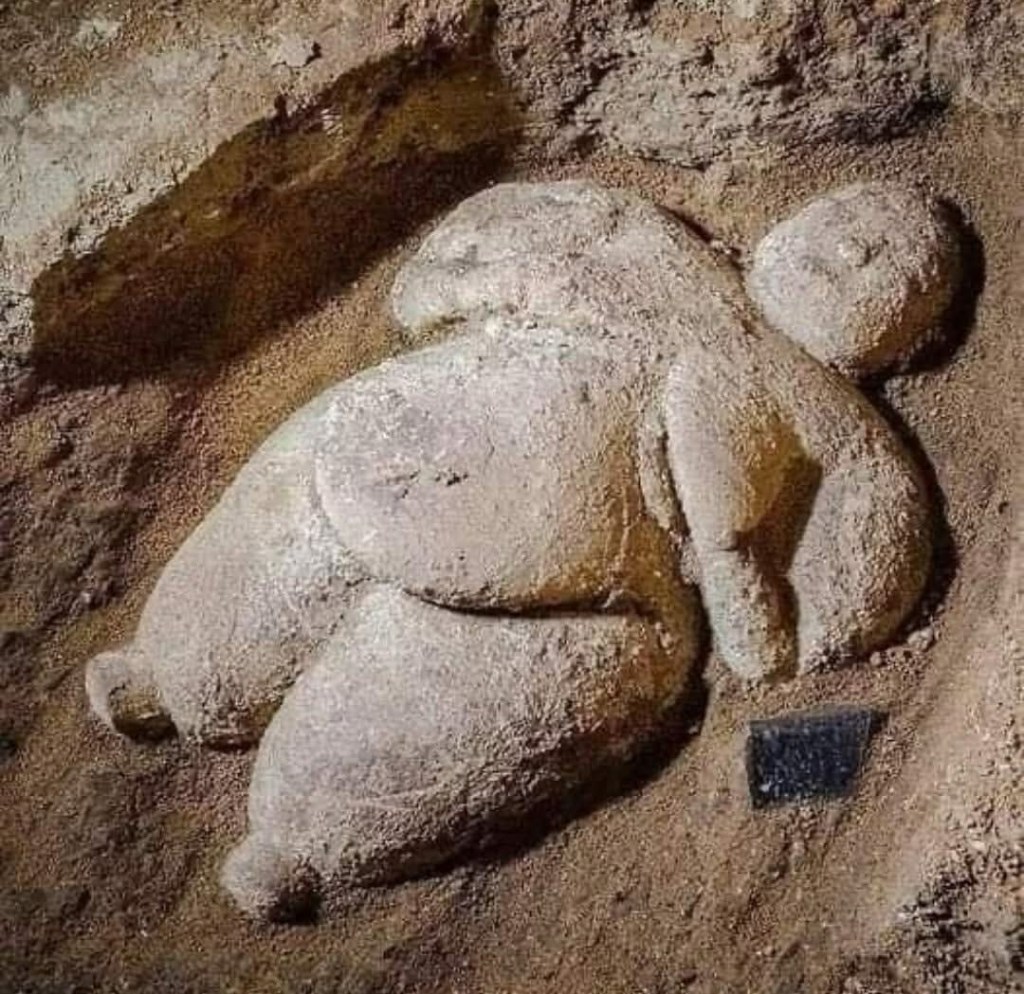
8,000-year-old ‘goddess figurine’ in central Anatolia, in Türkiye.
8,000-year-old ‘goddess figurine’ in central Anatolia, in Türkiye.
The Riddle of Çatalhöyük.
Archaeologists excavating the Neolithic settlement of Çatalhöyük in central Türkiye have discovered a remarkably intact goddess figurine.
Measuring 17 cm in length and weighing 1 kg, the figurine features exaggerated feminine traits, including large breasts, hips, and thighs, with small hands and feet. Its polished surface and finely incised details make it a rare find. It was deliberately placed under a platform near a piece of obsidian, suggesting a ritualistic purpose.
Dating back to between 7100 and 6000 BCE, the figurine is believed to represent either a fertility goddess!
Çatalhöyük, a site founded during the transition from hunting-gathering to farming, has revealed domestic structures without dedicated public buildings, where residents buried their dead under their homes.
Well-crafted piece, The Riddle of Çatalhöyük.
What sets this figurine apart from so many others is not its appearance, but its craftsmanship. Goddess figurines at Catalhöyük usually depict a woman with her hair tied in a bun, plump, with sagging breasts and a pronounced belly, suggesting maturity.
The figurine in question contains a few unusual features: elaborate fat rolls on the limbs and neck; the arms separated from the torso; and an undercut below the belly to separate it from the rest of the body. Such detail is only possible with thin tools, like flint or obsidian, in the hands of a practiced artisan. Millennia of weathering in the soil has erased evidence of the figurine’s handling.
While of exceptional quality, We have no information whether this statue had any special significance?! Is this a Goddess figure or a mature Woman figure?!
Goddess figurines were common in the Neolithic period, crafted throughout southeastern Europe, the Middle East and Anatolia, the region in central Turkey where Çatalhöyük once flourished. While they have long symbolized fertility, a more recent theory suggests otherwise.
 Hi welcome to my website