
How Empires Stole Africa’s Voice
How Empires Stole Africa’s Voice
Long before European empires arrived, Africa spoke with a thousand voices. From the deserts of Mali to the forests of Congo, the continent told its stories through oral traditions, songs, poetry, and sacred drums. Elders passed wisdom from one generation to another, griots preserved history in music, and kings and queens ruled with voices that carried authority and pride.
But when the empires came, they did not come only for gold, ivory, and land — they also came for power over words.
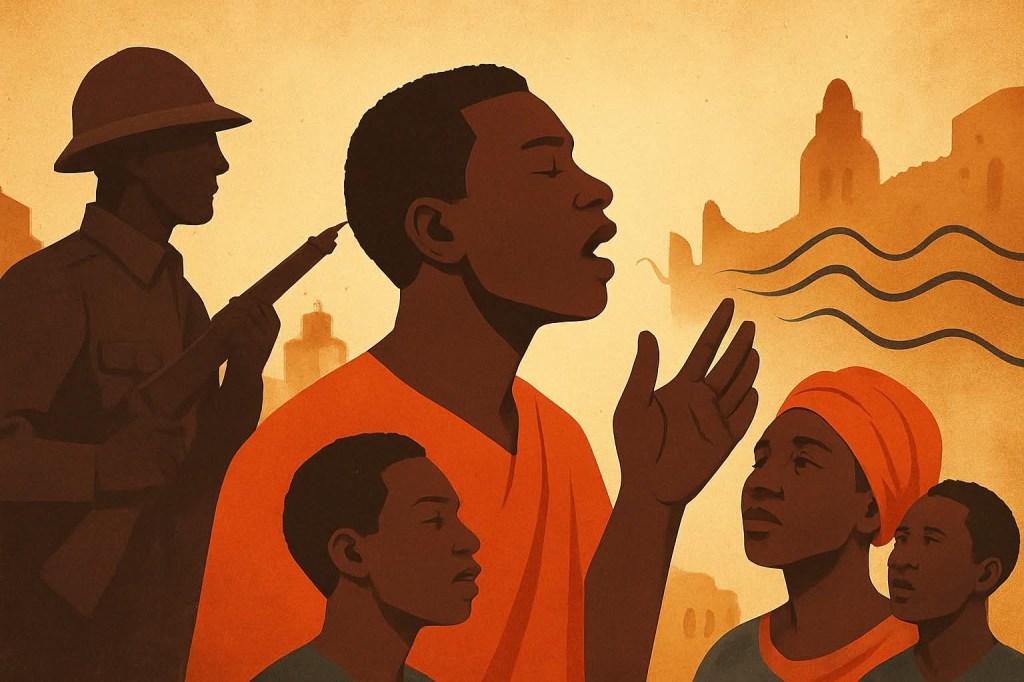
Schools forced African children to abandon their own languages and learn foreign ones. In many places, speaking your mother tongue was punished. Leaders who resisted were silenced, their words erased from the record. Newspapers were censored, and storytellers were told their wisdom was “primitive.” Slowly, the rhythm of Africa’s voice was drowned out by the noise of colonial rule.
Even history books betrayed Africa. Empires wrote Africa’s past as if it began only when they arrived, ignoring the brilliance of Timbuktu’s libraries, the wealth of Great Zimbabwe, or the philosophy of Ethiopia’s ancient kingdoms. The continent that had spoken for millennia was painted as “voiceless.”
But Africa’s voice was never fully stolen. It hid in songs sung at night, in secret gatherings, in stories whispered from grandmother to child. And when the time came, it rose again — in the speeches of leaders like Kwame Nkrumah, in the writings of Chinua Achebe, in the music of Fela Kuti.
Today, Africa speaks louder than ever, reclaiming its languages, honoring its storytellers, and writing its own history. The voice that empires tried to silence now echoes across the world — strong, proud, and unbroken.
AfricanHistory #ColonialLegacy #StolenHeritage #VoicesOfAfrica #HiddenTruths
 Hi welcome to my website