
Meet Lieutenant General Onyeabor Azubuike Ihejirika: The First Igbo Army Chief Who Reshaped Nigeria’s War on Terror
Meet Lieutenant General Onyeabor Azubuike Ihejirika: The First Igbo Army Chief Who Reshaped Nigeria’s War on Terror
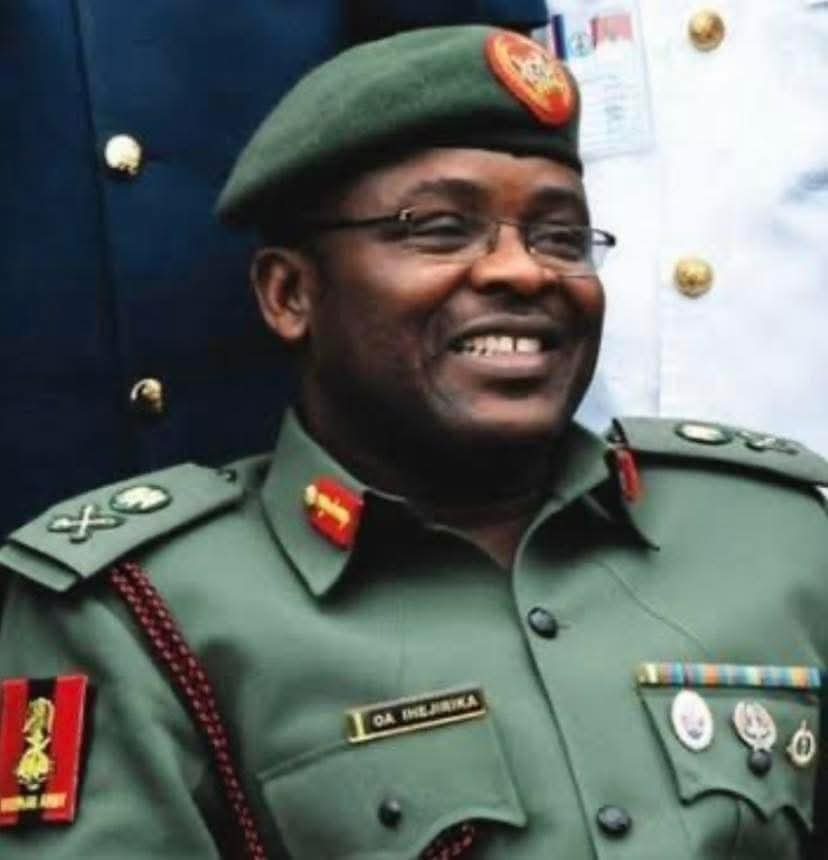
Lieutenant General Onyeabor Azubuike Ihejirika, CFR (born February 13, 1956), is a retired Nigerian Army officer best known as the Chief of Army Staff (COAS) from September 2010 to January 2014.
His time in office was historic for two reasons: he was the first Igbo officer to become Army Chief since the Civil War (1967–1970), and he introduced major reforms that reshaped Nigeria’s fight against Boko Haram.
Early Life and Career
Ihejirika was born in Isuikwuato, Abia State. After finishing secondary school in 1975, he entered the Nigerian Defence Academy and was commissioned as a Second Lieutenant in December 1977 with the Army Engineers.
He furthered his education with a degree in Quantity Surveying from Ahmadu Bello University, and attended top military schools including the Armed Forces Command and Staff College, Jaji, and the National War College. Over the years, he served in many key positions such as:
– Commander, 41 Division Engineers
– General Officer Commanding (GOC) 1 Division and 81 Division
– Principal Staff Officer at Defence and Army Headquarters
– Directing Staff at Command and Staff College
These roles shaped him into the leader he would later become.
Chief of Army Staff (2010–2014)
When President Goodluck Jonathan appointed him in 2010, Nigeria was facing the full force of Boko Haram’s insurgency. Ihejirika responded with bold reforms:
- Expansion of Army Presence – He set up new brigades in the North-East, where Boko Haram was most active.
- Counter-Terrorism Training** – He created schools for counter-terrorism and counter-insurgency, giving soldiers the skills needed for modern warfare.
- Reforms in Discipline and Morale** – He improved barracks, training, and warned soldiers against aiding insurgents, focusing on loyalty and effectiveness.
- Public Accountability** – In 2012, he openly revealed that Boko Haram had already killed more than 3,000 Nigerians, pushing the urgency for action.
Controversy and Clearance
In 2014, he faced accusations of funding Boko Haram, claims he strongly denied. The State Security Service later cleared his name, praising him instead for his tough stance against the group.
Legacy
After retirement in 2014, Ihejirika was given the traditional title “Dike Abia” (Warrior of Abia) by his community. He is remembered for:
- Strengthening the Army during a time of crisis
- Building Nigeria’s first counter-terrorism training structures
- Serving as the first Igbo Army Chief in nearly 40 years, symbolizing post-war unity
Today, he remains a respected voice in Nigeria’s military and national security circles.
 Hi welcome to my website