
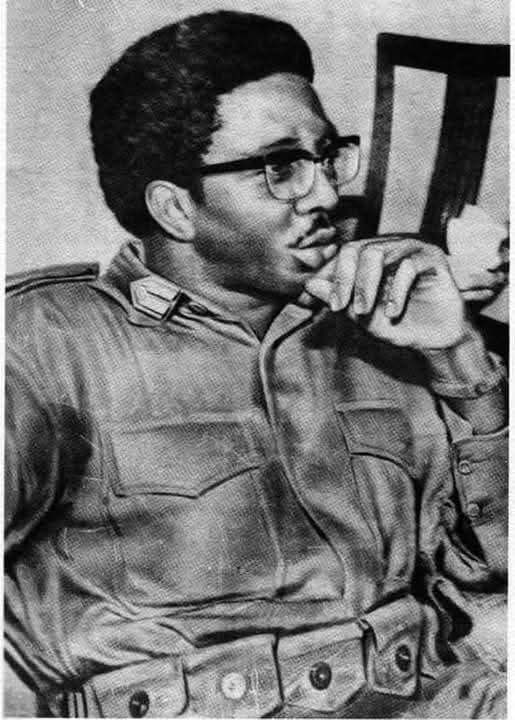
Colonel Victor Banjo (Army Number: N.16)
Colonel Victor Banjo (Army Number: N.16)
Colonel Victor Adebukunola Banjo was one of the earliest Nigerian officers to be commissioned after independence, reflected in his low Army Number (N.16). Such numbers indicated seniority and the pioneering status of officers trained abroad, often in the United Kingdom, who formed the backbone of Nigeria’s post-independence military elite.
Banjo’s career and fate became deeply entwined with the turmoil of the Nigerian Civil War. Initially imprisoned by the Federal Government under suspicions of involvement in the January 1966 coup and subsequent unrest, he was later released by Colonel Odumegwu Ojukwu, then Head of State of Biafra. Ojukwu sought to leverage Banjo’s military expertise for Biafra’s campaigns, including the push into Nigeria’s Midwest in 1967.
However, questions over Banjo’s loyalty soon arose. Ojukwu accused him, alongside Major Phillip Alale, Major Sam Agbam, and Major Emmanuel Ifeajuna, of conspiring to overthrow Biafra’s leadership. In September 1967, after a military tribunal, Banjo and the others were executed in Enugu.
Banjo’s story reflects both the tragic personal costs of Nigeria’s fractious civil war and the larger political uncertainties of a nation where even the most senior officers could swiftly fall from grace.
(For deeper reference: A. Madiebo, The Nigerian Revolution and the Biafran War; A. Siollun, Oil, Politics and Violence: Nigeria’s Military Coup Culture, 1966–1976.)
 Hi welcome to my website