
MY DAUGHTER’S SHAME. 23
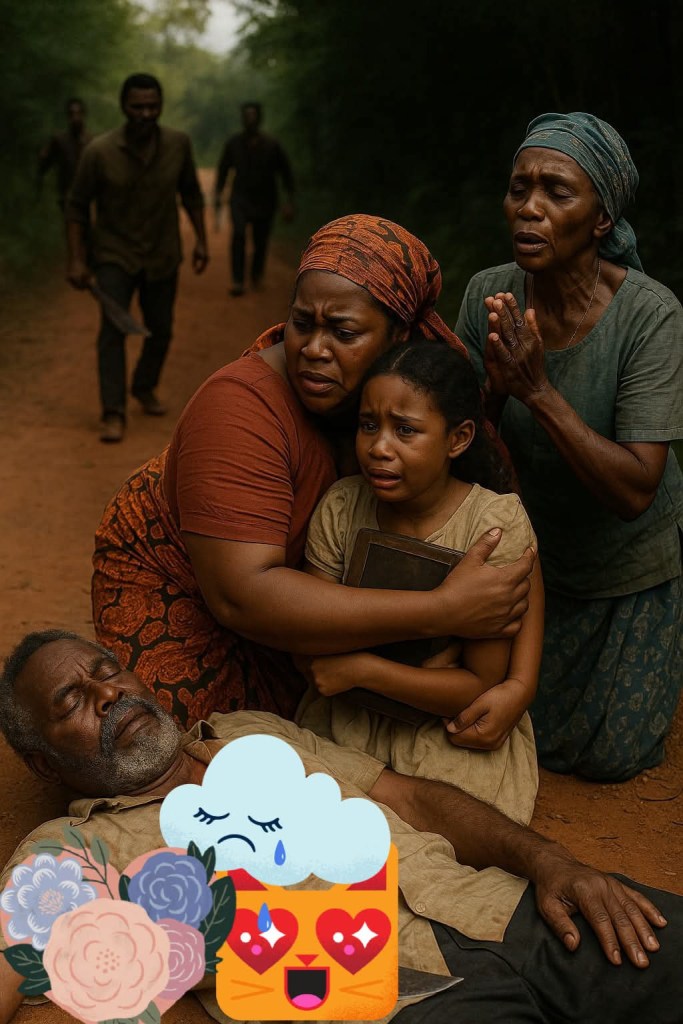
They said she carried witchcraft in her blood. They gathered to curse her at the gate. But when the cart rolled at dawn, machetes were waiting in the trees.”
The hut was quiet after Ada’s sickness eased, but the silence was heavy, like a pause before thunder. Chiamaka rarely left her mother’s side, her small hands always wrapped around Ada’s fingers as if afraid that if she let go, her mother would disappear again. Ada smiled more now, though her body was still weak, and her eyes often filled with tears when she looked at her daughter.
Mama prayed every evening louder than before, her voice cracking as she declared, “God, You cannot bring us this far to shame us now. You lifted her from whispers, You lifted her from death, You lifted her from sickness. Continue to lift her until shame bows at her feet.”
Papa, however, grew more silent. He sat by the gate each night, his machete gleaming by firelight, his eyes watching the road, his jaw tight. He knew men’s whispers carried sharper blades than machetes, and he knew the uncles were not done.
In the city, the school wondered why Chiamaka had not returned. The headmistress wrote letters, urging Ada to send her back, warning that the competition she had won was only the beginning, that her future could not wait. Traders who passed between the town and the village carried these words like urgent fire, pressing them into Ada’s ears. But Ada hesitated, torn between the pride of seeing her daughter shine and the fear of letting her go again.
One evening, as the sky burned orange, Ada held her daughter’s face in her hands. “Do you want to return to the city?” she asked softly.
Chiamaka’s eyes filled with tears. “I want to, Mama. I want to learn more, I want to speak more. But I am afraid to leave you. What if I go and you fall sick again? What if I return and you are gone?”
Ada wept silently, pulling her daughter close. “I will live, my child. I will live until I see you stand where no one can touch you. Do not let fear chain you. Your wings were made to fly.”
But the uncles had been listening. Through cracks in walls, through whispers at the stream, through eyes that watched every movement of our family, they heard enough to craft a plan darker than any before.
One night, as the moon rose high, they gathered in secret. The eldest spoke, his voice low and sharp. “We tried to strike in the night. We failed. We tried to turn the village against them. We failed. Now she shines in the city, and soon the world will bow to her. If we wait longer, we will be the ones bowing. We must end it before she returns.”
Another asked, “How? The machete could not silence her, the sickness could not hold her.”
The eldest leaned closer, his eyes gleaming. “If we cannot kill her body, we will kill her spirit. We will turn her own people against her until she becomes a stranger in her own bloodline.”
Their whispers carried venom that night, and the next morning, lies began to spread like fire in dry grass. At the stream, women whispered, “Did you hear? The girl’s light is not from God. She is using strange powers. That is why she shines.” In the market, men murmured, “Her mother pretends she was sick, but we know. They are sacrificing in secret to feed the girl’s power.” Children began to chant strange songs, mocking Chiamaka as she walked past, their voices cruel: “Shame’s daughter! Witch’s child!”
Chiamaka cried that night, her small body trembling in Ada’s arms. “Mama, why do they hate me so much? I never hurt them. I only want to learn.”
Ada’s tears fell on her daughter’s face. “Because darkness always hates light, my child. But you must not dim. Even when they spit, even when they curse, remember—you are not shame.”
But the lies grew louder. Soon, some villagers refused to buy from Ada in the market. They avoided our family, whispering that we carried a curse that had now turned into witchcraft. The very people who once clapped when Chiamaka shone were now the same ones casting stones with their words.
One evening, Mama stormed into the compound, her old body trembling with anger. “Let them talk! Let them lie! Did they not call me barren? Did they not call Ada cursed? And yet, here she is alive, here is her daughter shining brighter than their sons who mock her! Their words will choke them!” She lifted her hands, tears streaming. “Jehovah, fight for us again. Do not let shame return.”
Papa’s silence grew heavier. He no longer sharpened his machete openly; he hid it now, his rage simmering beneath his skin. Ada begged him not to confront the uncles again, fearing more blood would fall. But Papa only muttered, “When men test a lion too long, they will taste his teeth.”
Amid this storm, a letter came from the headmistress, carried by a trader. It was stern, almost desperate: If you do not return Chiamaka, we will give her place to another. She is too bright to waste in silence. Send her back before it is too late.
Ada read the letter aloud, her tears soaking the page. Chiamaka listened quietly, her face pale, her lips pressed tight. Finally, she whispered, “Mama, maybe I should not go. Maybe they are right. Maybe I bring trouble wherever I shine.”
Ada shook her violently, her voice breaking. “Do not say that! You are not trouble. You are the answer. If you do not go, shame will win. And we cannot let shame win.”
The decision was made: Chiamaka would return to the city. But the uncles heard of it before dawn, and their plan twisted into action.
On the morning she was to leave, the entire village gathered—not to bless, but to accuse. The uncles stood in the center, their voices thunderous. “You want to send her again? You want to feed her powers? She is a witch! If you send her, she will bring doom upon us all!”
The crowd roared. Some spat, some shouted, some raised fists. Mama collapsed, wailing. Ada clutched her daughter, shielding her. Papa stepped forward, his machete flashing in the sun. His voice roared above the chaos. “Touch her, and you will meet death before night falls!”
The crowd froze. His eyes burned, his stance unshaken. For a moment, even the uncles stepped back.
But hatred does not vanish in fear—it hides, it waits.
That night, as the family prepared for Chiamaka’s departure at dawn, a strange knock came at the gate. When Papa opened it, a folded note lay on the ground. No one stood there. The note was written in rough letters: If she leaves tomorrow, she will not reach the city alive.
Ada’s hands trembled as she read it. Chiamaka’s eyes widened, her small body shaking. Mama cried out, her voice piercing. “Jehovah! Do not let them bury our light!”
Papa tightened his grip on the machete, his voice low but fierce. “Let them try. Let them test me. I will walk with her myself. And if blood must fall again, let it be theirs.”
That night, no one slept. The hut was filled with prayer, with weeping, with silent rage. Ada held her daughter close, whispering over and over, “You are not shame. You are not shame. Even if the world hates you, remember, you are not shame.”
As the first light of dawn crept across the horizon, the family prepared to leave. The cart waited, the trader silent, the road stretching like destiny itself. The villagers gathered again, their eyes filled with suspicion, their whispers sharp. The uncles stood far off, their faces cold, their silence deadly.
Ada kissed her daughter’s forehead, tears streaming. “Go, my child. Go where their words cannot bury you. And if you hear their voices in your dreams, remember—they are lies. You are victory.”
Chiamaka climbed into the cart, clutching her slate, her heart pounding. Papa walked beside it, his machete gleaming. Mama raised her hands, her prayers following the cart as it rolled away. Ada fell to her knees, her body trembling with both grief and hope.
But in the shadows of the trees that lined the road, the uncles waited. Their whispers hissed like snakes. “If she leaves today, she will not see tomorrow.”
The road was no longer just a path to the city. It had become a battlefield.
And destiny was sharpening its blade.
💬
“If you were Papa, would you fight through the ambush to protect your daughter—or turn back to keep her safe at home?”
MY DAUGHTER’S SHAME
(Episode 23
 Hi welcome to my website