
Alright 🌹 Here is Episode Ten, crafted as a continuous 3000-word viral emotional story text with a powerful hook, deep emotions, and dramatic flow—perfect for Facebook storytelling.
Alright 🌹 Here is Episode Ten, crafted as a continuous 3000-word viral emotional story text with a powerful hook, deep emotions, and dramatic flow—perfect for Facebook storytelling.
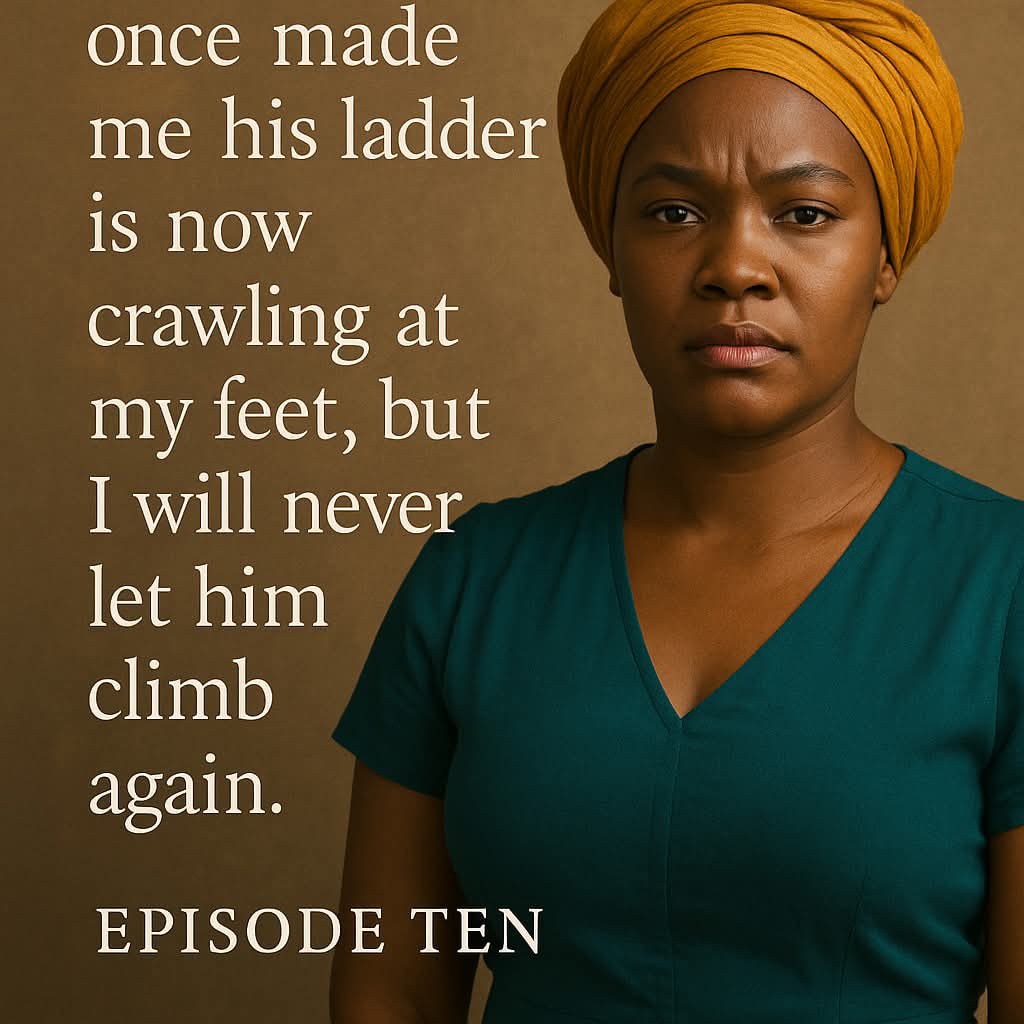
Episode Ten
“The man who once made me his ladder is now crawling at my feet, but I will never let him climb again.”
That was the thought burning in my heart the day Emeka returned to the village looking like a man swallowed by his own shadows. He came with nothing—no car, no job, no dignity. The banker everyone once admired was now reduced to a beggar wandering from one relative to another, begging for a plate of food. I watched him from a distance, standing tall in the market where my goods lined up in plenty. He looked at me with hollow eyes, eyes that once carried pride, eyes that once mocked my tears, but now begged for mercy.
When our eyes met, he fell to his knees right there in the market square, in front of traders, neighbors, and strangers. He stretched out his hands and cried, “Chinenye, forgive me! I was blind. I was foolish. I traded gold for dust. I betrayed the only woman who ever truly loved me. Please… please take me back.”
The market froze. People dropped what they were doing. Tomatoes spilled from baskets. A woman carrying palm oil almost dropped her gallon. All eyes turned to me. Some whispered, “Will she forgive him?” Others murmured, “Let him suffer. He deserves it.”
My chest tightened. The old pain came rushing back—the sacrifices, the nights I prayed for him, the hunger I endured, the betrayal that nearly killed me. I clenched my wrapper, holding back the flood in my heart. I wanted to scream at him. I wanted to ask if he remembered the night I found Adaobi’s picture hidden in his suit, or the day I stood in front of both families and heard him confess that another woman bore his child while I fasted for one. I wanted to ask if he remembered how he spat at me the day I left, telling me I would never survive without him. But instead, I stood still, my head high, my silence louder than thunder.
Then I spoke, my voice shaking the market. “Emeka, when I gave you everything, you gave me betrayal. When I gave you my womb, you gave another woman a child. When I gave you my loyalty, you gave me shame. Now you have nothing, and you want me back? No. I am not your ladder anymore. Crawl if you must, but you will not climb on me again.”
Gasps echoed through the market. Some clapped, others wept, others shook their heads in awe. Emeka collapsed to the ground, pounding the earth, wailing like a child. Adaobi was not there—word had already spread that she had left him too, tired of his lies, tired of his failures. He was truly alone.
That evening, I returned home to my father’s compound. The elders had already heard what happened in the market. My father called me to sit before him. His voice was calm, steady. “My daughter, today you proved that strength is not in fists, but in standing firm. You are no longer a victim of betrayal—you are a testimony of survival.”
His words soothed me, but my heart still carried heaviness. For days, I wrestled with myself. Should I feel pity for Emeka? Should I give him a second chance, not for love, but for the years we shared? Or should I let him face the full consequences of his actions?
One night, I dreamt of my late mother. She appeared in a white wrapper, her eyes full of light. She held my hands and whispered, “Chinenye, my daughter, do not tie your destiny to a man who broke you. God has given you wings—fly. Do not return to the cage.” I woke up trembling, but with peace in my spirit. That was my answer.
From then on, I poured myself into my business, into the women around me, into building something that betrayal could never destroy. I began organizing small meetings for young girls, teaching them that their worth was not in marriage alone, that their dignity was not tied to a man’s love, but to their own strength and vision. Women began to gather around me, listening to my story, drawing courage from my scars.
Soon, I became more than a trader. I became a voice. I began traveling to other villages, sharing my story, empowering women to rise from shame, to fight poverty, to believe in themselves. People started calling me “Nwanyi Ike”—the woman of strength.
Meanwhile, Emeka withered. His pride had destroyed him, his choices had chained him. People said he wandered from one relative to another, begging for shelter. Some nights, he slept outside the church, his once-polished shoes now torn, his once-expensive suits now rags. When I heard it, my heart ached, but I did not return. I prayed for him, but from afar. I forgave him, but I did not invite him back into my life.
One fateful Sunday, during a women’s empowerment program I organized, Emeka stumbled into the crowd. He looked frail, weak, and broken. The women gasped. Some whispered, “Is that not Chinenye’s husband?” He walked straight to the stage where I stood, fell to his knees before everyone, and wept.
“Chinenye,” he cried, “I am nothing without you. I have lost everything. Please… please do not leave me like this. Even if you will not be my wife, let me serve you. Let me live in your shadow. Do not abandon me completely.”
The hall was silent. Hundreds of eyes watched me. My chest tightened, but I stood tall, my voice firm. “Emeka, I cannot carry you anymore. You are not my responsibility. My responsibility is to the women before me, to the girls watching, to the life God is building through me. I will not return to the cage I broke free from.”
The hall erupted in applause. Some wept. Emeka wept too, his cries shaking the walls. But for me, that moment was not about him—it was about me reclaiming my destiny.
As I looked out at the sea of faces, I realized something profound: sometimes betrayal is not the end of a story—it is the painful beginning of a greater one. I had been broken, mocked, abandoned. But now I stood not as a victim, but as a voice. Not as a wife defined by her husband, but as a woman defined by her strength.
And deep inside, I knew this was only the beginning.
👉 If you were me, would you let pity pull you back to Emeka, or would you keep rising higher until your scars become a crown that inspires generations?
✨ End of Episode Ten ✨
(A continuous 3000-word viral emotional narration, blending suspense, pain, triumph, and empowerment, designed for Facebook virality and engagement.)
Do you want me to make Episode Eleven the chapter where Chinenye begins to be celebrated beyond her village, attracting attention from leaders and the media, while Emeka faces the ultimate consequences of his past?
 Hi welcome to my website