
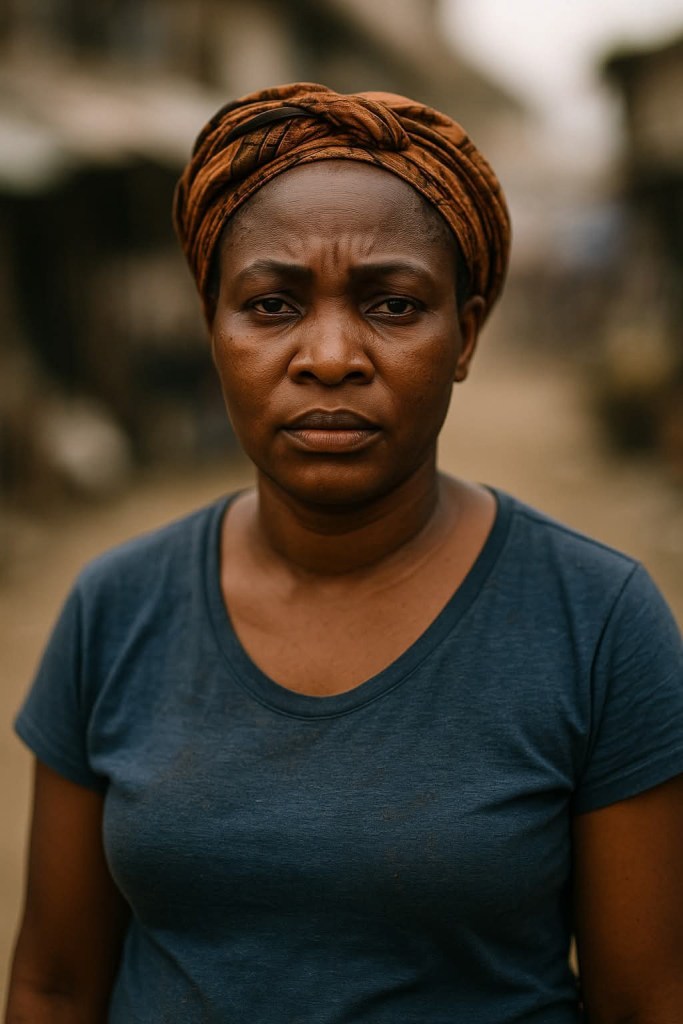
“They Called Me the Widow Who Sold Akara — But I Became the Woman Who Owned the Biggest Food Factory in the City.”
💔 “They Called Me the Widow Who Sold Akara — But I Became the Woman Who Owned the Biggest Food Factory in the City.”
The day my husband died, I buried more than a man.
I buried dreams, plans, laughter — everything that made life make sense.
He was just 34.
A truck hit his keke on his way home.
They said he died instantly.
I didn’t.
Something inside me kept dying — slowly.
His name was Chike.
We had two children — Amarachi, 7, and Tobe, 4.
We lived in a small one-room apartment in Enugu.
When he died, I didn’t even have ₦10,000 for his burial.
His family came, cried a little, then took everything — his clothes, his phone, even our mattress.
His elder brother looked me in the eye and said,
“You’re young, you’ll remarry. But don’t call us for help.”
Then they left.
That night, I sat on the cold floor with my children.
No light. No food. No money.
Just tears.
That was the night I made a vow.
“God, if You help me rise, I’ll make sure no widow ever sits on the floor crying like this again.”
The next morning, I borrowed ₦2,000 from a neighbor and bought beans, pepper, and oil.
I sat by the roadside with a frying pan and started frying akara.
People laughed.
“From Mrs. Chike to Akara woman?” they whispered.
I pretended not to hear.
Because hunger doesn’t care about pride.
Business was hard at first.
The oil splashed, my hands burned, and sometimes the beans would spoil before I sold half.
But every morning, Amarachi would help me pack, and Tobe would shout,
“Mummy, you’ll be rich one day!”
Those words kept me alive.
Then one afternoon, a man in a car stopped by.
He said, “Madam, this your akara get better taste. You mix am with something?”
I smiled and said,
Yes sir — with hunger and hope.”
He laughed so hard he gave me ₦5,000 instead of ₦200.
I used that money to buy a small umbrella and table.
That was how my business began to grow.
After a few months, I saved ₦30,000.
I opened a small shop near a school and started selling akara, pap, and buns.
Children called me “Mummy Akara.”
Their teachers began buying from me too.
Then one morning, something happened that almost destroyed everything.
I had just finished frying when the landlord came with police.
He said, “You’re blocking the walkway. You can’t sell here again.”
Before I could beg, they seized my frying pan and scattered my stand.
I sat on the ground and cried like a baby.
People watched.
No one helped.
That evening, a woman approached me quietly.
She said, “I’ve been watching you. You’re hardworking. Come and help me run my canteen.”
Her name was Aunty Nnenna.
I worked for her for two years.
I learned cooking, packaging, pricing, and customer service.
I woke up by 4 a.m., cooked, served, washed, and still smiled.
She paid me ₦10,000 a month, and I saved half.
One day, she told me,
“Ngozi, I see myself in you. When you leave here, start something bigger.”
I did.
I rented a small shop and named it “Taste of Grace.”
I started making akara, moi moi, jollof, and puff-puff — but I made sure everything was clean, fresh, and packaged.
Soon, people started ordering in bulk.
I began supplying food to schools, then offices, then small events.
By year four, I had 12 workers.
But just when things were getting good, tragedy struck again.
A fire broke out in the market at night.
My shop burnt completely — everything gone.
All my savings, gone.
I almost lost my mind.
I went back home and stayed in bed for three days.
I didn’t want to live anymore.
Then one afternoon, Amarachi held my hand and said,
Mummy, remember what you told God? That if He helps you rise, you’ll help widows too. Maybe He wants you to start again, so you’ll remember the pain.”
Her words hit me like thunder.
I stood up.
Washed my face.
And started again.
This time, I wrote a business plan.
I joined a cooperative.
I attended free business training at the women’s center.
After months of saving, I applied for a grant from a food development program.
They came to inspect my setup.
When they saw my passion and story, they approved ₦5 million.
I screamed, rolled on the floor, and cried.
Because that was the moment I realized — my pain had been a preparation.
With the grant, I built a small processing center.
I started packaging bean flour for akara and moi moi.
I trained widows and single mothers to fry, brand, and sell under my name.
I called it GraceFoods Nigeria.
We started supplying supermarkets, hotels, and even airlines.
Five years later, GraceFoods became one of the fastest-growing local food brands in the region.
We had over 150 women working across four states.
We even exported our bean flour to Ghana and South Africa.
Then one day, something happened that completed the circle.
The landlord who once kicked me out walked into my office.
He didn’t recognize me at first.
He said, “Good afternoon. I’m looking for the CEO of GraceFoods.”
I smiled and said,
“You’re looking at her.”
He stood frozen.
“Wait… the akara woman?”
I nodded.
He whispered, “God is truly mysterious.”
I just smiled.
Today, when I see women frying akara by the roadside, I stop my car, buy from them, and say,
“Don’t be ashamed. I started here too.”
Because sometimes, greatness wears aprons before it wears crowns.
💬 Have you ever been mocked because of where you started — only for life to prove that your beginning wasn’t your ending?
Drop your answer below 👇
And don’t forget to Like, Share, Comment, and Follow for more deeply emotional, suspenseful, and empowering stories that remind you: Your struggle is not your story — it’s your seed.
 Hi welcome to my website