THE CHAMELEONS OF OUR LAND
THE CHAMELEONS OF OUR LAND
Setting:
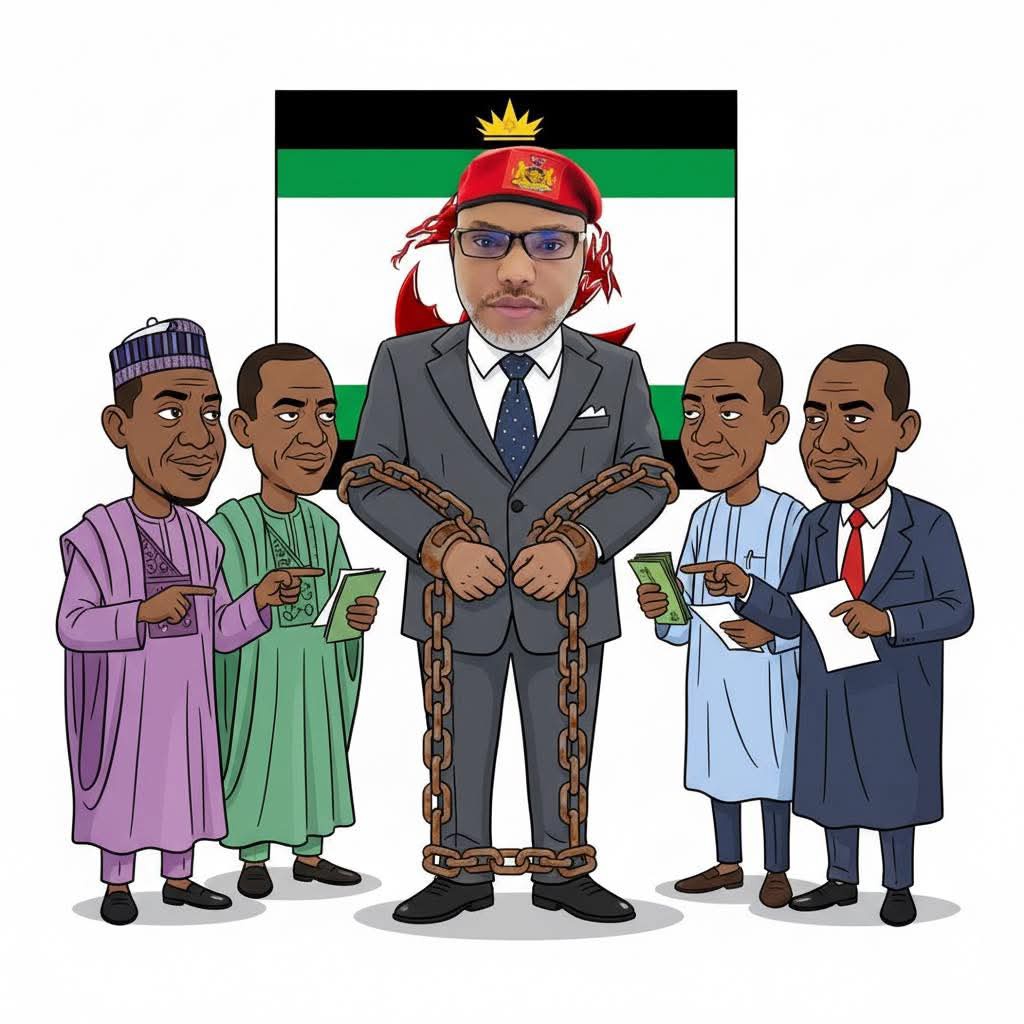
The National Assembly lounge, Abuja. Late evening. The plenary session had ended in chaos, with heated arguments spilling over into the corridors. Now, in a quiet corner of the lounge, two senators sit with cups of tea — Senator Chinyere Okafor from Enugu State and Senator Tunde Adebayo from Lagos. The television is muted, but images of the previous day’s protests flash on the screen — placards, angry youths, and a recurring chant: “Free Nnamdi Kanu!”
CHINYERE:
(Sighs deeply, shaking her head)
With the protest that happened yesterday, I expected to see Nnamdi Kanu’s picture on every big Igbo content creator’s page today. I expected every son and daughter of the East to rise and speak with one voice. But look at us, Tunde… it’s even non-Igbos who are bold enough to call for his release.
TUNDE:
(Sips tea thoughtfully)
Chinyere, that’s the tragedy of this country. We fight loudest when it’s not our turn to speak, and we go silent when it’s time to stand for our own.
CHINYERE:
Exactly. People pretend to be warriors online, but in truth, they’re political chameleons. Changing colours to match the tone of survival. You see them on Instagram preaching liberation, but when it’s time to act — they post comedy skits.
TUNDE:
(Laughs bitterly)
Ha! Na so we be. Nigeria is full of people who want change but don’t want to lose comfort. You know, my father used to say — “In this country, loyalty is seasonal. It expires faster than milk.”
CHINYERE:
Hmm. That’s deep. You Yorubas understand betrayal too well, don’t you?
TUNDE:
(Chuckles softly)
Ah! Don’t even go there. Betrayal is in our political DNA. Look at Awolowo — betrayed by his own kinsmen. Abiola — same story. Yoruba people talk big about unity, but when it’s time to show backbone, someone somewhere will say, “Ẹ jẹ́ ká mọ̀ọ́ rìn s’ẹ́yìn oga,” — let’s just follow the powerful man.
CHINYERE:
(Laughs sadly)
That’s not peculiar to the Yorubas alone. My people — the Igbos — betrayed Ojukwu too. The same Ojukwu who stood for their freedom. They left him to be branded a rebel. Even Nnamdi Kanu now — look at the silence. You’d think he never existed.
TUNDE:
And that’s the irony, my sister. When people are alive and screaming for justice, we call them troublemakers. But the moment they die, we name streets and airports after them.
CHINYERE:
Exactly! We love our heroes in graves, not in battles.
TUNDE:
It’s the chameleon spirit again. We’ve turned hypocrisy into national culture. When we talk about injustice, it’s only when we’re not the ones benefiting.
CHINYERE:
True. Look at yesterday’s protest. The loudest voices were from the North and South-West — people who, by logic, should have stayed quiet. But many of my own brothers and sisters were posting “soft life” pictures on social media.
(She pauses, her voice trembling slightly)
Do you know what hurts most, Tunde? Nnamdi Kanu may not be a saint, but he’s better than those Boko Haram members they recently pardoned.
TUNDE:
(Sets down his cup, eyes narrowing)
You said it! That’s the part that baffles me. We pardon killers, but imprison dreamers. Boko Haram bombed schools, markets, and churches. Yet, government calls it “rehabilitation.” But someone who spoke for his people is treated like a foreign enemy.
CHINYERE:
It’s painful. Very painful. But it also exposes how twisted our moral compass has become. We reward evil, but punish conscience.
TUNDE:
And you know what’s worse? Our people enable it. Politicians thrive because citizens forget too quickly. By next week, they’ll find another trending topic. Maybe a celebrity wedding or a football match.
CHINYERE:
That’s why our democracy is weak — no moral memory. We don’t remember yesterday, so we keep repeating the same mistakes.
TUNDE:
You’re right. We betrayed Awolowo because he wanted a Nigeria built on principles. We betrayed Abiola because he stood for justice. You Igbos betrayed Ojukwu because fear replaced faith. And now, you’re betraying Kanu because comfort has become the new god.
CHINYERE:
(Sighs deeply)
We’ve all sinned, Tunde. Religion, tribe, and politics have divided us beyond repair. Even here in the Senate, half of us don’t think as Nigerians — we think as ethnic shareholders.
TUNDE:
(Laughs quietly)
True! Every debate turns into tribal competition. If it favours the North, the South cries foul. If it favours the East, the West feels cheated. And in the end, Nigeria stands still.
CHINYERE:
It’s the curse of a house built without trust. We talk about one Nigeria, but we live like four countries sharing the same roof.
TUNDE:
That’s a brilliant metaphor, Chinyere. One roof, different hearts.
CHINYERE:
Hmm. But tell me, Tunde, why do you think people become chameleons in politics? Is it fear, greed, or survival?
TUNDE:
All of the above. Fear of losing position. Greed for power. And the need to survive in a system that punishes honesty. In this country, if you stand for truth, you stand alone.
CHINYERE:
That’s why I’ve always said — Nigeria doesn’t have leaders; we have survivors. People who learn how to blend, how to pretend, how to smile at the lion and dine with the snake.
TUNDE:
(Laughs)
You’re too poetic, my sister. But you’re right. We reward pretense. Even in religion — pastors shake hands with politicians they should be rebuking.
CHINYERE:
And Imams bless men who steal from the poor. We’ve turned faith into performance. Everything is for the camera.
TUNDE:
Hmm. (Pauses, looking distant)
You know, sometimes I wonder — what would Nigeria have become if Awolowo, Zik, and Bello had trusted each other?
CHINYERE:
Maybe we would have built a country, not a compromise. Maybe we’d have created a nation where tribe doesn’t define truth.
TUNDE:
Yes. But they all became victims of their own people. Awolowo was imprisoned by those he served. Bello was killed by those he empowered. Zik was forgotten by those he enlightened.
CHINYERE:
And now, history repeats itself. The South-East abandoned Kanu. The South-West abandoned Sunday Igboho. The North abandoned their own reformers. It’s like every tribe is allergic to its conscience.
TUNDE:
That’s the perfect diagnosis. We are a people allergic to truth.
CHINYERE:
You see, Tunde, when I look at our generation, I realize we’ve turned politics into theatre. Everyone is acting. Some act loyal. Some act patriotic. But behind the scenes, everyone is just calculating — “How do I survive?”
TUNDE:
And the sad part is, this performance costs lives. Real people die while we trade words. Every protest becomes a funeral. Every reform becomes a bribe.
CHINYERE:
And still, we say, “God bless Nigeria.” (She shakes her head) Sometimes I think God has blessed us enough — we just keep wasting it.
TUNDE:
Maybe that’s why prophets stopped visiting us. Even God is tired of our noise.
CHINYERE:
(Laughs bitterly)
Maybe. You know, I saw a post today — someone wrote, “Nnamdi Kanu fought for a people who preferred silence.” That line broke me.
TUNDE:
Yes. Silence is our new national anthem. We sing it every time injustice knocks.
CHINYERE:
(Speaking softly)
Do you think Nigeria will ever heal?
TUNDE:
Hmm… Healing requires truth, and truth requires courage. Right now, we lack both. But maybe — just maybe — the next generation will find the courage to be honest.
CHINYERE:
(Smiles faintly)
I hope so. Because if they don’t, this cycle will never end.
TUNDE:
(Sips his tea slowly)
Chinyere, do you know what I think? Maybe our real enemies are not the politicians, but the citizens who refuse to think.
CHINYERE:
That’s profound. Because every corrupt leader is elected by a willing follower.
TUNDE:
Exactly. The chameleon doesn’t exist without an audience. The people love deception as long as it entertains them.
CHINYERE:
And then they complain about bad governance. It’s madness — national madness.
TUNDE:
(Laughs softly)
You’re right. Nigeria is like a masquerade festival. Everyone is pretending, even the spectators.
CHINYERE:
And the true faces are hidden behind masks of ethnicity, religion, and party loyalty.
TUNDE:
(Sighs)
You know, the day Nigerians start seeing themselves beyond tribe, that day, the chameleons will die of shame.
CHINYERE:
Yes. Because truth doesn’t change colour. Only lies do.
TUNDE:
(Leans forward)
So, what do we do, my sister? How do we break the spell?
CHINYERE:
We start by speaking, even if our voices shake. We stand, even if we stand alone. We remind our people that silence is not peace — it’s surrender.
TUNDE:
(Claps slowly)
Well said, Senator. Maybe one day, history will say two senators refused to be chameleons.
CHINYERE:
(Laughs)
Let history say we tried.
TUNDE:
Yes. And maybe, when the next protest comes, we won’t wait for foreigners or other tribes to speak for our own.
CHINYERE:
Amen to that. Because if we don’t defend our own truth, nobody will.
TUNDE:
(Glances at the TV again — muted images of the protests replay)
Look at those faces. Angry, hopeful, desperate. That’s the real Nigeria. The one that still believes freedom is possible.
CHINYERE:
And as long as one person still believes, maybe there’s hope for all of us.
TUNDE:
Maybe. But until then, we must keep peeling the colours off these chameleons — one truth at a time.
CHINYERE:
(Smiles sadly)
One truth at a time, my brother. One truth at a time.
(They sit in silence. The sound of distant thunder rumbles outside, echoing through the marble halls of the National Assembly. On the television screen, a protester holds a placard high — “Justice for Nnamdi Kanu.” The camera pans over his face — determined, unafraid. The senators exchange glances — weary, but awakened.)
©️
 Hi welcome to my website