
INUBU FOR YORUBA. SHETTIMA FOR HAUSA-FULANI. WHO FOR NDỊ IGBO?
TINUBU FOR YORUBA. SHETTIMA FOR HAUSA-FULANI. WHO FOR NDỊ IGBO?
Tinubu for Yoruba.
Shettima for Hausa-Fulani.
Who for Ndị Igbo?
Nobody.
That is the bitter truth about Nigeria, a nation that claims unity but practices exclusion. For over six decades, the Igbo nation, one of the three pillars that formed Nigeria, has been systematically sidelined from the very center of power. While the Yoruba and the Hausa-Fulani continue to exchange the keys of Aso Rock, the Igbo have been kept at the political gate uninvited, unwanted, and unheard.
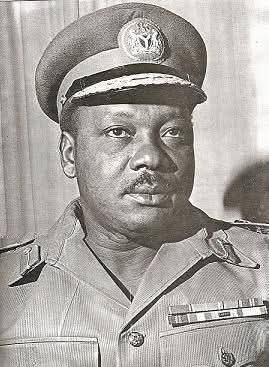
In January 1966, after Nigeria’s first military coup, Major General J.T.U. Aguiyi-Ironsi, an Igbo from Umuahia in present-day Abia State, became Nigeria’s first military Head of State.
He believed in unity, order, and discipline. His administration introduced the Unification Decree to bind Nigeria together under one system of government. But his vision was short-lived.
On July 29, 1966, Ironsi was overthrown and murdered in a northern counter-coup. His assassination ended the first and only Igbo-led government in Nigeria’s history.
Since that bloody day, no Igbo has ever ruled Nigeria again.
In 1979, with the dawn of Nigeria’s Second Republic, Dr. Alex Ekwueme, a brilliant architect and intellectual from Oko, Anambra State, emerged as the first civilian Vice President of Nigeria, serving under President Shehu Shagari.
Ekwueme was a visionary who spoke boldly for national unity, restructuring, and fairness. He represented dignity and intellect in governance, a true nationalist who believed in the idea of “one Nigeria built on justice.”
But the military coup of December 31, 1983, led by Major General Muhammadu Buhari, ended that government and silenced the last genuine Igbo presence in the nation’s leadership.
Since then, no Igbo person has occupied either the presidency or vice presidency of Nigeria.
From 1983 to this day, over four decades, power has rotated between the North (Hausa-Fulani) and the Southwest (Yoruba). The Southeast (Igbo) has been deliberately excluded.
When they are given ministerial appointments, it is often symbolic titles without authority, positions without power.
Nigeria, in truth, has become a government of two nations pretending to be one.
The structure of the federation itself is designed to silence the Igbo voice, to deny their people access to leadership, and to suppress their political relevance.
This calculated marginalization is not an accident, it is a policy.
How can a country that claims to be united continue to deny one of its major founding nations the right to lead?
How can a people who fought, contributed, and sacrificed for Nigeria’s survival be constantly told they are unfit to rule it?
From Aguiyi-Ironsi to Ekwueme, and then to silence, the history of the Igbo in Nigeria’s leadership is a story of exclusion and endurance.
For over 60 years, the Igbo nation has contributed to Nigeria’s unity, defended her borders, powered her economy, and enriched her culture, yet remains locked out of the presidency.
Nigeria cannot heal by suppressing the truth.
It cannot unite by silencing one of its own.
So we ask again:
Tinubu for Yoruba. Shettima for Hausa-Fulani.
Who for Ndị Igbo?
Still, nobody.
For truth, justice, and the freedom of the oppressed.
 Hi welcome to my website