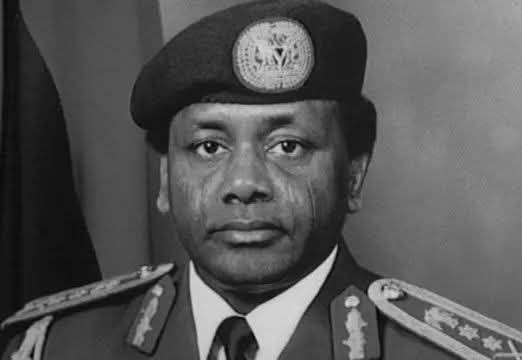
On 1 October 1996, under the military government of General Sani Abacha,
On 1 October 1996, under the military government of General Sani Abacha, Nigeria expanded its federation by creating six new states, raising the total to thirty-six. This decision came after sustained pressure for greater political representation, particularly from ethnic minority groups, as recommended by the National Constitutional Conference.
Below is a look at how each of these states came into being, and their significance.
1- Bayelsa State
Bayelsa was carved out from Rivers State. The name “Bayelsa” is derived from a combination of the first few letters of its major local government areas: Brass (Balga), Yenagoa (Yelga), and Sagbama (Salga). The creation of Bayelsa was especially important to the Ijaw people, who had long advocated for a state that would reflect their cultural identity and political needs. Its capital is Yenagoa.
2- Ebonyi State
Ebonyi is situated in the southeastern region of Nigeria. It was formed from parts of Abia State and Enugu State. Its establishment was driven by the desire to provide greater administrative recognition to communities in that area, particularly the Igbo-speaking populations who felt underrepresented. Its capital is Abakaliki.
3- Ekiti State
Ekiti was created out of Ondo State in the southwest of Nigeria. The people of Ekiti predominantly belong to the Ekiti subgroup of the Yoruba ethnicity, and the state’s capital is Ado-Ekiti. The creation of Ekiti fulfilled long-standing calls for a more localized administration, enabling the people to exercise more control over development in their region.
4- Gombe State
Gombe was carved out from Bauchi State. Its capital is Gombe City, and the state is often referred to as the “Jewel in the Savannah” because of its location in a northeastern savannah landscape. By becoming its own state, Gombe gained greater autonomy to manage its affairs and address local developmental challenges more effectively.
5- Nasarawa State
Nasarawa was formed from Plateau State. The capital is Lafia, and the state is sometimes called the “Home of Solid Minerals” because of its rich deposits of minerals. By having its own state structure, Nasarawa was better positioned to leverage its mineral wealth for local development.
6- Zamfara State
Zamfara came into being from Sokoto State. Its capital is Gusau. The creation of Zamfara responded to regional demands and has since played an important role in the political landscape of northwestern Nigeria.
The creation of these six states was not just an administrative exercise. It addressed deep-seated ethnic and regional demands, particularly from minority communities that felt marginalized in larger states. By increasing the number of states, the Abacha regime aimed to bring governance closer to the people, offering more opportunities for political representation, local development, and resource control.
Although critics have argued that creating more states can lead to financial dependence on the federal government, the 1996 state-creation remains a seminal moment in Nigeria’s federal history, shaping the structure that persists today.
 Hi welcome to my website