The Coup That Took General Johnson Aguiyi-Ironsi Out of Office, A Turning Point in Nigeria’s Turbulent History
The Coup That Took General Johnson Aguiyi-Ironsi Out of Office, A Turning Point in Nigeria’s Turbulent History
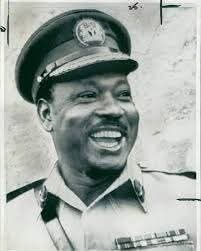
In the early hours of July 29, 1966, Nigeria was thrown into one of the darkest and most chaotic moments in its young history. The nation, still healing from the shock of the January 15, 1966 coup, woke to the thunder of gunfire and military mutiny. At the center of this storm was Major General Johnson Thomas Umunnakwe Aguiyi-Ironsi, Nigeria’s first military Head of State, a disciplined soldier whose goal was to steady the nation after the first coup. But the tension and bitterness left behind by the January events created a fragile atmosphere that would soon explode into another violent uprising.
The July coup, led mostly by Northern officers, was driven by deep resentment. Many believed that the January coup, which killed top northern leaders like Sir Ahmadu Bello and Sir Tafawa Balewa, had unfairly targeted the North. They also felt that Ironsi did too little to punish the coup plotters. Matters worsened when Ironsi introduced the Unification Decree (Decree No. 34), aiming to replace Nigeria’s federal system with a unitary structure. While the intention was to promote unity, many in the North saw it as an attempt to dominate them. This tension simmered dangerously until it finally erupted.
On the night of July 28, mutinous soldiers began coordinated attacks in Abeokuta, Ibadan, Lagos, and across the northern barracks. The military became a battlefield, with loyalists and rebels exchanging gunfire. By dawn, the rebels had seized control of key locations. The Head of State, General Ironsi, was in Ibadan, staying at the Government House as a guest of the Military Governor of the Western Region, Lt. Colonel Francis Adekunle Fajuyi, a soldier of courage, loyalty, and unshakable integrity.
When the mutineers arrived at Government House, their mission was clear: capture Ironsi. But something unexpected happened. Lt. Col. Fajuyi refused to abandon him. According to eyewitness accounts, Fajuyi insisted that if the Head of State was being taken, he, as host and loyal officer, would go with him. It was a moment that defined true military honour, a sacrifice that later earned Fajuyi deep admiration across Nigeria.
Both men were captured, beaten, and tortured by the mutineers. The rebels wanted Ironsi to confess to supporting the January coup, but he maintained his innocence. Eventually, the soldiers marched them out of Government House, drove them to a secluded area near Lalupon, outside Ibadan, and executed them. Their bodies were buried in shallow graves, marking a brutal end to Ironsi’s short and troubled leadership.
The aftermath of the July coup plunged Nigeria into even greater uncertainty. Power eventually shifted to Lt. Colonel Yakubu Gowon, who succeeded Ironsi as Head of State. But the ethnic tensions, mistrust, and military rivalry worsened. Within a year, the situation deteriorated so badly that Nigeria descended into the Civil War (1967–1970), a tragic conflict that cost millions of lives and changed the nation forever.
The death of General Aguiyi-Ironsi remains one of Nigeria’s most painful political assassinations. It was a moment shaped by fear, distrust, tribal politics, and the dangers of unchecked military power. Today, Ironsi is remembered as a soldier who tried to unify his nation and paid for it with his life, while Fajuyi stands as a symbol of loyalty and courage, a man who chose honour over survival. Their deaths remind us of the fragile journey Nigeria has walked, and the immense price paid for peace and unity.
 Hi welcome to my website