KING JAJA OF OPOBO: THE IGBO SLAVE WHO ROSE LIKE A LION, WHILE TODAY’S IGBO LEADERS PROSTRATE FOR POWER
KING JAJA OF OPOBO: THE IGBO SLAVE WHO ROSE LIKE A LION, WHILE TODAY’S IGBO LEADERS PROSTRATE FOR POWER
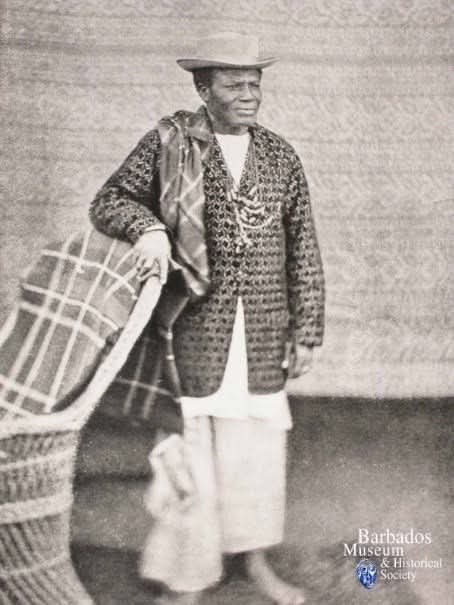
More than a century ago, an Igbo boy stolen into slavery grew into a man who forced the British Empire to reckon with him.
His name was Jaja of Opobo, a former slave who built a kingdom, controlled trade routes, rewrote power equations and defended his people with a defiance that shook imperial confidence.
Today, in that same Igboland, many of the men who parade themselves as “leaders” cannot challenge even the smallest forces that stand against the interests of their people. It is a contrast so sharp that it raises a painful question: How did the land that produced Jaja become a breeding ground for political submissiveness?
Jaja’s early life was shaped by brutality. As a child, he was seized, sold, resold and renamed. By every measure, he was expected to remain broken, another silent victim of the slave economy.
But he refused to accept the identity forced on him. Instead, he mastered the commercial networks of the Niger Delta, rose through the ranks, and eventually founded Opobo, a city-state whose economic power rivaled the influence of European traders. Jaja became a force that Britain could not ignore.
He negotiated with foreign powers as an equal, dictated his own terms, and blocked any attempt to undercut his people. He stood between Opobo and exploitation with a firmness that made even an empire uneasy.
The Painful Contrast: Leaders Who Fold Their Pride Before Boarding The Plane To Abuja
While Jaja challenged a global power, many of today’s Igbo political actors struggle to challenge discomfort, let alone injustice.
Their loudest voices often emerge only when criticizing their own communities.
Their boldest moves usually serve their own ambition, not their people.
They travel to Abuja with their pride carefully tucked away.
They treat obedience as strategy and servitude as survival.
And in moments that demand courage, they offer silence.
Jaja protected his people’s dignity.
Today’s political class protects their allowances.
Jaja refused to let foreign merchants dictate the price of palm oil.
He resisted manipulative treaties and kept Opobo’s economy independent.
Today, many Igbo officeholders sign documents without reading the implications.
They accept deals that weaken the region.
They trade the future for political favors so minor that a figure like Jaja would have dismissed them as mockery.
If Jaja built a kingdom, too many of today’s leaders would auction it.
The British Empire did not arrest Jaja because he was weak.
They arrested him because he was powerful enough to disrupt their plans.
He was lured onto a British warship, seized and exiled thousands of miles away, a dramatic show of force reserved only for men who mattered.
Today’s political class does not command such fear.
Many are known more for photo opportunities than principles.
No empire needs a warship to neutralize them; a simple threat to withdraw patronage is enough.
Jaja inspired imperial anxiety.
Today’s leaders inspire disappointment.
THE CONTRAST REMAINS JARRING:
Jaja defended his people’s dignity.
Today’s leaders defend their political future.
Jaja lost a kingdom for speaking boldly.
Today’s leaders lose their dignity by speaking timidly.
Jaja’s legacy is one of courage.
Too many modern leaders survive by bowing before those who undermine their people.
The tragedy is not just political, it is cultural.
A nation shaped by resistance now watches a generation of leaders who treat relevance as a gift granted by distant powers.
Jaja’s story still reverberates because it exposes a vacuum in contemporary leadership.
Igboland, known for resilience and fearlessness, now struggles under a political class too hesitant to challenge oppression or defend their own people.
Until a new generation rises, men and women with Jaja’s resolve, clarity and strength, the region will continue to feel the weight of leaders who bow when they should stand.
Jaja of Opobo fought an empire.
His successors struggle to fight their own fear.
And history will continue to judge that contrast.
 Hi welcome to my website