CHARLES TAYLOR: FROM REVOLUTIONARY DREAMS TO A CAUTIONARY TALE FOR AFRICA
CHARLES TAYLOR: FROM REVOLUTIONARY DREAMS TO A CAUTIONARY TALE FOR AFRICA
Charles Ghankay Taylor remains one of the most controversial and instructive figures in modern African history. His life story is not just Liberia’s story; it is a broader African lesson on power, ambition, violence, and accountability. Understanding Taylor is essential for understanding how nations collapse, and how they might avoid doing so in the future.
Born on 28 January 1948 in Arthington, Liberia, Charles Taylor spent part of his formative years in the United States, where he studied economics in the 1970s. His exposure to Western political thought, activism, and networks shaped both his ambition and worldview. After the 1980 military coup that brought Samuel Doe to power, Taylor returned to Liberia and briefly served in government. His fallout with the Doe regime came quickly. Accused of embezzling state funds, he fled the country, was arrested in the US in 1984, and then mysteriously escaped from a Massachusetts prison in 1985 an episode that still raises serious questions today.
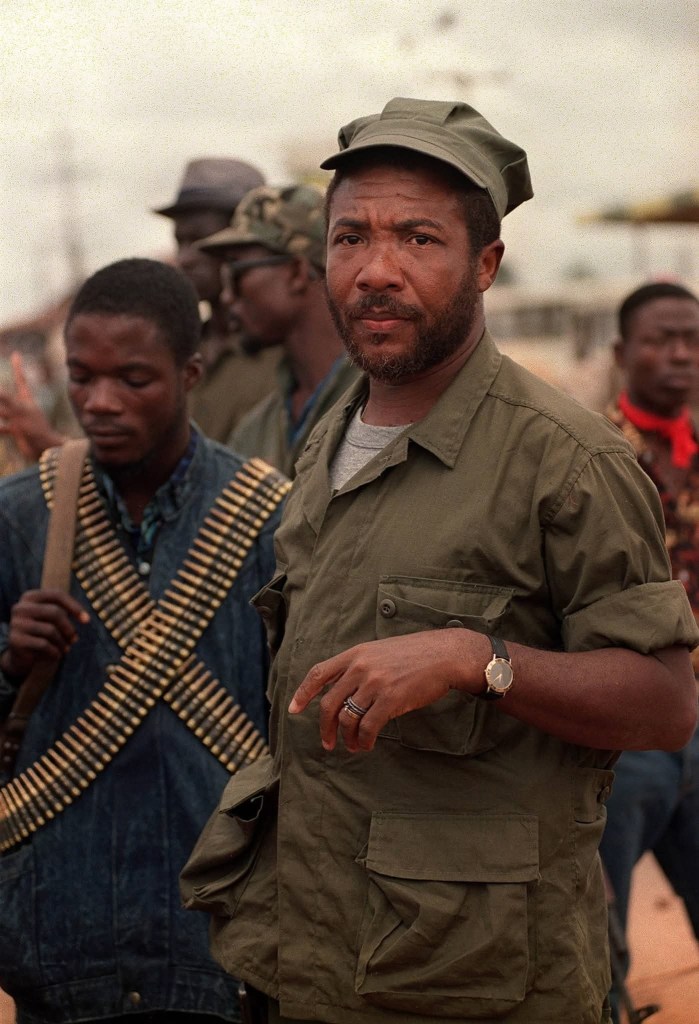
On 24 December 1989, Taylor re-emerged, this time as a rebel leader. He crossed into Liberia from Côte d’Ivoire with a small fighting force that would become the National Patriotic Front of Liberia (NPFL). This marked the beginning of the First Liberian Civil War, a conflict that would last until 1997 and plunge the country into unimaginable chaos. What began as a rebellion against dictatorship quickly turned into one of West Africa’s bloodiest wars.
Throughout the civil war years, Liberia experienced mass atrocities. Civilians were deliberately targeted, entire communities were wiped out, and children were forcibly recruited into armed groups. Over one million Liberians were displaced, and the state effectively collapsed. In September 1990, President Samuel Doe was captured and brutally killed by a rival faction, further fragmenting the country. Although multiple armed groups emerged, Taylor controlled vast territories and financed his war through natural resources, including timber, rubber, and diamonds.
In a tragic paradox, Charles Taylor transformed from warlord to elected leader. In 1997, after years of bloodshed, Liberia held elections. Many citizens voted for Taylor not out of admiration but fear, believing that electing him was the only way to end the war. The famous phrase summed up the national mood: “He killed my ma, he killed my pa, but I will vote for him.” Taylor won and became president, but peace proved short-lived.
Taylor’s presidency from 1997 to 2003 was marked by repression, corruption, and renewed instability. Rather than rebuilding Liberia, his government weakened institutions and silenced dissent. At the same time, Taylor extended his influence beyond Liberia’s borders, playing a central role in fueling the war in Sierra Leone by backing the Revolutionary United Front (RUF) in exchange for diamonds. This regional destabilization drew global outrage and eventually triggered international sanctions.
By the early 2000s, Liberia was once again at war. Rebel movements advanced toward the capital, the economy collapsed, and the country faced increasing international isolation. In August 2003, under immense pressure, Charles Taylor resigned as president and went into exile in Nigeria, boldly declaring that he would return. That return never happened.
In 2006, Taylor was arrested and transferred to face trial at the Special Court for Sierra Leone, sitting in The Hague. After years of proceedings, he was found guilty on 26 April 2012 of aiding and abetting war crimes and crimes against humanity, including murder, sexual violence, and the use of child soldiers. On 30 May 2012, he was sentenced to 50 years in prison, becoming the first former African head of state since the Nuremberg trials to be convicted by an international tribunal.
Charles Taylor’s story carries heavy lessons for Africa. Power without accountability destroys nations and scars generations. Violence may capture the state, but it can never build it. Elections alone do not guarantee democracy, especially when fear replaces free choice. Most importantly, impunity has an expiry date, no matter how long it takes, justice eventually catches up.
Liberia paid an enormous price for failed leadership and militarized politics. Africa must learn from this history. Recycling warlords into presidents does not create peace; it merely postpones the next tragedy.
 Hi welcome to my website