
Who Is Fela Kuti?
🚨Who Is Fela Kuti?
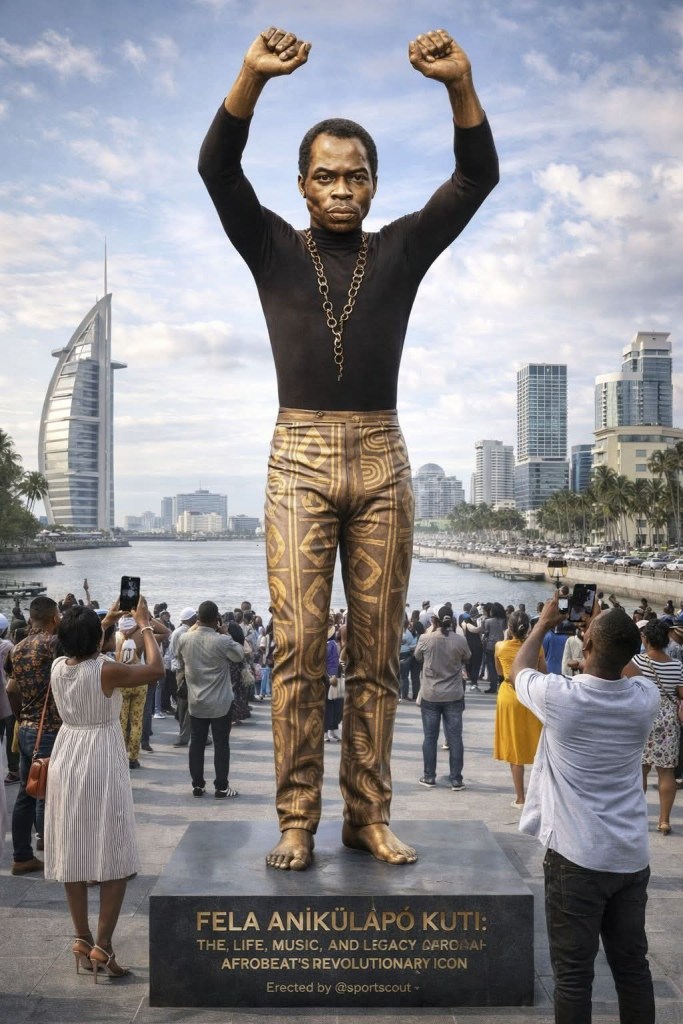
✨FELA ANÍKÚLÁPÓ KUTI: THE LIFE, MUSIC, AND LEGACY OF AFROBEAT’S REVOLUTIONARY ICON
Fela Aníkúlápó Kuti is not just a musician — he is one of Africa’s most powerful cultural revolutionaries, a fearless political activist, and the undisputed Father of Afrobeat. His life and music reshaped African identity, challenged oppression, and turned sound into a weapon for truth.
Born on October 15, 1938, in Abeokuta, Ogun State, Nigeria, Fela came from a deeply political and intellectual family. His mother, Funmilayo Ransome-Kuti, was a pioneering nationalist, feminist, and anti-colonial activist, while his father, Reverend Israel Ransome-Kuti, was a respected educator and clergyman. This background laid the foundation for Fela’s lifelong resistance to injustice, abuse of power, and colonial influence.
Fela studied music at the Trinity College of Music, London, where he refined his skills and global musical awareness. Upon returning to Africa, he fused jazz, funk, highlife, and traditional African rhythms to create a new genre — Afrobeat. More than music, Afrobeat became a cultural and political movement, marked by long instrumental grooves, complex rhythms, and unapologetically bold lyrics.
A relentless critic of corruption, military dictatorship, and neo-colonialism, Fela used his music to confront authority directly. His commune, the Kalakuta Republic, symbolized cultural independence and defiance against state control. In 1977, the Nigerian military launched a brutal raid on Kalakuta, destroying the compound and brutally assaulting its occupants. His mother sustained severe injuries during the attack and later died — a tragedy that deepened Fela’s resolve and intensified his protest music.
Over his lifetime, Fela released more than 50 albums, including iconic and politically charged works such as Zombie, Sorrow, Tears and Blood, Water No Get Enemy, Coffin for Head of State, Expensive Shit, and Roforofo Fight. Through these records, he documented the struggles of Nigeria and Africa, giving voice to the oppressed with unmatched courage and authenticity.
Fela famously declared:
“Music is the weapon of the future.”
For him, music was not entertainment alone — it was education, resistance, and liberation.
Although Fela passed away on August 2, 1997, his influence has continued to grow across generations and continents.
🏆 Historic Grammy Recognition – 2026
In 2026, nearly three decades after his death, Fela Aníkúlápó Kuti received one of the highest honors in global music — the Grammy Lifetime Achievement Award. This historic recognition celebrated his outstanding artistic contribution to recorded music and his global cultural impact, marking a monumental moment for African music on the world stage.
The award was accepted on his behalf by members of the Kuti family, reinforcing the enduring power of his legacy and the continued relevance of his message.
🌍 Enduring Legacy
Today, Fela Kuti remains:
The Father of Afrobeat
A global symbol of artistic courage and resistance
A cultural icon who inspired generations of African and international artists
A reminder that music can challenge systems, awaken minds, and demand justice
Fela did not just make music — he made history.
 Hi welcome to my website