ASABA, 1967: THE DAY SILENCE FELL ON A TOWN
ASABA, 1967: THE DAY SILENCE FELL ON A TOWN
In October 1967, Asaba was not a battlefield.
It was a town of traders, farmers, fathers, sons, and families trying to survive a civil war they did not start.
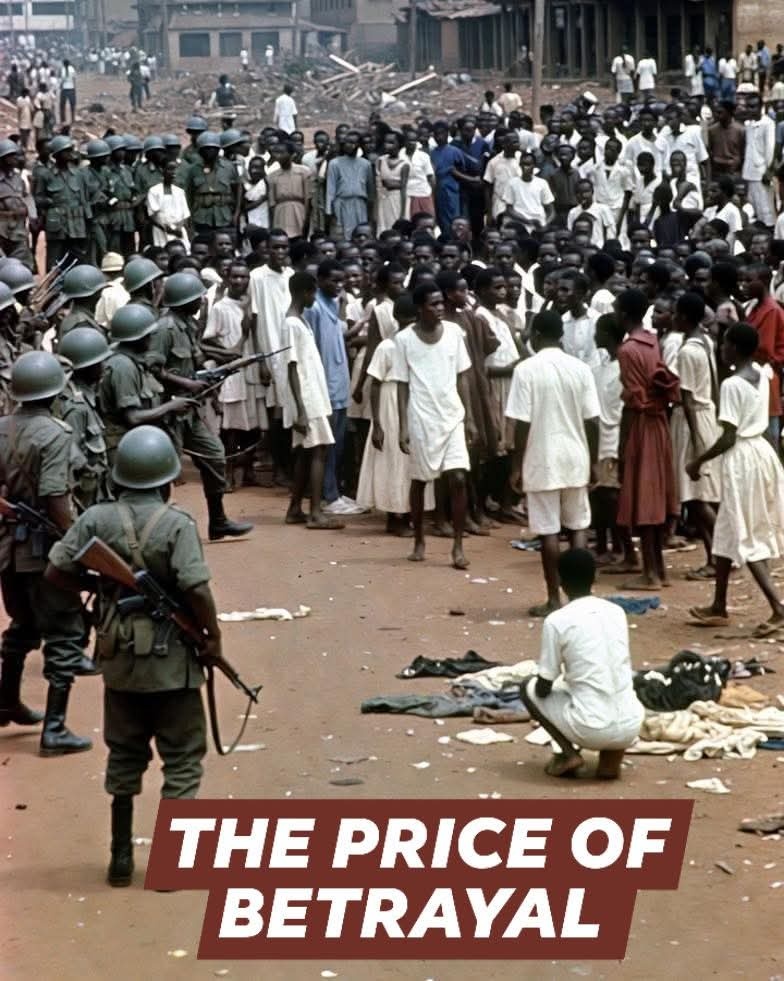
When federal troops entered Asaba during the Nigerian Civil War, residents believed peace was possible.
Many came out wearing white a symbol of unity and surrender hoping to show loyalty to one Nigeria.
They were asked to gather.
They were asked to sing patriotic songs.
They believed cooperation would protect them.
It did not.
Men and teenage boys were separated from women and children near Ogbe-Osowa area. What followed between 5–7 October 1967 became one of the most painful episodes of the war.
Hundreds of unarmed civilians were lost in a single sweep not in combat, but in a moment that left families erased and lineages broken. Mothers returned home alone.
Children grew up without fathers.
A town was left with memories it could not bury.
The soldiers involved were part of the Nigerian Army’s 2nd Division, under the overall command of Colonel Murtala Ramat Mohammed, who would later become Head of State.
Historical accounts and survivor testimonies place Major Ibrahim Taiwo, then second-in-command on ground, among officers present during the incident.
To this day, estimates vary, but historians and encyclopedic records confirm that hundreds were lost, and mass burials followed.
For decades, Asaba carried this pain quietly.
No official closure.
No national reckoning.
Only remembrance.
The Asaba Events remind us that wars do not only destroy enemies they wound nations from within.
And some wounds do not heal simply because time has passed.
History is not told to reopen pain, but to ensure silence does not repeat itself.
 Hi welcome to my website