The Afro-Turks were forcibly taken into the Ottoman world from the late 13th century
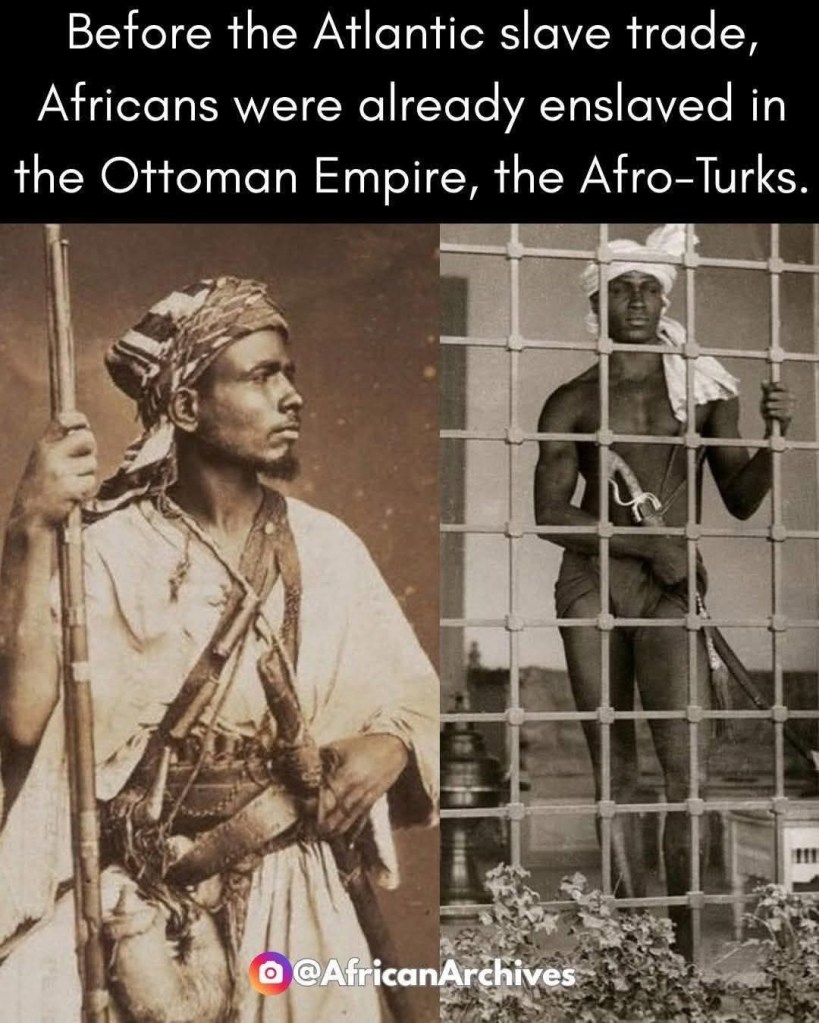
The Afro-Turks were forcibly taken into the Ottoman world from the late 13th century onward, centuries before the transatlantic slave trade expanded into the Americas. Many were captured from regions that today include Zanzibar, Kenya, Sudan, Ethiopia, Niger, Libya, and the Arabian Peninsula, and were transported through Indian Ocean and Red Sea trade routes. They were subsequently enslaved on plantations, in industry, domestic service, and the military.
African men were also taken into imperial households, with some being castrated and made eunuchs, serving in royal courts and the imperial harem. Although a few held authority and proximity to power, castration functioned as a method of control, and their lives were widely regarded as expendable. Racial hierarchy was explicit, with Black enslaved people being considered inferior to white and European slaves within the Ottoman system.
However, Afro-Turks were not solely victims. In 1621, Mullah Ali, an African man enslaved and later freed, rose to become kadiasker (chief military judge), one of the highest judicial offices in the empire. He utilized Islamic law and the Quran to challenge the ideological justifications for Black enslavement. In 1890, under growing international pressure, the Ottoman Empire signed the Brussels Conference Act to curb the African slave trade.
While new enslavement slowed, many Afro-Turks remained enslaved until the empire’s collapse. After 1923, Afro-Turks migrated from Crete to Turkey, settling mainly along the Aegean coast — İzmir, Aydın, Muğla, and parts of Antalya and Adana. #BlackHistoryMonth #africa #UnitedWeStandDividedWeFall
 Hi welcome to my website