
THE LOSS OF AFRICAN KNOWLEDGE SYSTEMS: HOW COLONIALISM DISRUPTED TRADITIONAL WISDOM
THE LOSS OF AFRICAN KNOWLEDGE SYSTEMS: HOW COLONIALISM DISRUPTED TRADITIONAL WISDOM
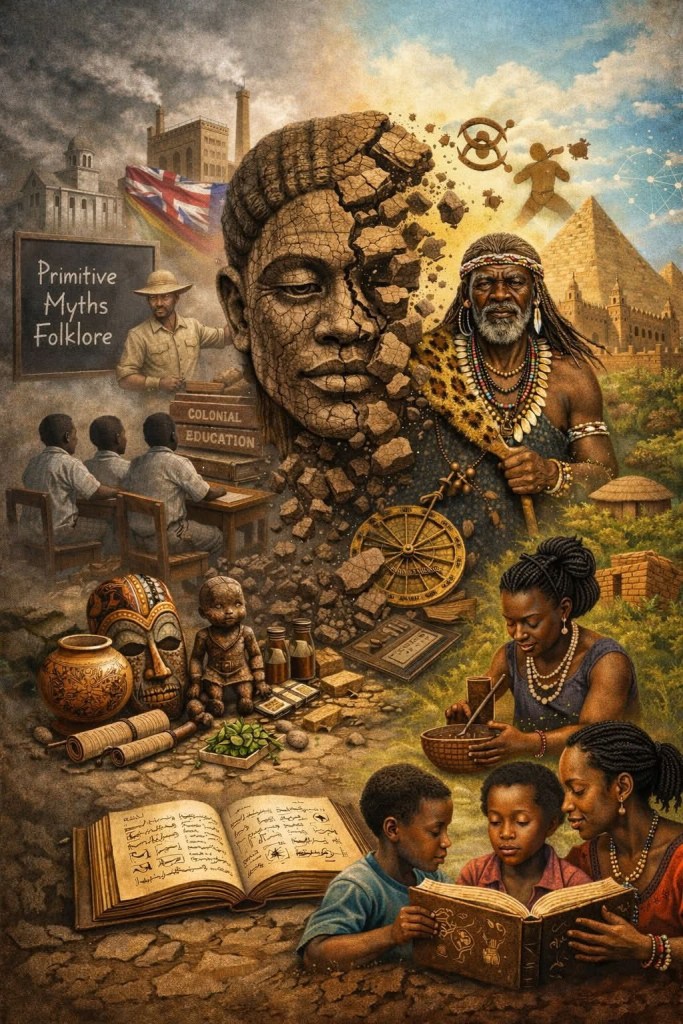
There was a time when Africa stood strong on its own systems of knowledge systems rooted in observation, experience, spirituality, and deep understanding of nature and society. Our ancestors were not empty vessels waiting to be filled; they were thinkers, scientists, healers, architects, astronomers, and philosophers in their own right.
But colonialism did not just take land it targeted the African mind.
Foreign education systems were imposed across the continent, deliberately structured to replace and suppress indigenous knowledge. What Africans once practiced as science became dismissed as “primitive.” What was once philosophy became labeled “myth.” What was once education became reduced to “folklore.”
Traditional African education was practical and life-centered. It taught governance, morality, agriculture, medicine, engineering, and community responsibility. Knowledge was not separated from life it was lived, applied, and passed down with purpose. Yet, colonial systems redefined education as something only valid when it came from outside Africa, written in foreign languages, and approved by foreign institutions.
This was not accidental. It was a strategy.
By erasing confidence in African knowledge systems, colonial powers created generations who would look outward for validation, solutions, and identity. The result is what we see today a continent rich in heritage but often disconnected from its intellectual roots.
It is time to rethink. It is time to reclaim.
Reclaiming African knowledge does not mean rejecting modern education it means restoring balance. It means recognizing that African systems of medicine, governance, science, and philosophy have value, relevance, and power. It means integrating our indigenous wisdom into modern frameworks so that Africa can grow from its own foundation, not from borrowed identities.
Our ancestors were not inferior. Their knowledge was not empty.
The real loss was not that African knowledge didn’t exist
The real loss was that it was made invisible.
Now is the time to make it visible again.
 Hi welcome to my website