
Nigeria at 65: Tribalism, Power, Violence—and the Cost of a Divided Nation
Nigeria at 65: Tribalism, Power, Violence—and the Cost of a Divided Nation
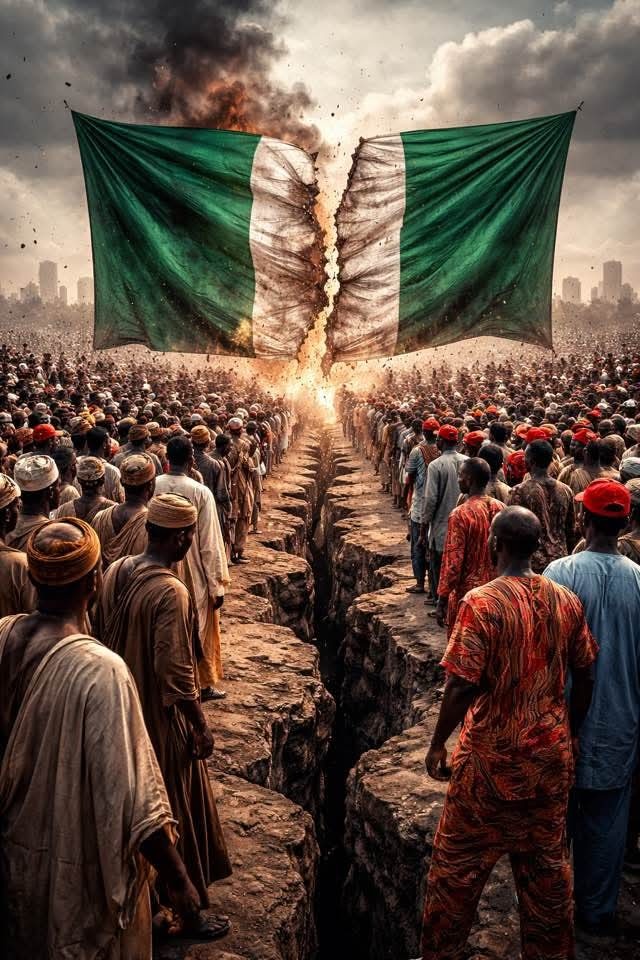
Sixty-five years after independence, Nigeria is still not one nation in the way it should be. It is a state held together by geography and hope—but pulled apart daily by tribe, fear, and competition for survival.
This is not a cultural accident. It is a system that has been built, reinforced, and rewarded over decades.
And today, it is getting worse—not better.
⸻
A Dangerous Shift Under Tinubu
Since the presidency of Bola Ahmed Tinubu, ethnic tensions have become more visible and more openly expressed.
Lagos—Nigeria’s supposed melting pot—became a symbol of division during the 2023 elections. Igbo voters and businesses were threatened, intimidated, and politically targeted. The message was clear: you can live here, you can build wealth here—but political power is not for you.
That is not democracy. That is tribal gatekeeping.
⸻
The Igbo Question Never Went Away
The legacy of the Biafran War still defines the psychology of the Nigerian state.
Many Igbos believe—rightly or wrongly—that they are excluded from the highest levels of power. That belief has not faded with time; it has deepened.
Movements like Indigenous People of Biafra are not just political—they are emotional, historical, and existential responses to perceived marginalisation.
Nigeria never fully healed after the civil war. It simply moved on without resolving it.
⸻
The Fulani Crisis: Violence Reshaping the Nation
At the same time, Nigeria is facing one of the most dangerous internal conflicts in its modern history.
Across the Middle Belt and beyond, Fulani herder–farmer clashes have turned into sustained violence:
• Thousands of casualties over recent years
• Entire villages destroyed
• Farming economies disrupted
In Benue State alone, dozens of people have been killed in single waves of attacks, part of a broader conflict that recorded over 2,300 deaths in hundreds of incidents between 2020 and 2024 
This is no longer just a land dispute. It has taken on ethnic and religious dimensions, with communities increasingly seeing it as existential. 
When farmers cannot farm, food prices rise.
When food prices rise, inflation worsens.
When inflation worsens, the country destabilizes.
This is not just a security crisis. It is an economic time bomb.
⸻
A Nation That Does Not Marry Cannot Unite
One of the most overlooked facts about Nigeria’s division is this: people do not mix enough.
In large parts of northern Nigeria, inter-tribal marriage is rare—especially for women. Social and religious structures strongly favor marrying within the same ethnic and regional identity.
This matters.
Because marriage is the deepest form of integration. It is where identity dissolves and something new is created.
If people do not marry across tribes, they do not fully trust across tribes.
And if they do not trust, they will not build a nation.
⸻
Which Tribe Is the Most Tribalistic?
The honest answer is uncomfortable.
All of them.
But in different ways:
• Hausa-Fulani: Tribalism often aligns with political and institutional control
• Yoruba: Tribalism is strategic, especially during elections and economic competition
• Igbo: Tribalism is defensive, shaped by exclusion, war memory, and survival instinct
No group is innocent.
Each is responding to the same broken system.
⸻
The Real Engine: Money, Power, Survival
Tribalism in Nigeria is not driven by hatred. It is driven by incentives.
Research shows ethnic division directly damages development:
• It reduces investment
• It creates favoritism in jobs and contracts
• It weakens trade and cooperation
• It fuels political instability and corruption 
In Nigeria, people often protect corrupt members of their own ethnic group rather than expose them 
Think about that.
Tribe has become stronger than law.
And when that happens, the state begins to collapse.
⸻
The Economic Cost: Billions Lost to Division
Nigeria is paying heavily for tribalism:
• Foreign investors hesitate in unstable environments
• Businesses avoid conflict zones
• Agriculture collapses in insecure regions
• Talent migrates or is underused
Insecurity alone has been shown to directly reduce agricultural output, cutting incomes and food supply 
A divided country is an expensive country.
Nigeria is losing billions—not because it lacks resources, but because it cannot organize itself around fairness and trust.
⸻
The Root Problem: A System That Rewards Division
In Nigeria:
• Elections are fought along ethnic lines
• Leaders distribute resources along tribal lines
• Citizens seek protection along tribal lines
Ethnicity has become the most powerful political identity in daily life, shaping who gets jobs, power, and opportunity 
This is the core truth:
Tribalism survives because the system needs it.
⸻
How Do You Break It?
Not with speeches. With structural change.
• Merit-based governance
Jobs, contracts, and leadership must be based on competence—not identity
• True federalism
Reduce the desperation to control Abuja
• Economic expansion
Jobs reduce dependency on tribal networks
• National integration policies
Schools, service programs, housing—designed to mix Nigerians
• Encourage inter-ethnic marriage and social integration
Not by force, but by removing barriers and promoting openness
• Equal justice system
No tribe above the law
⸻
Final Reality
Nigeria does not have a tribal problem.
Nigeria has a system problem.
Fix the system—tribalism weakens.
Keep the system—tribalism grows.
Right now, Nigerians wave one flag.
But they do not yet live one nation.
That is the truth.
That is the danger.
And that is the opportunity.
⸻
Nigeria #Tribalism #Tin
 Hi welcome to my website