
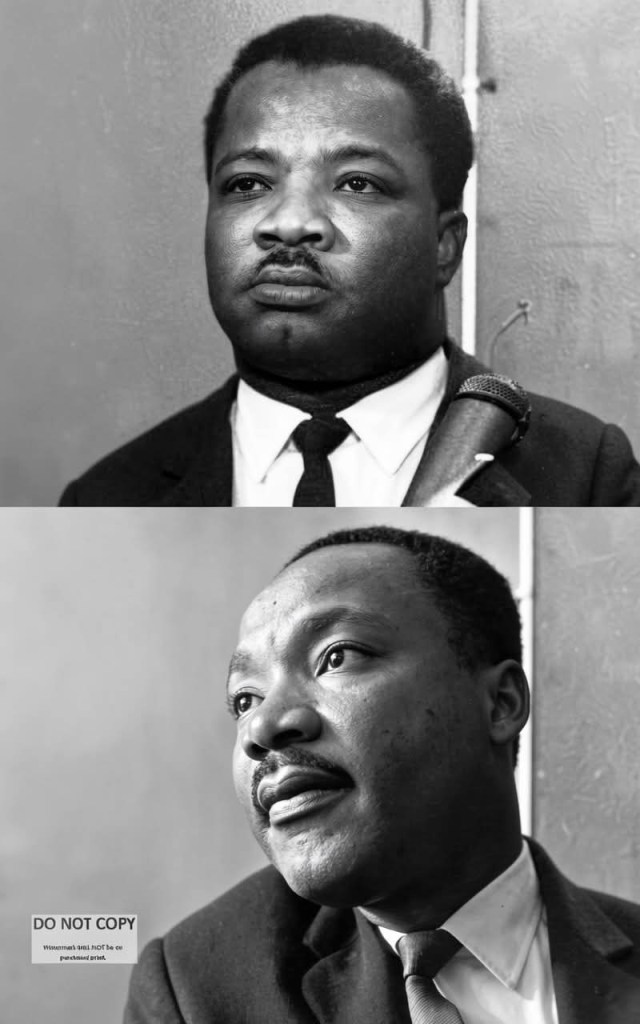
One year after the world lost Martin Luther King Jr., his brother was gone too.
No headlines. No answers. Just silence.
One year after the world lost Martin Luther King Jr., his brother was gone too.
No headlines. No answers. Just silence.
On July 21, 1969, inside a quiet home in Haynes Manor, Alabama, Alfred Daniel Williams King was found lifeless in his swimming pool. He was thirty-nine years old, and the stillness of that scene stood in sharp contrast to the life he had spent moving, organizing, and helping carry a movement forward.
Most people knew him as A.D. King, the younger brother of Martin Luther King Jr., but his work was not defined by that connection alone. He was a minister in his own right, a leader within the church, and an active figure in the Civil Rights Movement who stood beside his brother not as a shadow, but as a partner in struggle.
A.D. King worked closely with the Southern Christian Leadership Conference, helping organize campaigns, support voter registration efforts, and strengthen community networks in the South. His role was often less visible than his brother’s, but it was essential to the movement’s structure and reach.
In Birmingham, one of the most dangerous cities for Black activists at the time, he stood firm alongside those pushing for change. He faced arrests, threats, and constant pressure, the same forces that surrounded many who dared to challenge segregation and injustice during that era.
Then came April 1968.
The assassination of his brother shook not only the nation, but the family in a way that cannot be measured by headlines or history books. For A.D. King, it was not just the loss of a leader, it was the loss of someone he had stood beside, worked with, and lived alongside.
After that, he kept going.
He remained close to his family, continued his ministry, and tried to bring stability to a world that had just lost one of its most powerful voices. He stepped back from the national spotlight, not because the work no longer mattered, but because the weight of everything had changed.
By the summer of 1969, the country itself was trying to move forward, balancing grief with a sense of transition. It was a time when progress and pain existed side by side, and for many, the future felt uncertain.
That is the moment when A.D. King’s life ended.
There were no witnesses.
No clear sequence of events.
Only the quiet discovery of his body in the water, and a series of questions that would follow.
Authorities ruled his death an accidental drowning.
But for those who knew him, the explanation did not settle easily.
A.D. King could swim.
The circumstances felt incomplete, leaving gaps that were never fully addressed. Despite those concerns, no further investigation brought clarity, and no additional answers were ever confirmed.
There was no trial.
No definitive conclusion beyond the official report.
Only a family left with uncertainty, and a story that never fully closed.
Unlike the death of his brother, which stopped the world and reshaped the course of history, A.D. King’s passing did not receive the same level of attention. The nation continued moving, the headlines shifted, and his story faded from public focus.
But fading is not the same as disappearing.
His life remains part of the foundation of the Civil Rights Movement, built through work that was often less visible but no less important. He stood for justice, supported change, and carried responsibility in one of the most difficult periods in American history.
Remembering him is not just about the way his life ended.
It is about the work he did while he was here.
A minister.
A father.
A man who helped carry a movement forward.
And whose story still asks questions that were never fully answered.
Creating meaningful history content takes time and commitment. If you’d like to support this work, here’s how:
Every coffee helps me keep creating.
 Hi welcome to my website