
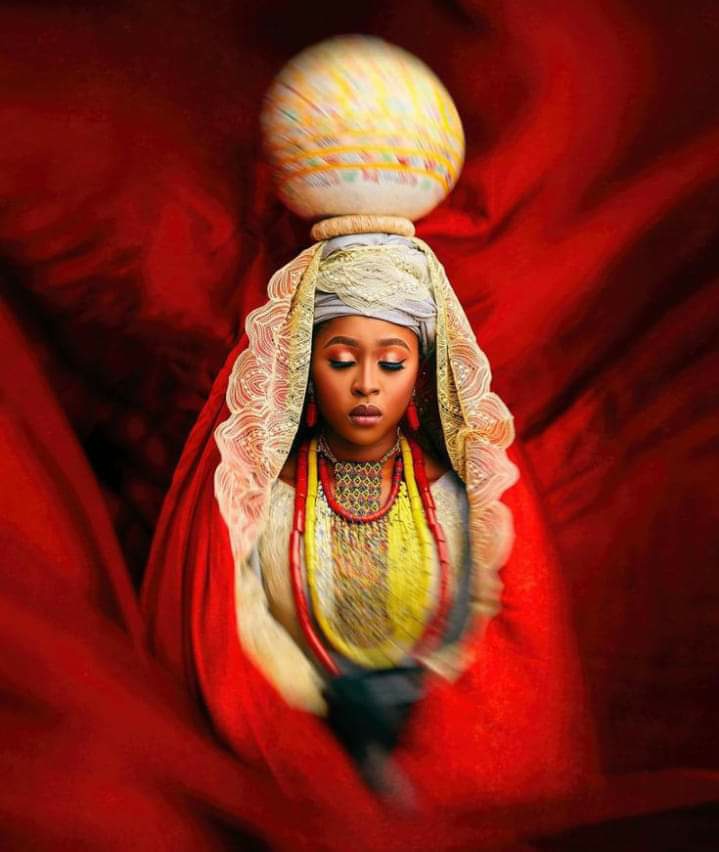
Some Aspects Of Fulani Culture And Tradition:
📍 Some Aspects Of Fulani Culture And Tradition:
Language:
Fulani people speak the Fulani language, also known as Fula, which belongs to the Atlantic branch of the Niger-Congo language family.
Religion:
Fulani people are mostly Muslim, and the influence of Islam is evident in their cultural practices and traditions.
Social Structure:
The social structure of the pastoral Fulani is egalitarian, with a preference for cousin and other intralineage marriages.
Most men are polygynous, and the typical household unit consists of the family head, his wives and his unmarried children.
Occupation:
Fulani people were originally a pastoral people, and their lives and organization were dominated by the needs of their herds.
Some Fulani people are still nomadic pastoralists, while others are sedentary farmers, scholars, artisans, merchants or members of the nobility.
Settlement Patterns:
There are three different types of Fulani based on settlement patterns: the nomadic-pastoral or Mbororo, the semi-nomadic and the settled or “town” Fulani.
Family Names:
Common Fulani family names include Diallo, Jallow, Sow, Barry, Bah, Bello, Tukur, Gidado, Barkindo, Jallo, Ahidjo and Dikko.
Geographic Distribution:
Fulani people are widely distributed across West Africa, particularly in Nigeria, Senegal, Guinea, Mali, Burkina Faso and Niger.
They can also be found in smaller numbers in other countries in West and Central Africa.
 Hi welcome to my website
The people are very dynamic…
LikeLiked by 1 person
Wow
LikeLike