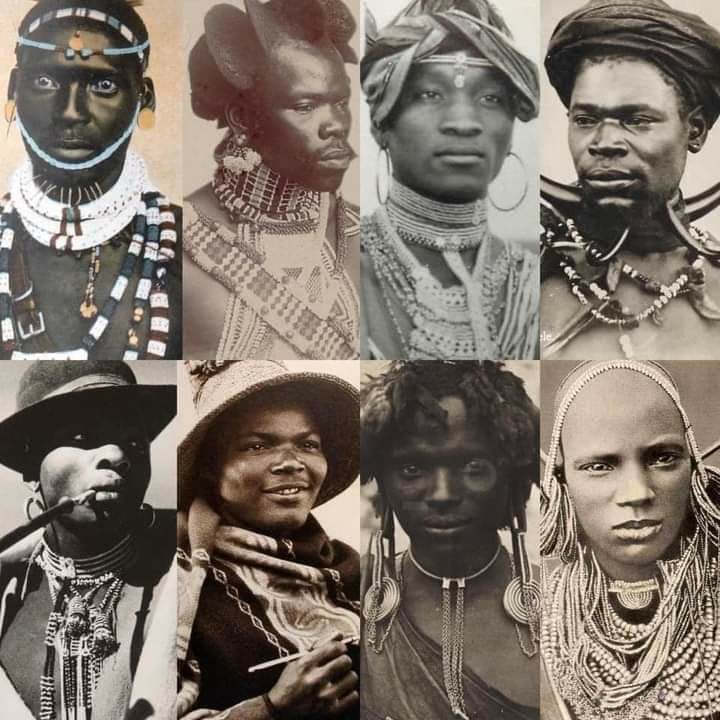
REAL ISRAELITĒS
(Ngoni, Tswana, Zulu, Xhosa, Ndebele, Kikuyu, Meru, Shona, Lemba, Luhya, Luba, Temne, Fang, Bakongo, Igbo, Some Yorubas, Akan & Mande)
REAL ISRAELITĒS
(Ngoni, Tswana, Zulu, Xhosa, Ndebele, Kikuyu, Meru, Shona, Lemba, Luhya, Luba, Temne, Fang, Bakongo, Igbo, Some Yorubas, Akan & Mande)
“There Has Been in this city for the last few days a young African negro who claims to be a Hebrew. He is deaf and dumb and as black as the ace of spades. He carries a pad of paper with him and answers all questions by writing them in Hebrew and Loschen Khodish.
What excites the most wonder is that he writes Loschen Khodish very rapidly. It is the language of the b0oks of Moses, and is made a special study of, spoken and written with ease Only by the Rabbis and highly educated Hebrews…”
“This Negro was sent to one of the rabbis of Hartford, who is perfectly satisfied that he is a Hebrew. He says that he came from a large town in Africa, where there is a tribe of about 20,000 black Hebrews who speak Loschen Khodish and are quite prosperous. He also says that his father is a rabbi in that town, and that is why his father took the trouble to teach him to write these languages. He says his people not only write Loschen Khodish, but it is their speaking language as well…”
“He left home a few years ago and has seen a good deal of the world. In each town he hunts up the Jewish section, and there they give him clothes, food and money. What surprises him, he writes, is that no Hebrew knows of his countrymen in Africa.”
SOURCE;
The Hartford Courant Archive; Tues, Sep 14, 1897, page 4
Here are some firsthand and scholarly secondhand sources that describe how real Jews looked:—
“…In which mountain there dwell four or five thousand Jews, and are more black than any other color, and if they can get a moor into their hands, they skin him alive”
SOURCE;
(Ludovico di Varthema; The Travels of Ludovico Di Varthema in Egypt, Syria, Arabia Deserta and Arabia Felix, in Persia, India, and Ethiopia. A. D. 1503 to 1508)
“Going back to the path-breaking work of Sander L. Gilman in the late 1980s, scholars often assert that “a strong European tradition, dating back to the Middle Ages, maintained that the Jews were ‘black’ or at least swarthy” (Melamed 2003, p. 31)
“In medieval literature a theory prevailed in which the Jews were part of the black race, or were at least dark-skinned” (Shavit 2001, p. 182)
“The general ‘look’ of the Jew was considered to be like that of the black” (Parfitt 2013, p. 6)
“Jewish blackness sometimes means that the Jews were quite literally seen as black” (Gilman 1994, p. 372)
“The general consensus of the ethnological literature of the late nineteenth century was that the Jews were ‘black’ or, at least, ‘swarthy’” (Gilman 1994, p. 368)
Scottish ethnologist Robert Knox (1793–1862), writes explicitly about “the African character of the Jew” (quoted in Gilman 1994, p. 372)
Knox considers the “Jewish, Coptic and Gipsy races” to be “the dark races of man” (Knox 1850, p. 300)
The Jews for Knox definitely are (what is nowadays called) so called Blacks:—“there is no mistaking the race when pure: it is Egyptian, that is, African” (Knox 1850, p. 300)
SOURCES;
(Jewish Culture and History Volume 8, Issues 1-3; 2006)
(Abraham Melamed, The Image of the Black in Jewish Culture A History of the Other; 2003)
(Yaacov Shavit, History in Black African-Americans in Search of an Ancient Past; 2013)
( Tudor Parfitt, Hybrid Hate Conflations of Antisemitism and Anti-Black Racism from the Renaissance to the Third Reich; 2020)
(Les Back, John Solomos, Theories of Race and Racism; 2000)
(Tudor Parfitt, Yulia Egorova, Genetics, Mass Media and Identity A Case Study of the Genetic Research on the Lemba; 2006)
(Robert Knox, The Races of Men A Fragment; 1850)
“The contention has been made that the extraneous element of the Bantu was derived from tribes of Israel which were first carried away to Babylon, as related in the Scriptures, and who afterward in whole or in part migrated through Egypt into equatorial Africa, and, through mingling with native tribes, upon whom they imposed much of their own religion and customs, gave rise to the peoples now known as Bantu…”
SOURCE;
(N. B. Ghormley, ‘The Land of the Heart of Livingstone Or, The Genius of the Bantu’; 1920)
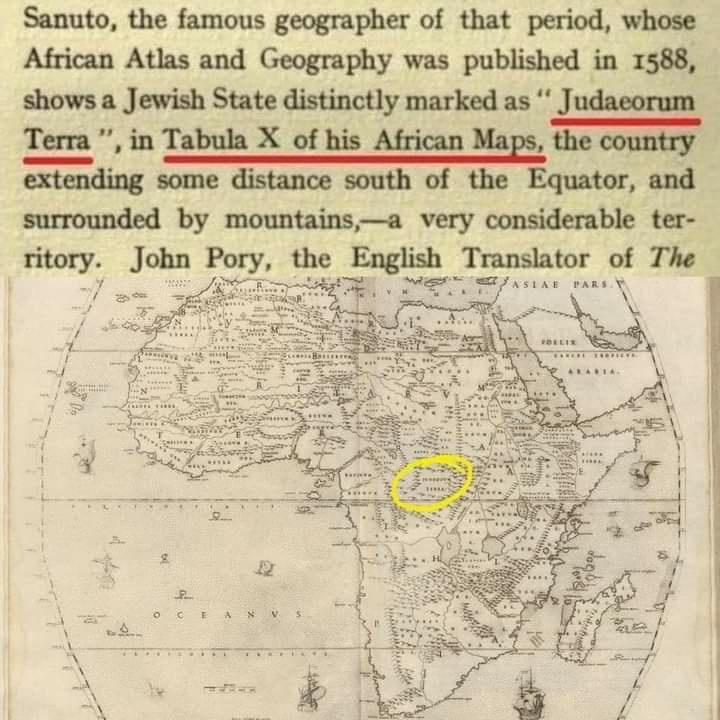
“At this day also the Abassins affirm that upon the Nilus [Nile] towards the west there inhabiteth a most populous nation of the Jewish stock under a mightie king. And some of our modern cosmographers set down a province in those quarters which they call the land of the Hebrews, placed as it were under the equinoctial, in certain unknown mountains, between the confines of Abassin and Congo”
SOURCE;
(John Pory, ‘A Geographical Historie of Africa’; 1600)
“Sargon, or Sennacherib, the successor of Shalmaneser III, King of Assyria, having continued the war commenced by his predecessor, conquered the Kingdom of Israel, and brought the captive Jews and their King Hosea to his country (circa 722 B.C.), and from thence they eventually found their way into Abyssinia and Ethiopia.”
“After the destruction of Jerusalem by
Vespasian in 70 A.D., large numbers of Jews fled or drifted into Ethiopia, Abyssinia, and the neighbouring territories.”
SOURCE;
(Sidney Mendelssohn, ‘The Jews of Africa Especially in the Sixteenth and Seventeenth Centuries’; 1920)
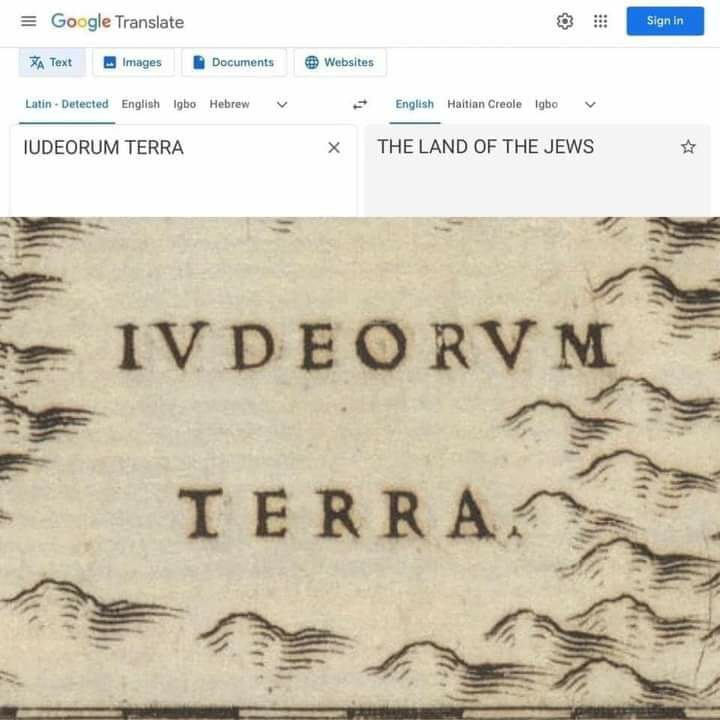
On old maps, Abyssinia = Ethiopia and Ethiopia = Sub Saharan Africa
“Ancient Ghana was created by Jewish settlers about 300 A.D. in the area west of Timbuktu in modern Mali…”
SOURCE;
(The New Encyclopædia Britannica: Micropædia; 1993)
“The Akan people of Ghana result from an ancient southward emigration of Libyo-Berbers, who were cousins to the pre-Hellenic population of Greece [Pelasgians?] from the Sahara desert oasis; and their intermarriage at Timbuctoo with Niger River Negroes. In the eleventh century A.D., they moved still further south to what is now modern Ghana”
SOURCE;
(Robert Graves, ‘The Greek Myths’; 1955)
“Akan culture and civilization is not “Negro-African” in origin, but can be classed, on the whole, as Libyo-Phoenician or Carthaginian”
SOURCE;
(Eva L. E. Meyerowitz, ‘The Akan of Ghana: their ancient beliefs’; 1959)
“The Supreme Being not only of the Ashanti and allied tribes, but most probably of the whole of Negro Land as well, is not the God of the Christians which, at a comparatively recent date, was superimposed on the various tribal beliefs by ministers of the Gospel: but the Yahweh of the Hebrews, and that too of the Hebrews of pre-exilic times”
SOURCE;
(R. Patai, ‘The Ritual Approach to Hebrew-African Culture Contact’, in Jewish Social Studies 24; 1962)
Captain Francis Gardiner (1794-1851), a commander in the Royal Navy and a devoted missionary, who was later to die of starvation along with missionary companions on a desert island in Tierra del Fuego, went on a journey traveling east from the Cape to Natal…
Upon his first encounter with the Zulus, he took their customs to be “apparently of Jewish origin” and the Zulus themselves to be of Jewish extraction…
The Zulu customs that led him to this conclusion included circumcision, levirate marriage, the festival of the first fruits, and a number of others…
In 1835 Gardiner was sent to negotiate a peace with the Zulu chief Dingane at his winter home, Kwa-khangela, near present-day Eshowe…
Upon his return after lengthy and detailed talks about every aspect of Zulu life, Gardiner reported that Zulu religious beliefs were quite simply “a remnant of pre-Christian Judaism.”
As British power was extended farther east, the same discourse continued…
Throughout the 1850s Zulus continued to be racially constructed as Jews…
Their settled, pastoral life and their religious and social customs were evidence enough of this…
G. R. Peppercorne, the magistrate of Pafana Location, observed to the Native Affairs Commission that “a general type of the customs and laws of the Ama-Zulu may be found in the early history of the Hebrews.”
Zulu polygamy, marriage customs, even attitudes toward work were all described in the appropriate biblical passage…
He suggested that any European who wanted to understand Zulu customs had only to read the Old Testament…
Henry Francis Fynn (1803-1861), an English traveler, trader, and an acknowledged expert on Zulu customs, left behind a diary that is one of the best sources on the history of the Zulus…
The diary covers the period from 1824 to 1836, when Fynn was living much of the time with the Zulus…
“I was surprised,” he wrote, “to find a considerable resemblance between many of the Zulu customs and those of the Jews.”
These included “war offerings, sin offerings, propitiatory offerings, Festival of first fruits… periods of uncleanness, on the decease of relatives and touching the dead, Circumcision; Rules regarding chastity, rejection of swine’s flesh.”
Fynn concluded in the usual way of the Hamitic hypothesis that in view of “the nature of semblance of many of their customs to those of the ancient Jews, as prescribed under the Levitical priesthood I am led to form the opinion that the Zulu tribes have been very superior to what they are at the present time.”
SOURCE;
(Black Jews in Africa and the Americas By Tudor Parfitt; 2013)
Two Bantu groups dispersed from the Great Zimbabwe/Gokomere area into what is today South Africa…
This migration began to take place around circa 400 A.D.
Prior to this both groups had migrated down from Northeast Africa via Arabia Felix…
This initial migration from Arabia Felix (Sena) took place circa 150 A.D. and was caused by political unrest in Southern Arabia between the Himyarites, Saba, Qataban, Hadramaut, and Aksum…
Sena was a thriving Jewish city at the time of the Medo-Persian empire around 500 B.C., and is believed to have been dominated by Israelites who had fled Jerusalem during the Babylonian invasion…
They crossed the Jordan into Yemen, believing they were safe in the valley in the east, crossing the Masilah River…
These two Bantu groups are now known as the Nguni and the Sotho-Tswana…
 Hi welcome to my website
Very nice
LikeLiked by 1 person
Thanks
LikeLike