The significance of the staffs held by Oromo brides and grooms:
The significance of the staffs held by Oromo brides and grooms:
The Siinqee – Symbol of Strength and Solidarity for Oromo Brides
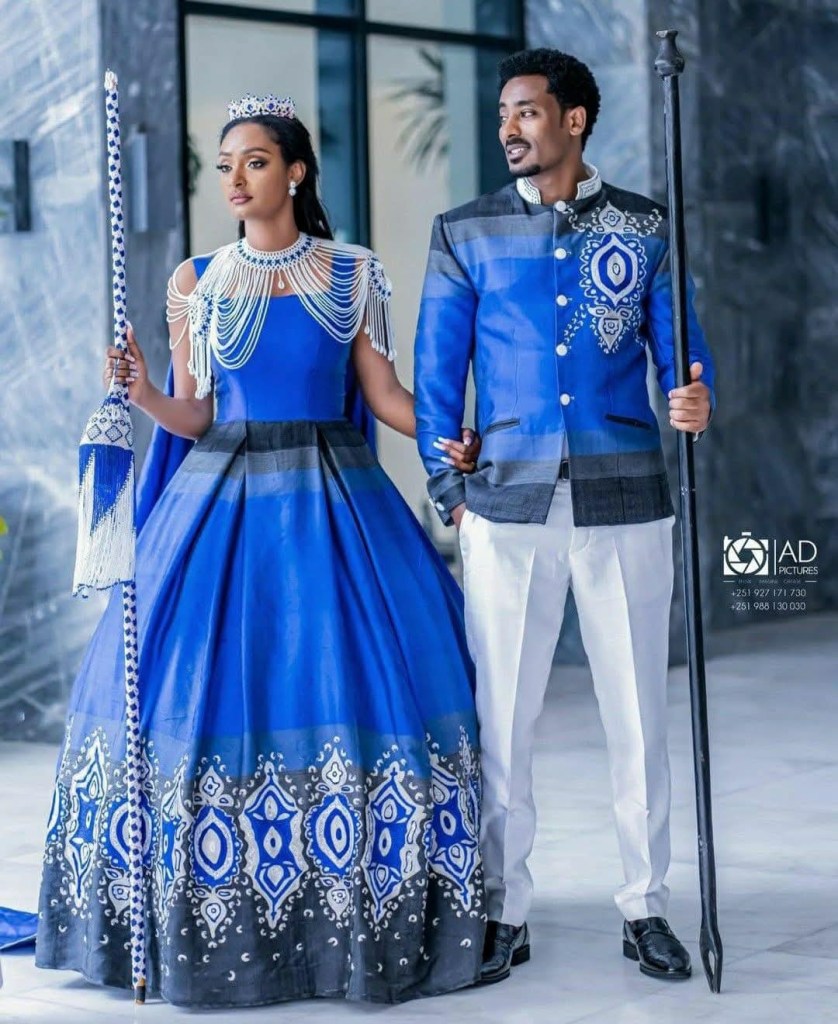
In Oromo culture, brides hold a staff called the siinqee during their wedding ceremony, which carries deep symbolic meaning. This staff represents the bride’s dignity, authority, and the respect she commands within her community. Traditionally, the siinqee is given to a woman upon marriage, symbolizing her transition into a new role filled with responsibilities and privileges. Holding the siinqee not only signifies her connection to the women of her community but also serves as a reminder to her husband and others of the respect and protection that society expects toward her.
The siinqee is more than just a ceremonial accessory; it is also a symbol of justice and solidarity. Women may use it as a form of protest or rallying symbol in cases where they seek justice, especially within marital or social disputes. Thus, the siinqee embodies the cultural values of strength, unity, and the significant role of women in upholding community ethics and respect.
The Hirpha – Emblem of Leadership and Guardianship for Oromo Grooms
Similarly, Oromo grooms carry a staff known as the hirpha or hora, which signifies their authority, leadership, and responsibility. This staff, often crafted from particular types of wood and sometimes adorned with decorative elements, symbolizes the strength and resilience expected of men within Oromo society. Carrying the hirpha demonstrates a man’s role as a protector and a leader, highlighting his duty to uphold the community’s values and safeguard the honor and well-being of his family and people.
The hirpha is not only a symbol of authority but also an integral part of traditional celebrations, where men may use it in ceremonial dances, showcasing their strength and pride. This staff serves as a reminder of the courage and guardianship expected from men, reflecting the values of Oromo culture that emphasize mutual respect and shared responsibilities.
Together, the siinqee and hirpha represent the complementary roles of women and men within Oromo society. While the siinqee underscores solidarity, justice, and respect for women, the hirpha highlights leadership, protection, and resilience for men. These staffs serve as enduring symbols of the responsibilities each holds within their community, reinforcing the cultural values of harmony, respect, and unity between genders in the Oromo way of life.
 Hi welcome to my website
Wwwwwww
LikeLiked by 1 person
Wow
LikeLike