
On February 17th, 1990, while conducting a restoration survey inside the ancient Ellora Caves of Maharashtra, India
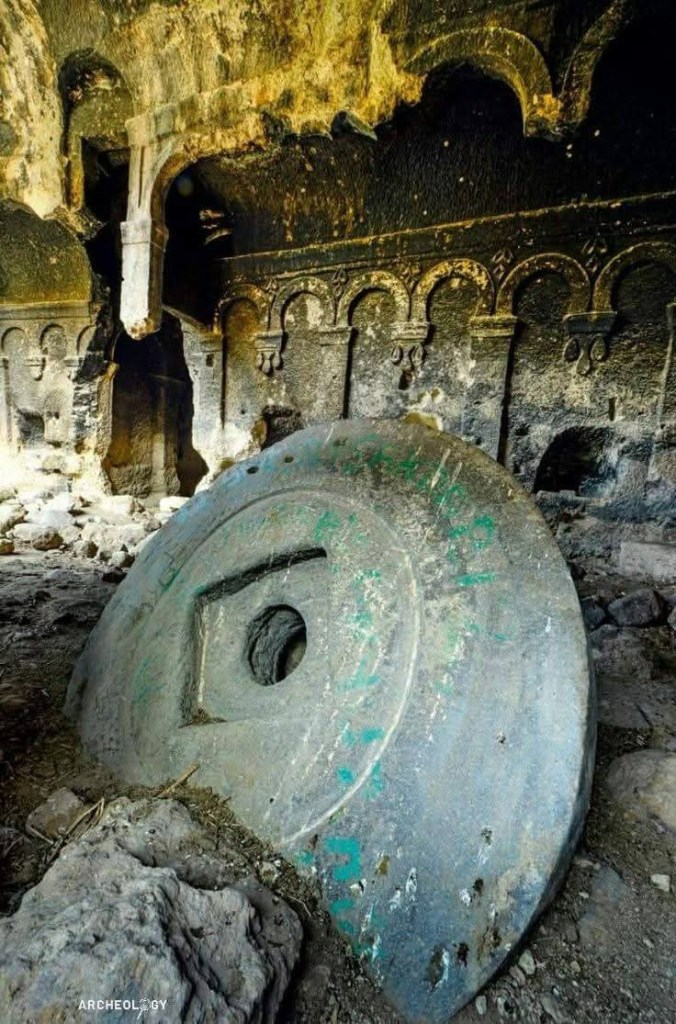
On February 17th, 1990, while conducting a restoration survey inside the ancient Ellora Caves of Maharashtra, India—structures estimated to be over 1,200 years old—researchers stumbled upon an object that has since defied every conventional explanation. Half-buried beneath collapsed rubble, what they uncovered was a massive stone disc, perfectly shaped and eerily smooth, etched with strange, fading symbols no known civilization has ever recorded.
The object, nearly two meters in diameter, was found within a chamber previously believed to be ceremonial. But the symmetrical grooves, central aperture, and near-aerodynamic design raised immediate questions. Some archaeologists proposed it was symbolic or ritualistic, yet no parallels exist in traditional Indian iconography. Others began to suggest something far more controversial: that this was not a relic of worship—but a technological component, perhaps even a fragment of an ancient machine or spacecraft.
For years, whispers have spread through fringe archaeology communities, comparing this disc to the Dropa stones of China and even suggesting a link to lost visitors from the stars. But if that’s true—why would such a device be hidden deep inside one of the most sacred temple complexes on Earth?
Could this stone disc be the last surviving piece of a forgotten contact—a record of an ancient encounter we were never meant to understand?
 Hi welcome to my website