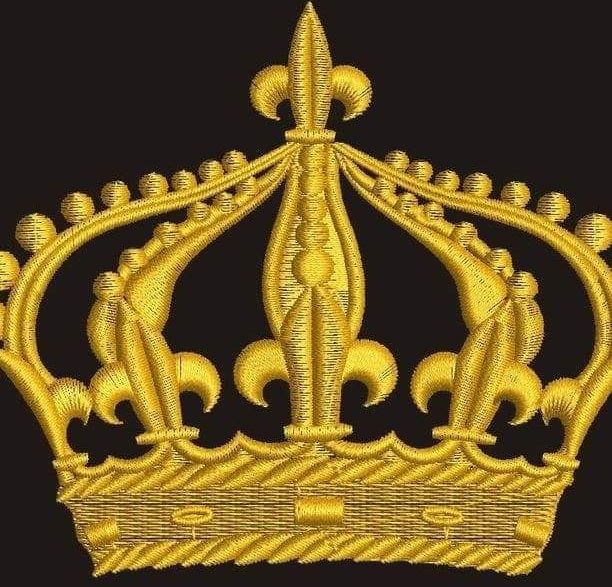
This one is for my Readers 🙂 The first “Pharaoh”, called Nesut Bity, was Narmer, aka Menes, aka the Scorpion King.
This one is for my Readers 🙂 The first “Pharaoh”, called Nesut Bity, was Narmer, aka Menes, aka the Scorpion King. I put Pharoah in quotations because the indigenous Kemetic name of this title is ‘Nesut Bity’.
Nesut Bity was an ancient African royal title meaning “King of Upper and Lower Regions after the unity of the two lands”. Both words are actually titles, Nesut was title for King in the south, Bity was title for King in the North. Nesut (or nswt) was a title for the King of Upper Kemet. It is often part of the larger title, nsw-bity, which translates to “King of Upper and Lower Egypt” or “Dual King”, signifying the unified governance over both regions of Egypt. While nesut can be functionally translated as “king”, it seems to primarily refer to the divine aspects of kingship, while bity refers to the worldly responsibilities of the king. The tradition of Divine Kingship started in Ethiopia from whence the tradition was carried forward. This person could be a man or woman and was seen as an intermediate between god and man. This is old African Tradition.
So this title which was later corrupted by the Greeks to “Pharaoh” which is actually pr ʿaa” or “per-aa”, meaning “great house,” or “the dwelling place of royalty,” originally referred to the royal palace . . but this is how Greeks interpreted, and this mis-interpretation lives today. I encourage everyone to dig deeper as the word Pharoah is used in the Holy Bible is actually a foreign interpretation of that title. The name ‘Holy Bible’ derives from the greeks ‘Helios biblios” Helios means “Sun”, Biblios means “Book” so this translates to “sun book” in Greek. It’s a term they used to refer to the writings of the people of the Sun, those African Cultures who worshiped the sun. It indicates the their advanced understanding of Astronomy and also spiritual concepts of astrology as the Greeks were the first culture to study in Kemet, embrace African diety concepts as their own, then later develop their own approach to science, later coming back and invaded the region, naming it ‘Aegyptos’ “Aegyptos,” which was the Greek interpretation of the e ancient Kemetic name for the city of Memphis, “Hwt-Ka-Ptah” (“Mansion or House of the Spirit of Ptah”) . . . with the invading Arabs later shortened the Greek name for the region to ‘Egypt’ after they invaded the region in 639 a.d. and it’s their name “Egypt” that is most commonly used for the modern country that occupies the lower part of the region of Kemet today.
So Narmer was the Nubian who unified upper and lower Kemet in 3,100 BC, thus beginning the Kemetic civilization, (5,122 years ago). Its important to note that all of the classical elements of “Egyptian” culture were already long established in Nubia before Egypt’s first dynasty when it became the worlds first Federated Nation with 42 states called ‘Knomes’. The Heiroglyphs already existed deeper in inner Africa, as well as this particular structure of government. 5500 years later, The United States becomes the second Federated Nation in the world, now with 51 states, one difference is The United States began as a slavery based economy.
After centuries of Invasions by Greeks, Romans, Arabs, Kemet was in decline 2,348 years later, the Nubians came back from the Kingdom of Kush (located in modern day Upper Sudan) in a last effort to reclaim Kemet in what became the 25th Dynasty, and governed for 90 more years before being sacked by the Assyrians. This is the only period European colonial Historians acknowledges an African presence in Egypt ruling class, however, Nubia was the Dawn and also in the Dusk of Kemet, now called “Egypt” by the invading populations from 639 a.d. when Egypt became an Islamic society under Arab rule.
Today Ancient Nubia sits under 250 of Nile River Waters after being deliberately flooded by the construction of the Aswan Dam, completed in 1963. This was an attempt by Colonizing populations to make all that African Archeology JUST GO AWAY . . . . Today, many of us would love to Drain Lake Nassar because of the World Heritage Treasures that sit under those waters. It’s as important as the discussion of repatriating all the looted Sacred African artifacts from European Museums. For me, all of this is part of the same discussion and this is coming to a Head . .
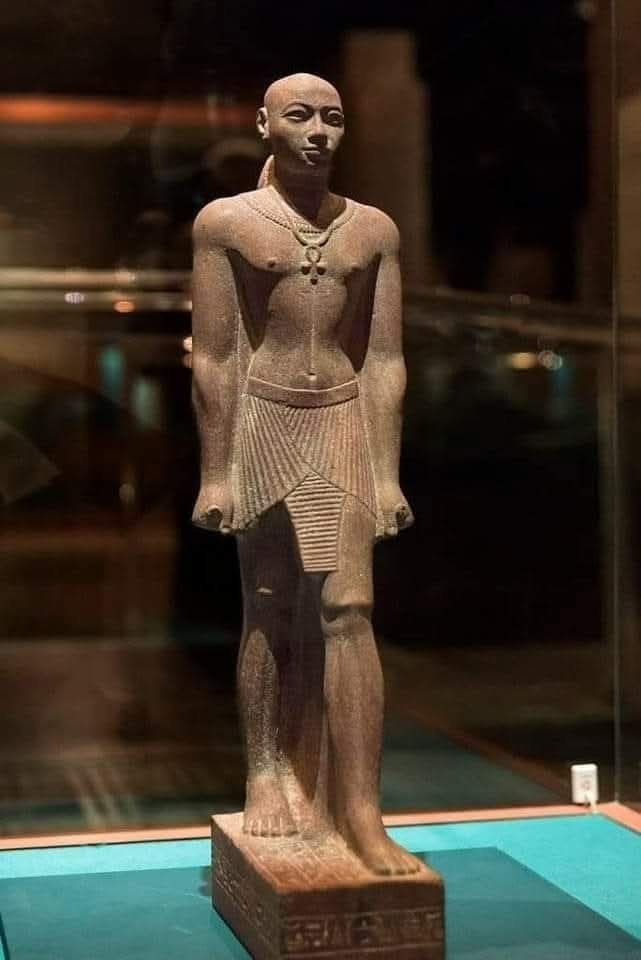
Below is Horemakhet, a Kushite High Priest, who was the son of Shabaka. Shabaka was the 3rd Nesut Bity (“pharaoh”) of the 25th Dynasty, and is known for his efforts to revive the traditional culture and religion, and reuniting Upper and Lower Egypt under Nubian rule.
Note Horemakhet is rocking an Ankh pendant. The Ankh has it’s origins in Dogon culture of West Africa, the Water People. I want to provide you with some incredible sources. Follow the work of Archeologist Dr. Anthony T. Browder . He is the only African American archeologist working in this region . . I want to also reccomend studying the amazing work of professor Prof. James Small African World and also Tdka Maat Kilimanjaro a college Dean who has developed and entire Science Based K-12 Curriculum for the Independent African Schools . . There is much much more but I will stop there 🥰🥰🥳 Make it a GREAT day everyone!
 Hi welcome to my website
Very interesting read.
LikeLiked by 1 person
Thanks
LikeLiked by 1 person
PEACE BE STILL…
LikeLiked by 1 person
And also will you
LikeLike
PEACE WITH PEACE COMES MORE FAITH, MONEY, HOUSES, CARS & CLOTHES( even your mind is clothe’)
LikeLiked by 3 people
Smile
LikeLike