UKPABI ASIKA: THE PRO-NIGERIA IGBO INTELLECTUAL WHO LED THE REINTEGRATION OF EASTERN NIGERIA
UKPABI ASIKA: THE PRO-NIGERIA IGBO INTELLECTUAL WHO LED THE REINTEGRATION OF EASTERN NIGERIA
How an Onitsha-born scholar became the face of reconciliation and rebuilding after the Nigerian Civil War
Early Life and Education
Born on June 28, 1936, in Onitsha, Anambra State, Anthony Ukpabi Asika was the son of a retired postmaster. He grew up in a period of colonial transition, where education was emerging as the pathway to leadership among Nigeria’s new elites.
He attended University College, Ibadan (now University of Ibadan), where his academic brilliance and confidence distinguished him among his peers. He later proceeded to the University of California, Los Angeles (UCLA), where he earned a degree in Political Science.
While at UCLA, Asika became president of the African Students Association, a position that sharpened his diplomatic and leadership skills. Those who knew him during this period described him as articulate, cosmopolitan, and deeply convinced about the importance of a united and modern Africa.
Scholar and Political Thinker
After completing his studies, Asika returned to Nigeria, joining the academic staff at the University of Ibadan, where he lectured in political science. His scholarly interests focused on governance, federalism, and political integration — themes that would later define his career.
By the mid-1960s, Nigeria was facing political crises and ethnic divisions that culminated in the 1966 coups and, ultimately, the Nigerian Civil War (1967–1970). When the Eastern Region seceded as Biafra under Colonel Chukwuemeka Odumegwu Ojukwu, Asika chose a different path. He remained loyal to the Federal Republic of Nigeria, believing that national unity was essential for long-term peace and development.
Civil Administrator of East Central State
In October 1967, General Yakubu Gowon, then Head of State, appointed Ukpabi Asika as the Civilian Administrator of East Central State, the federal government’s structure for governing the former Eastern Region territories under federal control.
His appointment was a daring and symbolic move — Asika was the first Igbo civilian to serve in such a capacity during the war. His role was to represent the federal side of the conflict and to coordinate humanitarian and administrative affairs in war-affected areas.
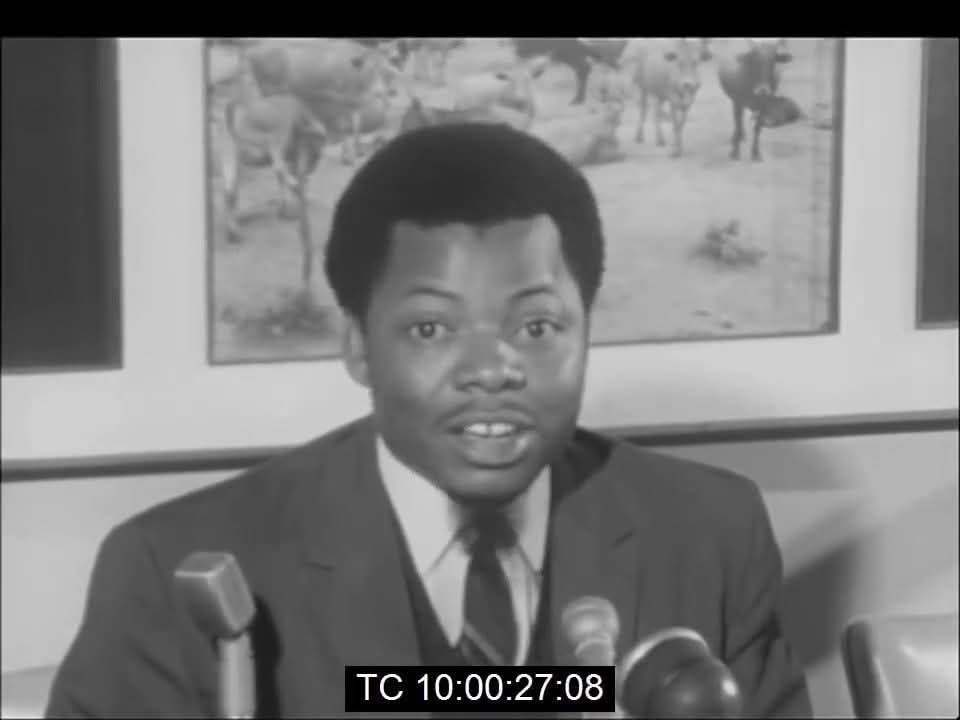
A photograph dated June 30, 1968, taken during a press conference at Nigerian House in London, shows Asika addressing journalists. Calm yet assertive, he denied allegations that the Federal Government was committing genocide against the Igbo, insisting that the war was not against a people, but against secession.
His public stance made him a controversial figure: regarded as a patriot by some and a traitor by others. Yet, history would later reveal that his commitment to peace and reintegration stemmed from conviction, not convenience.
Rebuilding the East After the War
When the war ended in January 1970, Ukpabi Asika faced an immense challenge — rebuilding the war-torn East Central State, which comprised today’s Anambra, Enugu, Imo, Abia, and parts of Ebonyi states.
Under the policy of “No victor, no vanquished,” he oversaw the reconstruction and reintegration of former Biafran territories into the Nigerian federation. His government prioritised:
Rehabilitation of civil services and local administrations
Restoration of schools, hospitals, and public utilities
Encouragement of displaced persons to return home
Economic revival through federal development programmes
Despite limited resources and political distrust, Asika pursued a pragmatic approach. He worked closely with federal authorities while also advocating for the fair treatment of the Igbo people in national recovery plans.
Personal Life and Family
Ukpabi Asika married Chinyere Asika, who later became a well-known figure in Nigerian social and media circles. They had children, including Obi Asika, a prominent Nigerian entertainment executive and media entrepreneur, and were closely related to Asa Asika, a leading talent manager in Nigeria’s music industry today.
Asika’s family reflected his cosmopolitan worldview — a blend of intellect, discipline, and creativity. Despite his busy public life, those close to him described him as reserved, thoughtful, and deeply family-oriented.
Legacy and Death
Ukpabi Asika served as Administrator until 1975, when General Murtala Muhammed’s government replaced the military governors and civilian administrators. After leaving office, he returned to academia and public policy work, contributing to national discussions on governance and federalism.
He passed away on 14 September 2004, at the age of 68, leaving behind a legacy of resilience, intellect, and reconciliation.
While his stance during the war remains debated, historians increasingly recognise Asika as a pro-Nigeria Igbo intellectual who believed that unity and reconstruction were the only viable paths for survival and progress after one of Africa’s most devastating conflicts.
Today, his name is remembered among Nigeria’s post-war nation builders — men who put intellect and country above ideology.
Image Credit:
Ukpabi Asika addressing the press in London, June 30, 1968. Courtesy: Evening Standard/Hulton Archive/Getty Images.
References:
- Falola, Toyin & Heaton, Matthew. A History of Nigeria. Cambridge University Press, 2008.
- Suberu, Rotimi T. Federalism and Ethnic Conflict in Nigeria. United States Institute of Peace Press, 2001.
 Hi welcome to my website