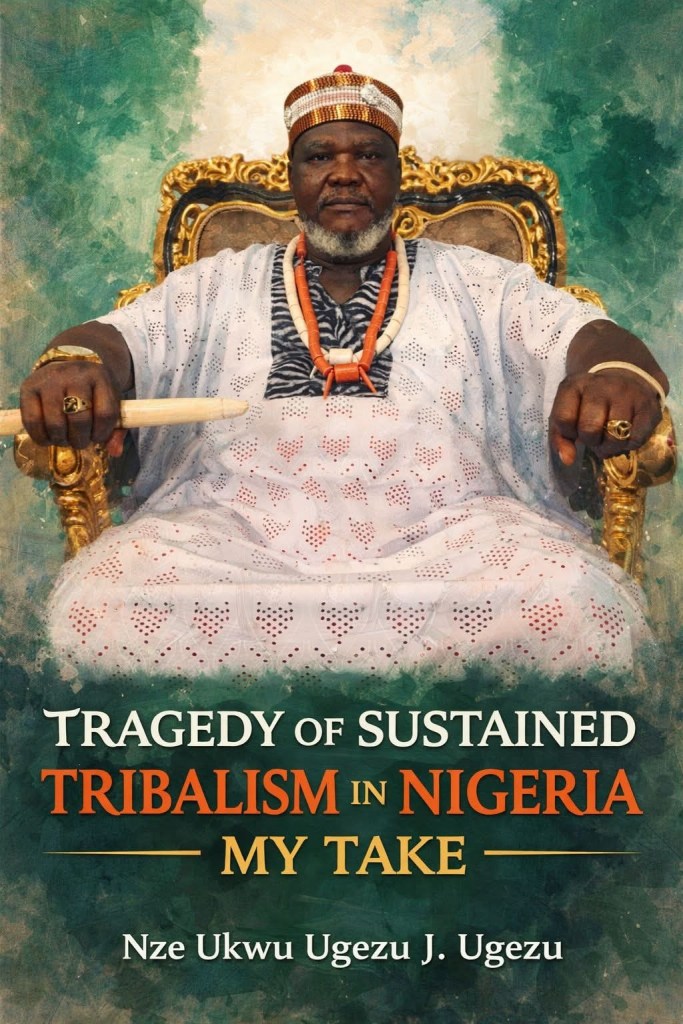
THE TRAGEDY OF TRIBALISM IN NIGERIA
THE TRAGEDY OF TRIBALISM IN NIGERIA
Nigeria’s greatest tragedy is not poverty, insecurity, or underdevelopment. These are symptoms, not causes. The deeper affliction is tribalism, a quiet but persistent poison that has denied the country the soul of a nation. More than six decades after independence, Nigeria still struggles to answer a simple question, are we a people, or merely a collection of regions forced to coexist?
At independence, the founding fathers of Nigeria failed in the most critical task of nation building. Rather than forging a shared national identity, they were preoccupied with securing regional dominance. Politics was not driven by ideology or a collective Nigerian vision, but by ethnic arithmetic. Loyalty was first to tribe, then to region, and only distantly to the nation. Federalism became a bargaining table, not a unifying framework. The seed of distrust was planted early, and it has grown unchecked. It is on record that some of the founding fathers exhibited a disturbing lack of will to tolerate people from other regions. This disposition was passed down to their followers, and that dangerous ideology has continued because government has not deemed it crucial to fight it as an identified virus.
That foundational failure continues to echo through modern Nigeria. One of the clearest illustrations lies in something as ordinary as official documentation. Decades after independence, Nigerians are still required on government forms to state their state of origin or state of birth, rather than simply their address or place of residence. This seemingly harmless requirement reinforces the idea that citizenship is conditional, that where you come from matters more than where you live, work, contribute, and belong. In many countries, such questions would be considered irrelevant or even discriminatory. In Nigeria, they are institutionalized.
Worse still is the state’s tolerance of tribal bigotry. Public figures openly make divisive, ethnically charged statements without consequence. Tribal insults are normalized in political discourse, on television, at rallies, and across social media. No meaningful sanctions follow. Silence from authority becomes endorsement. When government refuses to punish tribal bigots, it sends a dangerous message, that hatred is acceptable as long as it serves power.
Even holders of sensitive public offices, those entrusted with national security, justice, and policy, are not immune. Appointments are often perceived, rightly or wrongly, through tribal lenses. Statements are made that betray sectional loyalty. Decisions are interpreted as favoring “our people” over “others.” The tragedy is not only that this happens, but that it happens without accountability. A nation cannot survive when its guardians are tribal partisans.
Perhaps most revealing is how deeply tribalism has penetrated even spaces meant to unite us. Sports, which should dissolve differences under a single national flag, has not been spared. Selection debates, fan reactions, and even commentary often descend into ethnic camps. Victories are claimed by regions, failures are blamed on tribes. Even in the just concluded AFCON, Nigerians on social media showed the world how deeply divided we are along tribal lines. One would have expected an official framework to address such open displays of ethnic hostility, but alas, nothing happened. And because nothing happened, those behind it will do it again. This is deeply saddening and troubling.
The consequence of this collective failure is the absence of true nationhood. Nigeria functions as a country, but does not yet breathe as a nation. Trust is thin. Suspicion is automatic. National success is viewed through ethnic gain or loss. In such an environment, unity remains a slogan, not a lived reality.
Until Nigeria decisively confronts tribalism, progress will remain cosmetic. Until tribal bigotry is punished, not excused, not justified, not ignored, we will continue to orbit around the idea of nationhood without ever arriving. Until citizenship replaces ethnicity as the primary identity, Nigeria will remain structurally divided, no matter how often we sing the national anthem.
True nationhood demands courage, the courage to abandon inherited prejudices, the courage of leadership to enforce consequences, and the courage of citizens to see themselves first as Nigerians. Until then, the tragedy of tribalism will continue to define us more than our potential ever could.
 Hi welcome to my website
This is a powerful and incisive analysis. You’ve captured the deep, systemic roots of tribalism in Nigeria with clarity and courage, showing how it affects politics, society, and even national pride. Your words cut to the heart of the issue, urging accountability, unity, and a shift from ethnic allegiance to true citizenship. A thoughtful, sobering, and necessary piece that challenges readers to reflect on the real barriers to nationhood.
LikeLiked by 1 person