Biafra And Igbophobia: The Redaction Of Igbo History In Nigeria’s Educational System And The Justification Of The Biafran Quest
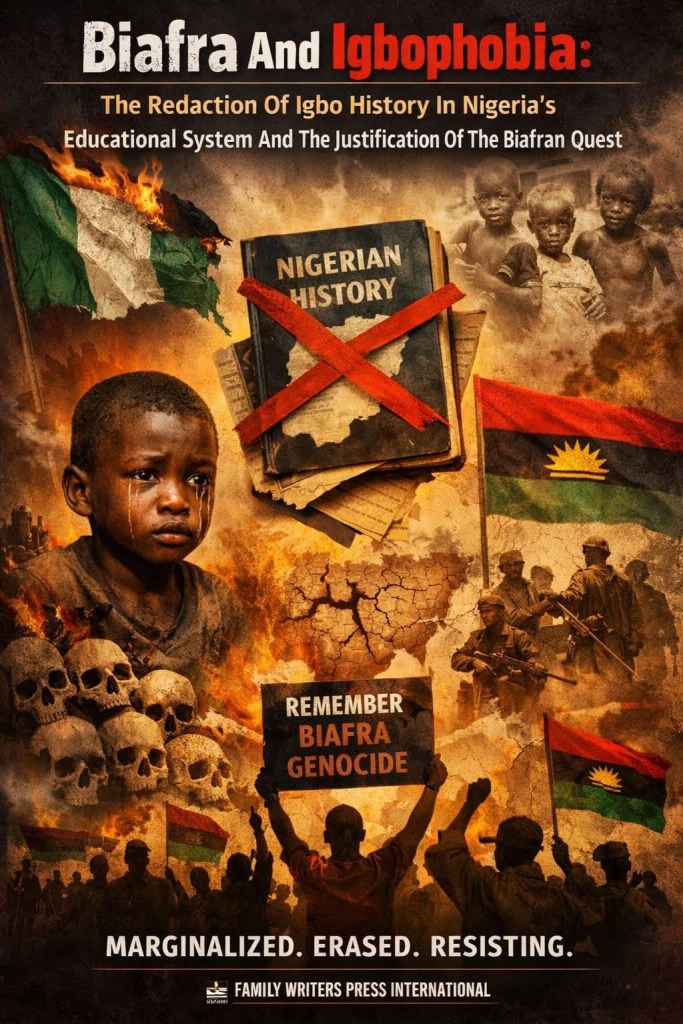
Biafra And Igbophobia: The Redaction Of Igbo History In Nigeria’s Educational System And The Justification Of The Biafran Quest
The systematic exclusion and redaction of Igbo history from official educational materials is not merely an academic oversight. It reflects a deeper issue of Igbophobia; a persistent fear and bias against the Igbo ethnic group in Nigeria.
This recurrent practice within Nigerian institutions stands as evidence of the ongoing Biafra restoration activism, challenging the notion of a united Nigeria and revealing the deep fractures within a country that claims to be a harmonious whole.
The Biafran genocide (1967–1970) remains a pivotal moment in Nigerian history, marked by profound trauma and loss for the Igbo people. However, despite its significance, the portrayal of this conflict within Nigeria’s educational system has often fallen short, presenting a sanitized narrative that neglects the historical and humanitarian realities of the Igbo experience.
Rather than fostering understanding, this selective narration contributes to the pervasive stigma surrounding Igbo identity in Nigeria.
The redaction of Igbo history from instructional materials perpetuates misconceptions and fosters national ignorance about the realities of the Biafran War and its aftermath.
When students are deliberately deprived of a comprehensive understanding of their nation’s history by scholars, institutions, and government authorities, their ability to engage critically with contemporary issues of identity, justice, and reconciliation is severely limited while simultaneously laying the groundwork for national disintegration.
Such omissions not only marginalize the Igbo voice, experience, and contributions, but also reinforce the quest to extricate the Biafran people from the Nigerian project.
Igbophobia in Nigeria manifests not only in educational contexts, but also in social attitudes, institutional policies, and political rhetoric. This bias can be traced to colonial legacies and has been exacerbated by post-independence socio-political dynamics.
The marginalization of Igbo perspectives in historical narratives reveals Nigeria’s unwillingness to confront uncomfortable truths about its past and pursue genuine remediation.
By dismissing the contributions and struggles of the Igbo ethnic group in instructional materials published for national use in schools where Igbo students are present, despite their scale and significance, Nigeria continues to grapple with the illusion of “One Nigeria,” thereby further justifying the Biafran quest for self-determination.


This made me really question how history gets shaped and whose voices get heard.
LikeLiked by 1 person
The truly must told
LikeLike